
A Life in the Field: Ryan Black

By midmorning, Ryan Black is already thinking about the creek.
East Chester Creek runs through the Westtown campus, past the tennis courts and into places many students have never considered part of school. Black knows those edges well: the marsh, the woods around the lake, the streambanks, the stretches of mowed grass waiting to become meadow. He knows where freshwater mussels might be hiding and where eastern red-backed salamanders live quietly beneath the forest floor.
Black teaches Environmental Science, though the title leaves out much of what happens in his classes.
Nearly 450 of Westtown’s 600 acres are natural spaces that contain forests and meadows as well as freshwater habitats like a marsh, a creek, and a lake. In Black’s courses, those acres replace a standard whiteboard, desks, and chairs. “The big differentiator here is that the campus is the classroom,” he says. “Everything starts in the field.”
On field days, students pull on boots and waders and head across campus carrying nets, probes, data sheets, pitfall traps, and other equipment. Nearly 450 of Westtown’s 600 acres are natural spaces that contain forests and meadows as well as freshwater habitats like a marsh, a creek, and a lake. In Black’s courses, those acres replace a standard whiteboard, desks, and chairs. “The big differentiator here is that the campus is the classroom,” he says. “Everything starts in the field.”
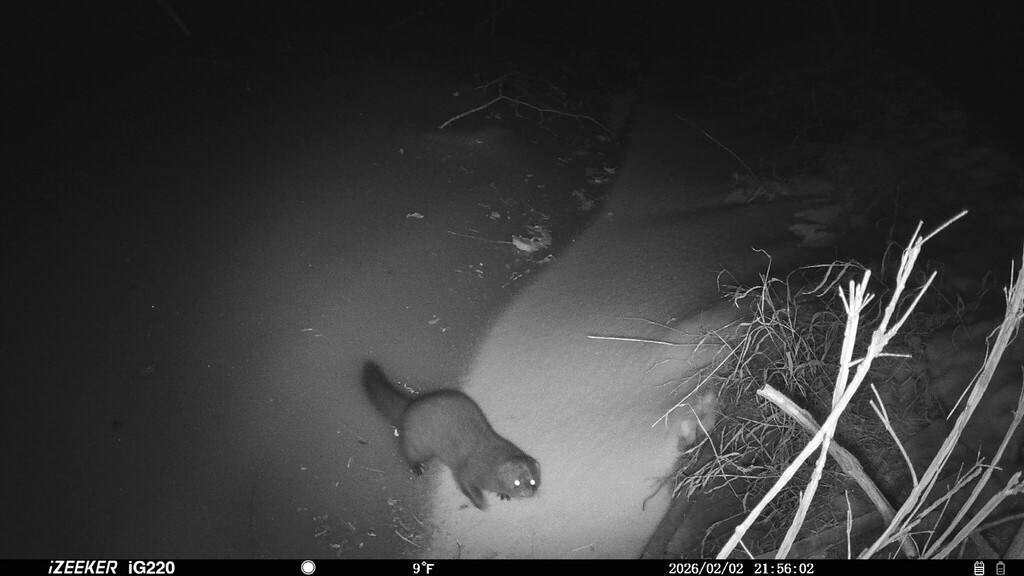
His students study the health of riparian zones and compare soil temperatures along planted and mowed streambanks. They track the spread of beech leaf disease—an emerging forest threat in the Eastern U.S.—near the lake. They survey freshwater mussels, count macroinvertebrates, map plant diversity, measure trees, analyze carbon storage, examine tree rings, and use trail cameras to study nocturnal mammals. And, they are building a forestry database that students will continue adding to long after the current classes have graduated. Most of the work happens on campus. The rest takes students outward and farther into the field, often toward connected ecosystems.
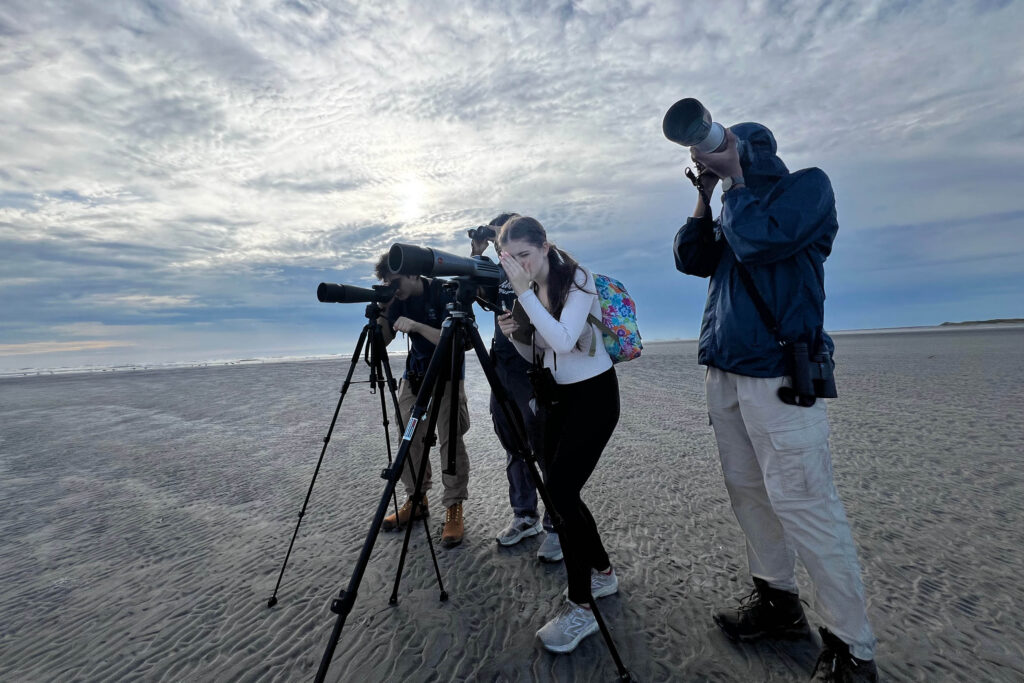
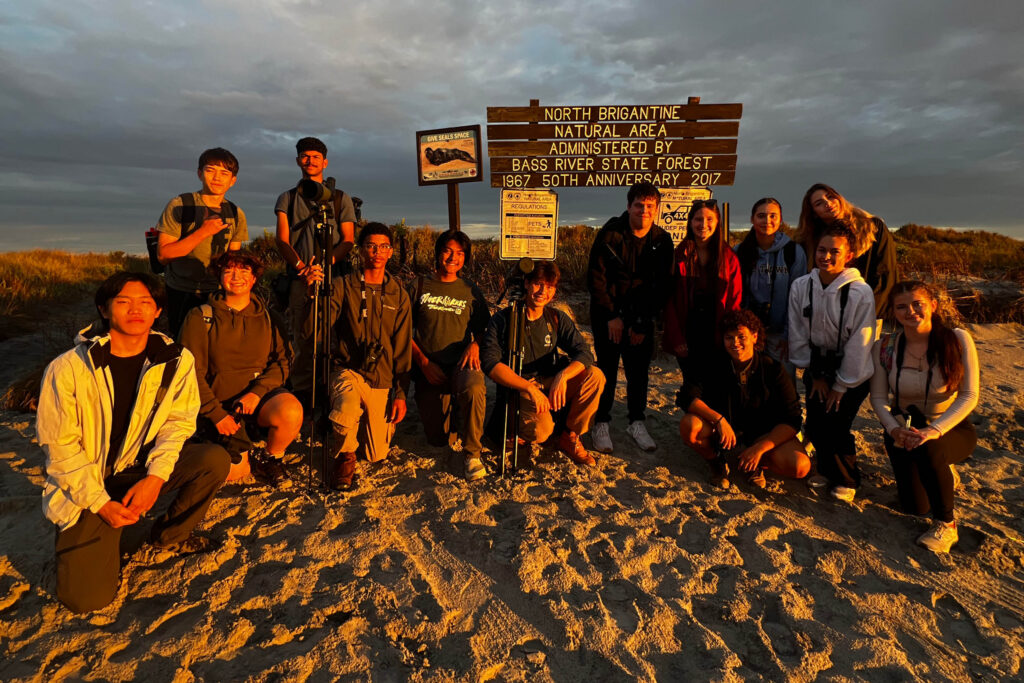
At North Brigantine Natural Area along the New Jersey coastline, students begin an annual three-mile shorebird survey before sunrise, recording the number and variety of birds they see. They also document activity in the area such as vehicles on the beach, people walking, dogs, and any disturbance that causes a flock to lift from the sand. In May and June, they travel before sunrise to the Delaware Bay, where horseshoe crabs crowd the shoreline to spawn and their eggs feed the migratory birds the students counted months earlier.
Black teaches environmental science as a web of relationships. A fish carries mussel larvae upstream on its gills. A healthy streambank slows runoff and filters water. A horseshoe crab sustains a bird traveling thousands of miles. A tree records drought in the width of its rings.
“I mean, the world is incredible,” he says while explaining the unusual reproductive life of freshwater mussels.
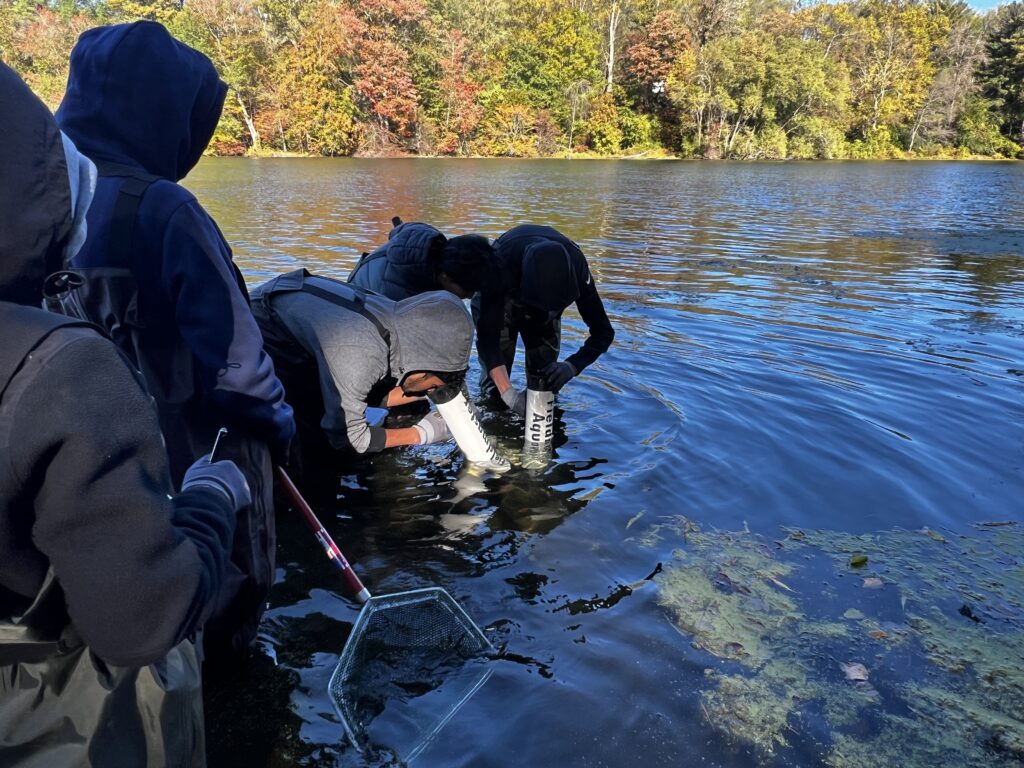
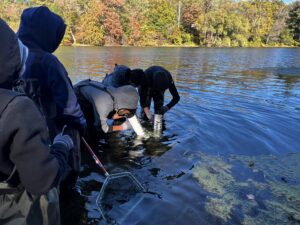
His enthusiasm tends to gather speed as he talks. Ask about those mussels, and he will explain how they clean water, why they are among the most endangered animal groups in North America, and how dams can interfere with their ability to reproduce. Ask about the beech trees near Westtown Lake, and he will describe the banding that appears on infected leaves, the rapid spread of the disease, and the ecological succession that may follow if mature trees begin to die.
Black is interested in the singular discovery, but he is building studies meant to last. Students return to the same habitats, repeat established methods, and compare their results with previous years. They collect baseline data before a meadow restoration begins so another class can measure what changes. They survey the creek for macroinvertebrates twice a year because those organisms can reveal patterns in water quality that a chemical test taken on a single afternoon might miss.
A student studying birds has worked with Westtown’s archives to bring handwritten observations and old data sheets from the 1800s into a modern spreadsheet. She is comparing those records with current observations from Westtown Lake. The school’s history of naturalists and student collectors is becoming part of the present-day course, one row of data at a time. “The opportunities to use our history and then apply it to what we’re doing today are endless,” Black says.
Today’s students are recording the present for people they may never meet. Black has seen that responsibility change the way students work. A one-time class activity can be completed and forgotten. A longitudinal study carries a different weight. “They develop a sense of ownership,” he says. “It’s our responsibility to carry this work into the future.”
The same is true in the other direction. Today’s students are recording the present for people they may never meet. Black has seen that responsibility change the way students work. A one-time class activity can be completed and forgotten. A longitudinal study carries a different weight. “They develop a sense of ownership,” he says. “It’s our responsibility to carry this work into the future.”
That responsibility depends on precision. Black teaches ecological sampling methods, field protocols, spreadsheet analysis, chemical testing, and scientific writing. Students learn to use quadrats to estimate populations across a larger habitat. They calculate tree height, diameter, wood volume, economic value, and stored carbon. They extract cores with an increment borer and study the rings as a record of growing conditions.
In Environmental Science I and II, Black poses the research questions and establishes the methods. In the Advanced Field Research course, students do that work themselves. “I’m not asking the questions anymore, and I’m not telling you what your methods are anymore,” he tells them. He offers support, but the students must design a study, gather the data, analyze what they find, and defend their conclusions.
They sometimes arrive with an idea he has never tried or a technique that requires new equipment. His response is usually, “Let’s go for it. Let’s buy the equipment!” The point is to work as scientists work.
“They’re doing real science,” Black says. “That’s the whole point. It’s an environmental science class. Let’s go do science. Let’s not just talk about researchers doing science.”
That distinction matters even for students who have no intention of entering a scientific field. They learn to organize information, question a result, notice a flawed method, and look closely at what the evidence actually supports.
The fieldwork also makes the subject harder to keep at a distance. A student reads a journal article about the effects of a pesticide on frogs and arrives in class upset, asking what can be done. Another investigates the health of the riparian zone along Hickman’s Run, the main stream feeding Westtown Lake, and begins working with neighbors on a small restoration project upstream from campus. Other students expand pollinator gardens, plan bat boxes and wood duck houses, collect data for conservation organizations, clean beaches, and rescue stranded horseshoe crabs.
Black encourages that movement toward action. “Posters and classroom talks are great,” he says, “but [I want them to] go outside and do something.”
His students are not asked to care about the environment as a broad idea. They are asked to study this creek, this group of beech trees, this lake, this meadow, this streambank. The places are close enough to pass every day, yet unfamiliar enough to catch their attention unsolicited. Once students learn how to understand them, their experience of the campus changes. The marsh behind the tennis courts becomes habitat. A patch of leaf litter becomes a comparison site. A mowed field becomes a question about land use. The water entering the lake carries information about lawns, neighborhoods, nutrients, and decisions made upstream from Westtown’s 600 acres.
Black wants students to recognize that they can take meaningful action now. They can make an impact. A high school student can gather data that an environmental organization needs in real time. A high school student can restore a streambank or identify a problem adults have overlooked. A student can leave Westtown knowing that a place is healthier because they paid attention to it.
“They might just not know what to do,” he says of community members facing a restoration problem, “whereas a high schooler that comes through the Environmental Science program can be like, ‘I know what to do. Let’s do something about it.’”
That confidence grows across divisions starting with Westtown’s younger learners. Black speaks with admiration about Lower School teachers who cultivate an early sense of wonder; Middle School teachers who explore campus ecology with students; colleagues who tend pollinator gardens and raise food on the school’s farm for the Dining Room; and conservation partners who are helping Westtown convert unused grass spaces into meadow habitats.
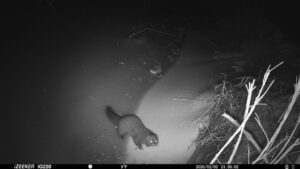
Trail cameras move between divisions. Teachers trade reports of otters, birds, beavers, and other campus sightings. An observation made by Middle School students may become the beginning of an Upper School class’s afternoon field study. “They’re doing work that inspires me to do work, and vice versa,” Black says.
Westtown’s Sustainability Plan has given that work a shared structure. For Black, it has also affirmed what he and his colleagues have been building—a schoolwide approach in which the campus functions as a living laboratory and students contribute to its care.
He is candid about the practical conditions that make his courses possible. He has access to land, equipment, vans, institutional support, and enough freedom to let a study change with the season. He can revise the curriculum around fieldwork rather than force the fieldwork into a conventional sequence of lectures and units. He has taken that freedom seriously. His courses continue to move toward a project- and place-based model organized around case studies about forestry, water quality, biodiversity, and restoration. The field study comes first. The concepts grow from what he and his students encounter there.
Black traces that approach to his own high school environmental science teacher, whose field-based model helped determine the direction of his life. He remains in touch with him. Their students now contribute to the same shorebird research, combining data across schools and across years.
“The best teaching happens when you have somebody that wants to be teaching the class and the content, and wants to find creative ways to do it in the way that actually helps the students learn it and care about it.” At Westtown, that might mean a quadrat placed on the forest floor, a tree core held to the light, or a van waiting at the far end of campus after students finish surveying a creek.
In reflecting on teaching philosophy, he says, “The best teaching happens when you have somebody that wants to be teaching the class and the content, and wants to find creative ways to do it in the way that actually helps the students learn it and care about it.” At Westtown, that might mean a quadrat placed on the forest floor, a tree core held to the light, or a van waiting at the far end of campus after students finish surveying a creek.
It might even mean a teenager standing in the water in borrowed waders, looking closely enough to understand that the creek has been telling a story all along.


