A focus on sustainability and the environment is embedded in much of our curriculum and practices, but on Earth Day, we enjoy special activities and celebrations. Some of the ways we celebrated on Earth Day included an all-school Meeting for Worship in the Greenwood, an all-vegan and a locally sourced lunch in our Green Star Certified Dining Room, an assembly with a student panel, and workshops centered on the theme “Finding Your Why and Empowerment.” The 17 workshops offered—which covered topics from bioremediation to clean energy at Westtown to environmental justice, to seed sharing pollinators, to name just a few—aimed to help to inspire students to get involved in sustainability work and to find the ways their passions and interests intersect with sustainability guided by the 17 Sustainable Development Goals created by the United Nations. Special thanks go to Mira Hartmann ’25 who was integral in organizing the day’s schedule, activities, and workshops in the Upper School.
In Middle School, teacher Courtney McKinley‘s eighth grade students headed outside to race the solar powered cars they had made. As Middle School Principal Will Addis shares, “The call to be stewards of a better world is implicitly and explicitly woven throughout the Middle School. In sixth grade science, the work STEM teacher Carlos Charriez and the students do cultivating plants in the greenhouse fosters a keen understanding of nature. In eighth grade social studies and science classes, students gain a broader understanding of climate change from both scientific and sociological perspectives. In Abby Lausch‘s seventh grade English Language Arts class, students learn to write persuasive letters to community leaders, which will alone them to hone their skills to be change makers. In the dining room, students eat food cultivated locally and debate which items go in the compost bowl and the Green Captain helps them get the decision right. Our outdoor education trips create a meaningful relationship with the world around them, with a ‘leave no trace’ focus. Our athletic program teaches our students to have positive personal lifelong health practices by exercising on our beautiful campus. Our Visiting Artist program also took a sustainability focus this year. Stephanie Rowley centered on using found materials to create a new work of art. Students manipulated the materials in a variety of ways, including sewing and knitting, to create a new work of art. The process had a zero waste focus, and highlighted the connection between us and the natural world. While we celebrate Earth Day each year, we observe the principles every day.”
A signature experience for many students at Westtown are the school-sponsored trips which provide a variety of opportunities to learn and broaden their experience beyond the classroom. This year’s spring break trips offered cultural and language immersion, biodiveristy exploration, service, and political activism. Groups went to Puerto Rico, Costa Rica, and Washington, DC.
Puerto Rico Spanish teacher and Puerto Rico trip leader Mercedes Ureña Durán shares, “I had the opportunity to travel Puerto Rico with 18 amazing students and two wonderful colleagues: Fernando Gomes and Franco Yannielli. Throughout the trip we enjoyed the richness the island has to offer through its music, customs, biodiversity, and vibrant culture which allowed for an unforgettable experience.
“Our trip was a mix of fun adventures, immersive learning and service experiences, sprinkled with opportunities to relax and soak in the island’s beauty. We started the trip in Old San Juan and learned about the history of the island and visited some important landmarks like El Morro. We then traveled and hiked deep in the tropical rainforest of El Yunque. It was a challenging uphill hike, nonetheless it was wonderful to have the opportunity to connect with nature in such a majestic setting surrounded by a lush forest of a variety of trees, including the native Yagrumo. The students were then rewarded with the chance to cool off by skidding down a natural rock slide into the refreshing waters that run through the forest.
“Visiting a local sustainable forest project called Casa de la Selva was a highlight of the trip for many students. Being deep in the forest and surrounded by nature allowed them to disconnect from technology and engage with each other. They supported the project by clearing the trail by cutting brush and fallen bamboo. It was tough work, but rewarding. Some students dug ditches that helped re-establish drainage to help proper water flow while others built steps along the trail which help to create easy access to the forest. After a day’s work, students got to be in community with each in a more connected way. One student brought yarn and taught other students how to make intricate braided bracelets, which became a favored unwinding activity after a day of work. As the sun set in the evenings we were delighted by the croaking of the endemic Coqui frogs which, although they are pretty small and sometimes hard to see, in unison they can make a cheerful and impactful sound.
“We traveled to Loiza to visit Samuel Lind, a local artist that celebrates Afro-Puerto Rican history and his passion for nature through his art and sculptures. Dancing was also an important part of the trip, as the students learned about Bomba and Salsa. We visited historic cities such as San Juan and Ponce and learned about the history of the Puerto Rican people. A favorite and unforgettable experience for many students was to experience the magic of nature at the Bioluminescent bay at La Parguera.
“Throughout the trip, Spanish immersion was our goal and it was wonderful to see the students practice their language skills outside of the classroom in authentic settings. To keep sharpening their writing skills students were encouraged to journal in Spanish throughout the trip as a way of encapsulating their daily experiences.”
Costa Rica
Science Department Chair and Environmental Science teacher Ryan Black led the trip to Costa Rica along with Megan Williams and describes it here:
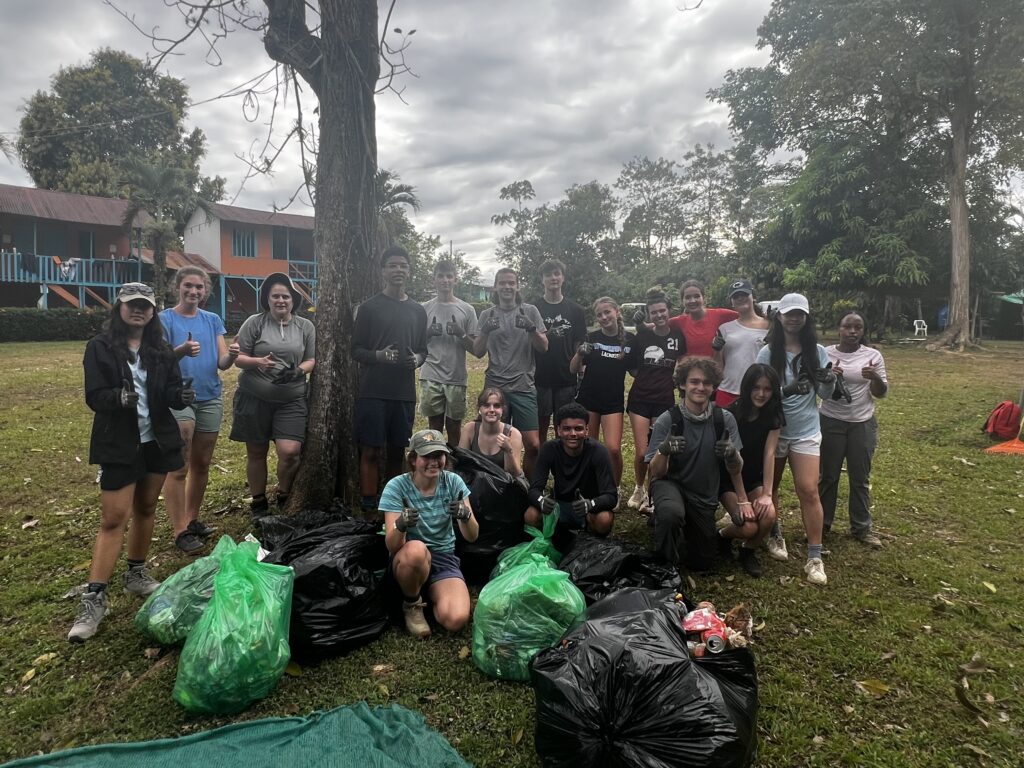
“Students had a rewarding experience in Costa Rica during our biodiversity exploration! We spent the majority of the trip in Caño Negro, a remote wetland area and crucial migratory stopover for many bird species. The students did a fantastic job on several service projects, which included trail maintenance behind the Refugio Nacional de Vida Silvestre Mixto SINAC facility, camping platform sanding and staining, turning soil and building a greenhouse structure for a community garden, and conducting trash cleanup and recycling along local roadways.
“Several students made the most of our time there by waking up at 4:30 a.m. to observe birds, howler monkeys, and other wildlife at dawn. Highlights in Caño Negro included a biodiversity boat tour down the Río Frío, as well as a biodiversity talk and walk with local experts.
“After five days of hard work and manual labor, we traveled to Arenal Volcano, where we encountered sloths, coatis, and eyelash vipers during a unique hike to a scenic lookout point. There, students learned from our guide about the history and ecology of this impressive active volcano.
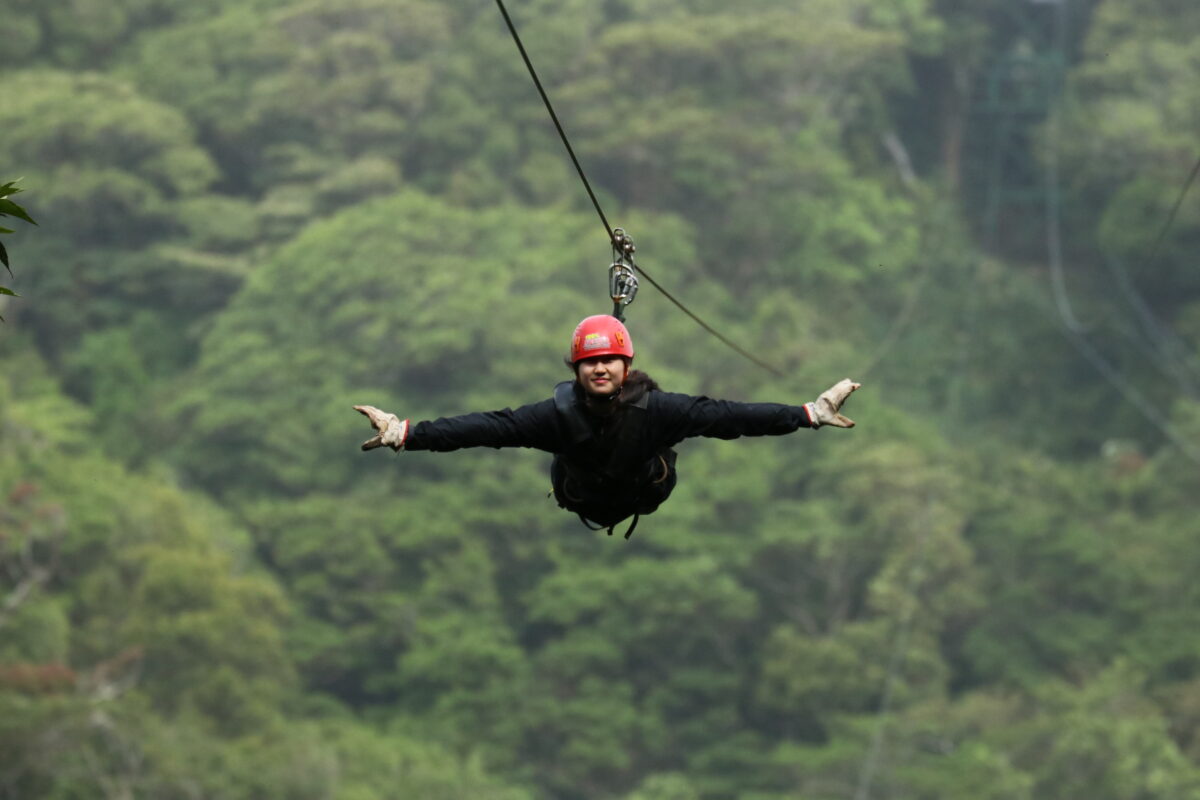
“We then visited the cloud forest in Monteverde, where students got a reprieve from the heat and were able to immerse themselves in a completely different ecosystem. Among the highlights was a thrilling night hike, where we spotted scorpions glowing under UV light, camouflaged glass frogs, hidden walking sticks, industrious leaf cutter ants, elusive kinkajous, stingless “blue cheese” bees, and a variety of other exotic wildlife. Students also zip-lined over the rainforest, bravely conquering the longest zip-line in Latin America, and explored the farming and processing of sugar cane, cacao, and coffee at the Don Juan Plantation. Many of the amazing species we encountered can be viewed on our iNaturalist project.“
Washington, DC
Teachers Lara Freeman and Jake Norton took a small group of students to Washington, DC, for the Friends Committee on National Legislation’s (FCNL) Spring Lobby Conference. FCNL is a”national, nonpartisan Quaker organization that lobbies Congress and the administration to advance peace, justice, and environmental stewardship.” The Spring Lobby Conference welcomes about 300 students from across the country to learn about active legislation, engage in trainings about lobbying, and meet with their representatives in Congress. This year’s conference focused on the threat to healthcare and food assistance. After their training sessions, students met with their representatives to lobby them to protect healthcare and food programs. Freeman shares, “We had a great trip and the students were fabulous advocates for protecting Medicaid and SNAP benefits as Congress works on its reconciliation budget.”
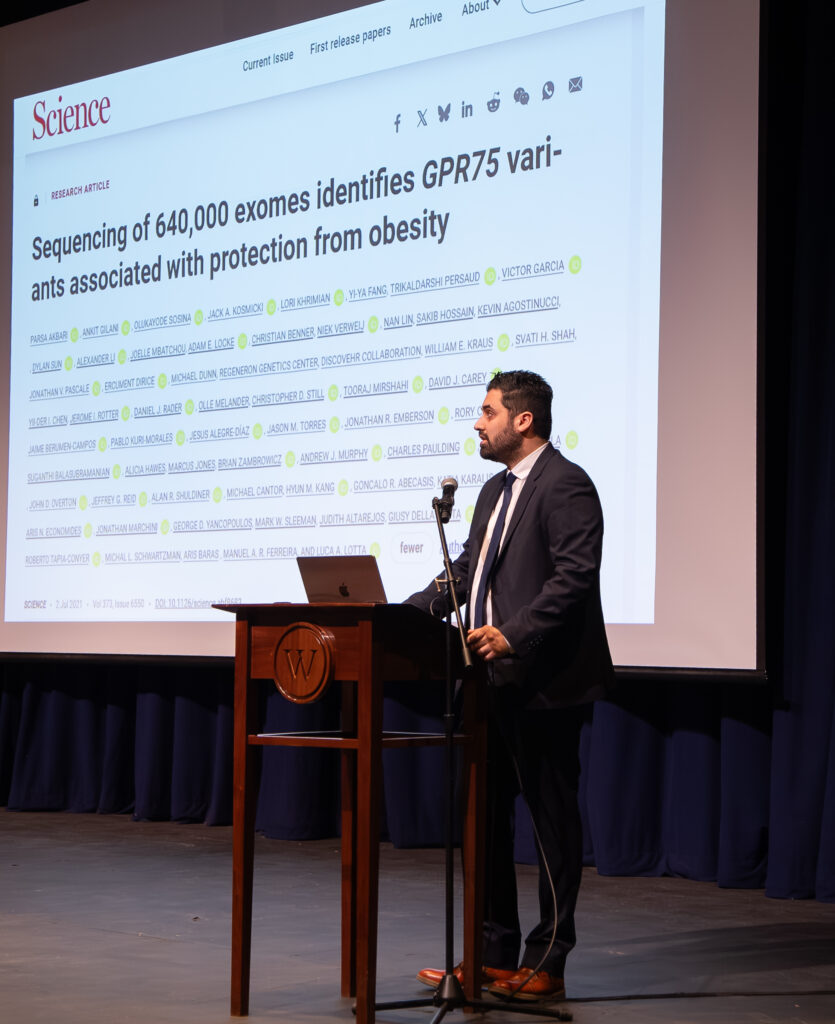
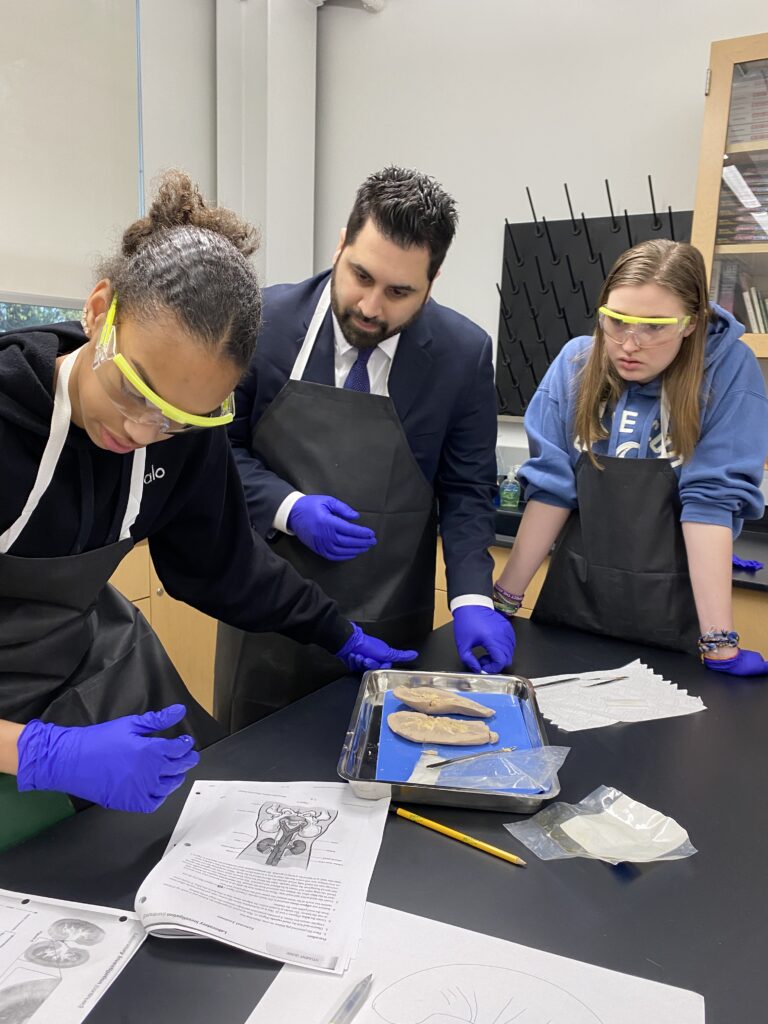
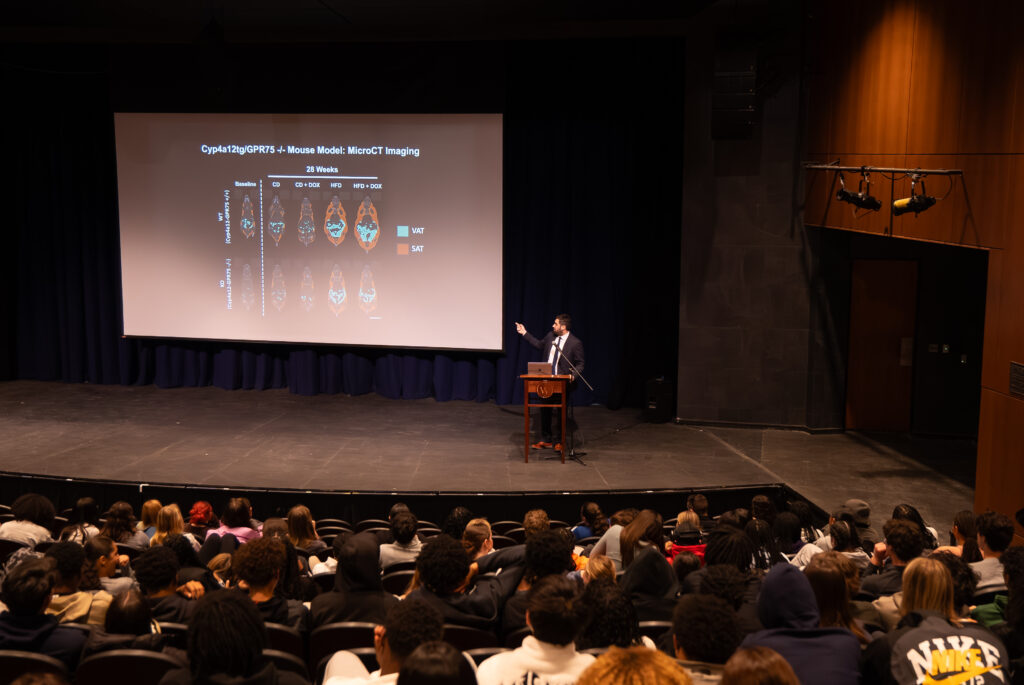
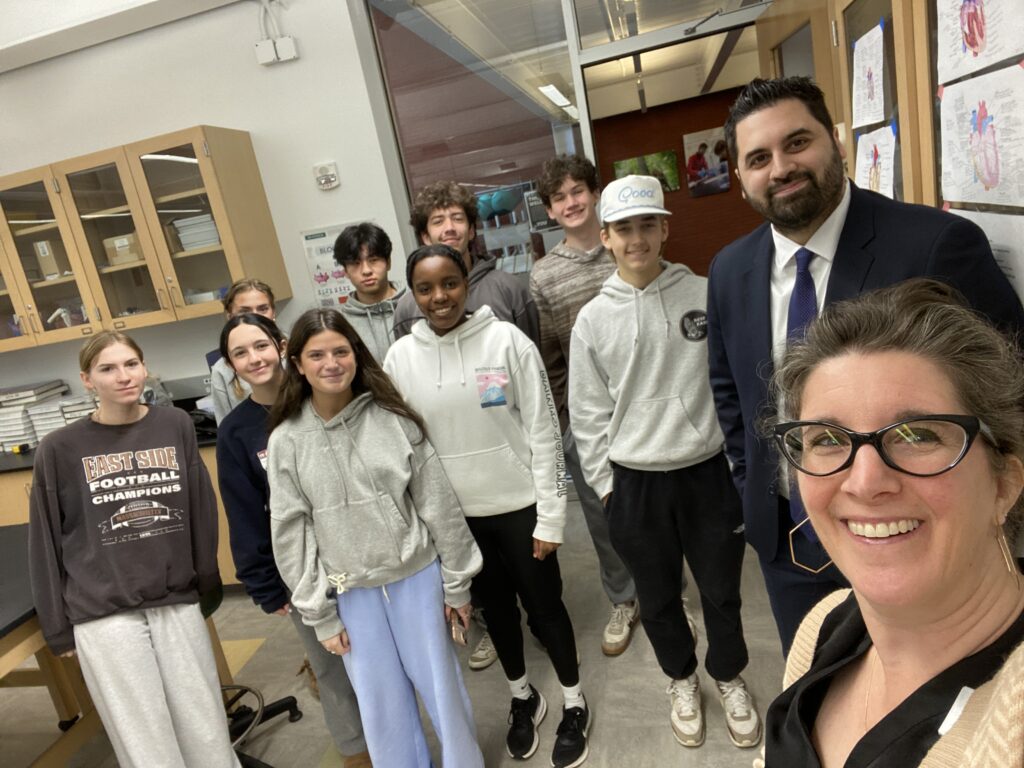
We recently had the honor of welcoming Dr. Victor Garcia ’03 to campus. Dr. Garcia is an Assistant Professor in the Department of Pharmacology at New York Medical College, where his groundbreaking research led to the discovery of a receptor (GPR75) involved in regulating obesity, diabetes, and cancer. He holds a patent and has contributed to the development of several drugs targeting these diseases. He is also deeply passionate about mentoring and empowering young scientists. Dr. Garcia visited classes, met with students, and spoke at the Upper School Assembly where he talked about his professional journey, his work, and his time at Westtown. Students were excited to engage with Dr. Garcia both in and out of the classroom.
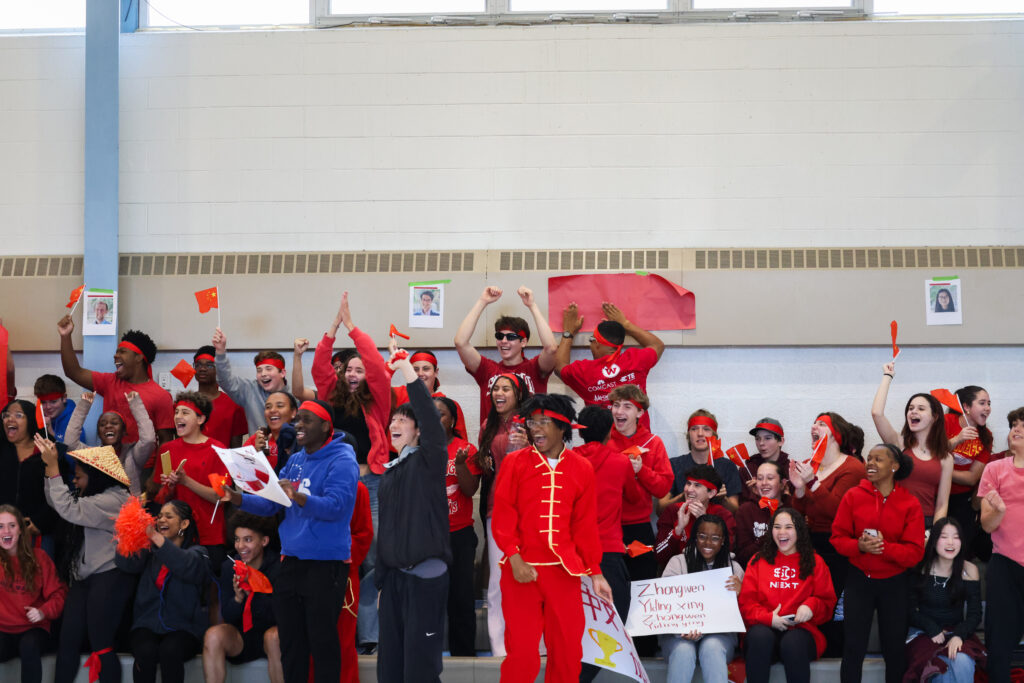
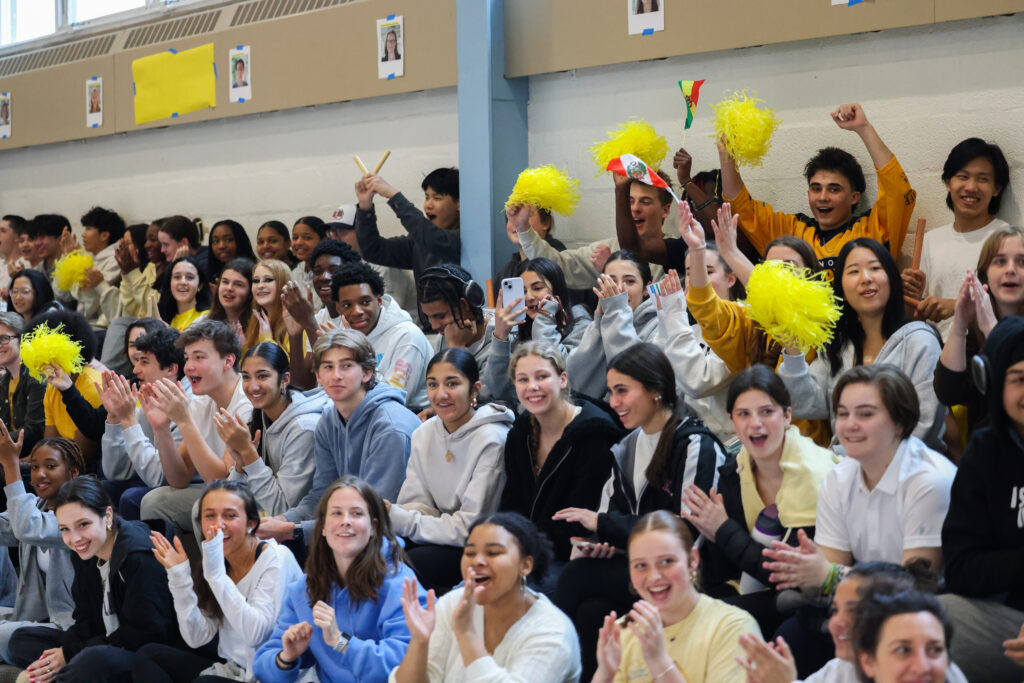
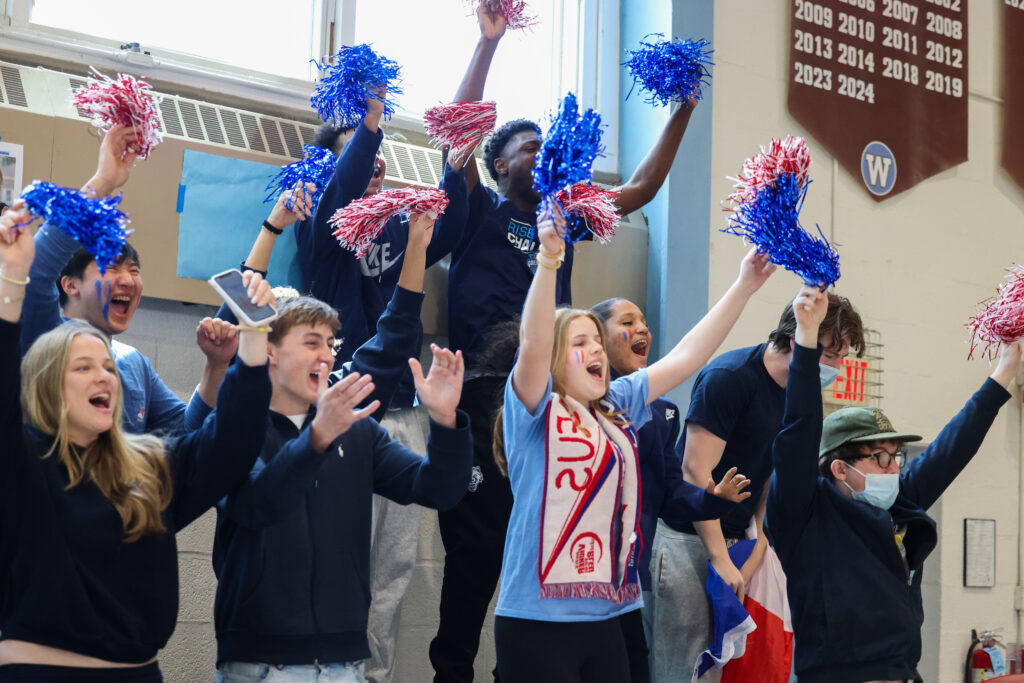
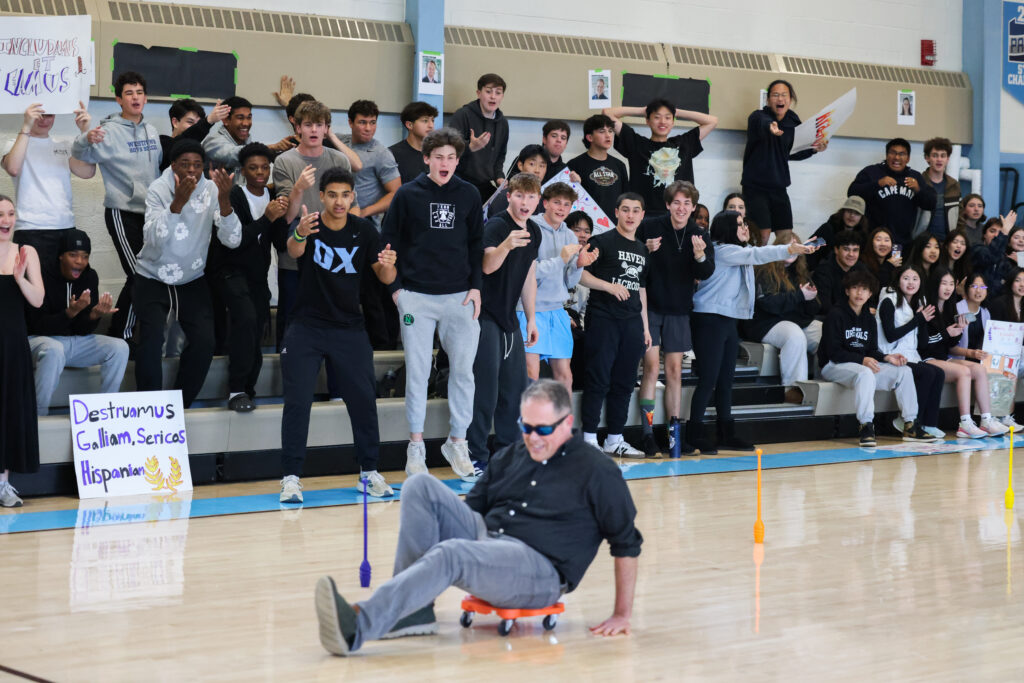
The World Languages Department, chaired by Bei Zhang, created a series of activities and events to promote language learning and immersion during the fourth-annual World Languages Week celebration at Westtown. The Upper School student body was divided into language teams—Chinese, French, Latin, and Spanish—to compete throughout the week. Activities included special assemblies with guest speakers who demonstrate how they use languages in their work, student peformances of songs in their language, themed dinners representing culture and languages each night, and, finally, concluded with the the Language Olympics.
The first assembly featured polyglot YouTuber Arieh Smith—known as @xiaomanyc online—who gave his entire presentation in “Gen Alpha,” much to the delight/chagrin of the primarily Gen Alpha audience!
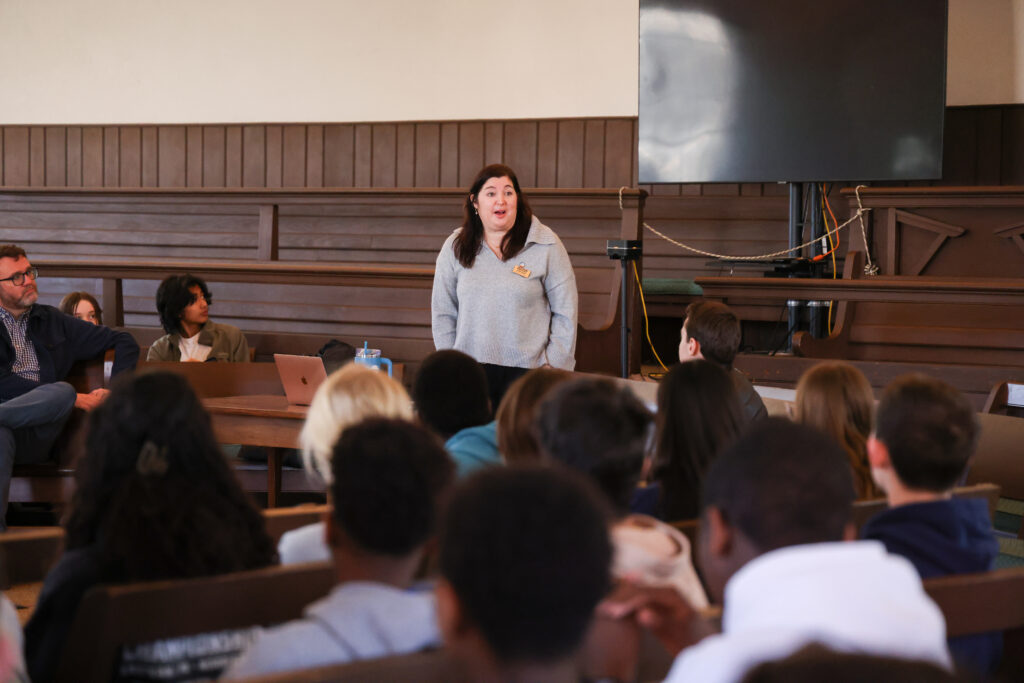
At the second assembly, the keynote speaker was Meg Smithson, Senior Social Worker at New York Immigrant Family Unity Project (NYIFUP), where she works with detained and non-detained people in removal proceedings. She spoke about how language learning has impacted her life and how being able to speak Spanish is crucial in her profession, not only in her one-on-one work with people, but also as she serves as an interpreter in highly sensitive client-attorney meetings. After the moderated talk with Zhang, there was a Q&A for students to learn more.
The Language Olympics—a series of field-day-type events—is always a highlight of the week and capped off the week’s activities. You can enjoy photos here!
Though World Languages Week was planned by language teachers, it was an all-hands-on-deck undertaking, as all Upper School faculty participated in facilitating events. This week-long celebration was also a unique way to assess language acquisition in real time. Zhang says, “Some of our goals included promoting language acquisition, building cultural competency, providing students a platform to celebrate their success in their language education, and helping students envision their future career paths where they can apply their language skills and cultural knowledge.”
March was Disability Awareness Month, and before spring break, we were honored to host both Aimee Ruben and Karla Gilbride. Aimee is the owner of Game On State, a non-profit business in Media that models inclusive hiring practices. She spoke at Lower School Gathering, then with Middle School students before Meeting for Worship. Later in the week, Karla, a lawyer and activist who was the General Counsel of the Equal Employment Opportunity Commission and the first blind lawyer to argue a case before the Supreme Court (she won her case 9-0), spoke with Middle and Upper School students at assembly about how blindness has shaped her life’s work, and why the scope of her work includes not just advocating for people with disabilities, but for everyone facing discrimination. Our thanks to Aimee and Karla for speaking to our students, and to Dean of Equity, Justice, and Belonging Louisa Egan Brad for bringing these speakers to campus.
In December, seven Westtown School employees traveled to the National Association of Independent Schools’ People of Color Conference (PoCC) in Denver, Colorado, to take part in seminars, master classes, and workshops on a range of topics. PoCC has been held annually since 1986 and it is specifically designed to support equity and inclusion for people of color working in independent schools. Here are some of their reflections.
“PoCC is always a great place to connect and recharge. Since I work primarily in the Middle School, I loved the opportunity to get to know my colleagues from other divisions, some of whom teach my younger son, Hugo. I especially enjoyed the Latinx affinity session which has grown substantially since I first attended PoCC almost 20 years ago. The session that stood out to me the most was Playing with Polarization: Building Empathy and Understanding Through Creative Dialogue. The session began with a very intentional seating arrangement so that everyone had a place to sit and other participants to engage with. There were several prompts at each table for us to consider that dove into polarizing topics ranging from wealth and privilege to immigration and education. Instead of diving right into these potentially triggering topics with students, the presenters used a metaphor-driven approach that provided them with an opportunity to engage in dialogue around topics that mostly involved different phenomena in nature. The structure of these conversations was meant to have students develop their listening, empathy, and creative problem-solving skills before tackling more polarizing topics such as U.S. politics during the election. As teachers, we had a chance to practice this method in small groups while learning how the Field School staff navigated the last presidential election cycle.” ~Carlos Charriez, Middle School science faculty
“As an educator new to the independent school system I did not know what to expect attending my first professional conference. What I walked away with was a sense of camaraderie and personal empowerment. I had the opportunity to visit the International School of Denver and hear directly from their EJB Director and a BIPOC student affinity group over the challenges and successes they have encountered rolling out this work in their community. I attended very personal and thought-provoking workshops such as Colorism in the Latine Community and The Erasure of Black Girls in Schools, two topics that impacted me as an educator and mother. The most powerful thing that I walked away with, however, was the opportunity to hear from other professionals and connect with some in affinity groups that allowed us to be vulnerable with one another and feel a little less alone. Our experiences are not unique no matter what part of the country we were from. I think one of the hardest parts of EJB work is feeling like you are never doing enough but attending PoCC and just looking over the thousands of amazing educators, administrators, and students I take some comfort for now. There are a lot of amazing educators out there doing the work, and giving their students and communities the voices they deserve. We are the dreams of our ancestors.” ~Jenn Andres, Lower School Spanish faculty
“While Sekou Andrews was commenting on what it is like to be a BIPOC educator at our PWIs [predominantly White institutions] and then exist in the space at PoCC, I was thinking about how this experience is intense and also in isolation. To feel extreme community and belonging for a few days at the conference can make the readjustment back to my full-time community feel more removed. However, I am not white every day of the year. At my first and at this PoCC experience, I attended the Multicultural Affinity Group. I think this group suits me most because people in the room look all different kinds of ways, and yet, we end up sharing so much. This is how it is for me here at Westtown as well. No one looks just like me, and yet I find things in common with my peers, my students, and other community members.” ~Fran de la Torre-Shu, Upper School Learning Specialist
“My own experience of the PoCC was one of professional nourishment. Given that so many Equity, Justice, and Belonging-type positions across independent schools are held by people of color, PoCC offers a unique opportunity to connect with and learn from the experiences and expertise of many people who occupy roles similar to my own. I was able to engage with speakers and participants at sessions that focused on financial aid beyond tuition (similar to Westtown’s Full Access program) and engagement of alums of color, among other sessions, as well as hear firsthand from experts in the field including Kenji Yoshino (New York University School of Law, author of Say the Right Thing: How to Talk About Identity, Diversity, and Justice) and Ruha Benjamin (Princeton University, author of Race after Technology) whose work has previously informed my own practices. Being able to connect with people in parallel and adjacent roles at other independent schools was invigorating and I returned with new ideas for collaborations with our Advancement and Admissions teams, as well as other strategies and tools that I’m already beginning to implement. I also left with an even greater appreciation of the excellent work that Westtown has put into building inclusive spaces and practices here at our school over the course of decades.” ~Louisa Egan Brad, Dean of Equity, Justice, and Belonging
Upper School history teacher Joseph Daniels was named the 2024 Pennsylvania Gilder-Lehrman History Teacher of the Year! Joseph was chosen by a panel of teachers, administrators, and scholars for his achievements in American history education. In addition to this state-level honor, he was in the running with 53 other teachers across the country for National History Teacher of the Year.
Joseph Daniels is the Chair of the History and Religion Department. Over the last 20 years, he has taught World History, U.S. History, U.S. Government, and several electives including Modern Asia, Modern Africa, Genocide Studies, and US-China Relations, among others. Additionally, he has led student experiential learning tours to Israel and Palestine as well as Central Europe. He is an active member of several organizations, including the Gilder Lehrman Institute, the Council on Foreign Relations, and the National Consortium for Teaching about Asia. Please join us in congratulating Joseph!
As part of our Identity, Values, and Politics series Katina Bays ’01 spoke at an Upper School Assembly this fall. This series, organized and hosted by Dean of Equity, Justice, and Belonging Louisa Egan Brad, brings speakers to Westtown to talk about their work and life experiences especially as they relate to these topics. Bays is Deputy Director of Outreach and Engagement at the Ohio Department of Children and Youth,serving under a Republican governor, Mike DeWine. Originally from New Jersey, Bays enrolled at Westtown in ninth grade. She was a two-season athlete and was involved in Service Network. After Westtown, she earned a B.A. from Spelman College, then went on to earn a Master of Science in Social Administration from Case Western Reserve University. She is also a licensed independent social worker.
Bays presented an engaging assembly and Q&A session where she described her roles, what inspired her to pursue work in social service, and both her positive and negative experiences at Westtown. She noted that regardless of the political party in office, the issues remain and their department’s mission is to serve the children and families of Ohio. “I think that red, blue, independent aside, many of us in helping professions, get into it because we want to make a difference and help families thrive…And when we put the politics aside and look at the fact that African American babies in the state of Ohio are dying at two times greater rates than their white counterparts, that has absolutely nothing to do with politics and everything to do with the social determinants of health. And so I think that it is very important that as we are having these discussions and that we are starting to frame them in a different way.”
Bays also visited the Peace and Justice class and hosted a drop-in session in the South Room where a steady stream of students talked with her individually. She says that she was impressed by the students. “In both Jonathan’s [Ogle] classroom and as well as my time in the South Room with students, I just felt like [students] were wise beyond their years,” she shared. Some of the questions they were asking were very forward-thinking, and oftentimes I think that we sometimes have misconceptions of who and what teens are. But these students were ones that you knew were going to go out and do great things. For me, it was energizing, it was invigorating, and it was a reminder of how much Westtown pours into students… I left thinking that there are so many budding leaders that I was able to engage with that I know will make a difference in many of the professions that they choose. I felt excited to be a part of the Westtown family and the legacy that Westtown is continuing to make.”
After her visit, Bays and Egan Brad spoke more extensively. Bays says being back at Westtown made her feel nostalgic and like “coming home in many ways. While it was great to see some of those same things, it was also so encouraging to see the increased diversity in the student body and staff population, much of which I had not experienced, at least to that level, during my time.”
Egan Brad asked Bays what major points she wanted to students to take away from her talk. “That everyone’s journey is unique,” she replied. “The time you have at Westtown is a special time to find yourself, and you have the ability to explore who you are and who you aspire to become. It was my hope that individuals would take away that not only was my experience unique as is everyone else’s, but it was also important for me to use that time at Westtown to explore who I was as a young African-American woman. I also wanted people to take away that it wasn’t always rainbows and butterflies, and that there were some challenges that I experienced. I don’t think that my challenges were abnormal, but I also wanted to make sure that I was telling a very accurate story. Despite the highs and lows, Westtown helped me be very intentional in my decision for my next phase in life, which was college. I made the decision to attend a historically Black college because I knew that for some of those pieces that I had not yet fine-tuned at Westtown, I needed to be in an environment in which I would be able to cultivate those and grow. I really do hope that students took away that you can still have a great experience that may have some valleys that are a part of it, but that it is important to take away all that Westtown has to offer and use that as you are making your next steps into adulthood.”
Finally, Egan Brad asked Bays how she felt her Westtown education set the stage for her subsequent education and career. Bays says that there were so many ways that Westtown prepared her for her future, noting discipline first. “If I think back to study halls from the age of 14, I got used to having the discipline to study at my own pace and make sure that I was prepared,” she says. “The other piece is just the level of independence. I was active on campus at Westtown, so it was a lot of me having to put myself out there, and also go into places and spaces where it may have been a little bit uncomfortable. I think that played a huge role in my life because now, oftentimes, I am the only one that looks like me in a room. I also know from Westtown that although I may be the only one in the room that looks like me, I’m in that room for a reason, and so my value is the same as everyone else that’s in the room. I think that Westtown also allowed me to speak up for marginalized groups. Westtown made me confident and made me feel like the sky was the limit. The other piece is how important community is, and how important having a firm foundation is. As I just noted, after my visit I went back to my closest Westtown friends, and we’ve been together since our time at Westtown. In many ways, those ladies have grounded me and have kept me sane through highs and lows in life. But all of that began on what was then Girls Third [dorm]. We were all just young girls from New York and New Jersey and we needed each other throughout our time there. Westtown gave me so very much and I am eternally grateful for the opportunity. At 14, when my mom told me I was going to apply to the Wight Foundation, it was met with apprehension. I wanted to stay home, I wanted to stay in a world that I knew well. But going to Westtown completely set me on the trajectory of where I am in life, and I am forever grateful for everything that I received from Westtown. Even the lows, because I think it helped to shape me into who I am today.”
Teacher Ryan Black engaged Environmental Science and Biology 2 students in a biodiversity study, employing a variety of technologies to collect and analyze data. Black explains, “iNaturalist is a community science app that allows users to share and record biodiversity information with a database which can be used for scientific research. The goal of iNaturalist is to connect people to nature and create a living record of life on Earth. Environmental Science and Biology 2 students used the app to contribute to our Westtown Biodiversity Studies. The overall project, the Westtown School Biodiversity Study, pulls all of the observations recorded on campus. Anyone with the iNaturalist app can contribute to these projects.
“There are sub-projects that pull data from different parts of campus that Environmental Science students use to compare the biodiversity of different areas. All of those projects can be viewed via the “umbrella project” that shows all of our projects on one page: Westtown School Biodiversity Studies. Some of the Environmental Science students set up trail cams and recorded those observations on our Westtown Trail Cams project. And since there are a lot of avid birders on campus, we also set up the Avian Diversity Study. We may add more projects next year to show the diversity of other taxonomic groups.”
We encourage you to visit these links to learn about our campus biodiversity yourself. Remember that anyone in the community with the iNaturalist app is welcome to contribute to these ongoing projects as well!
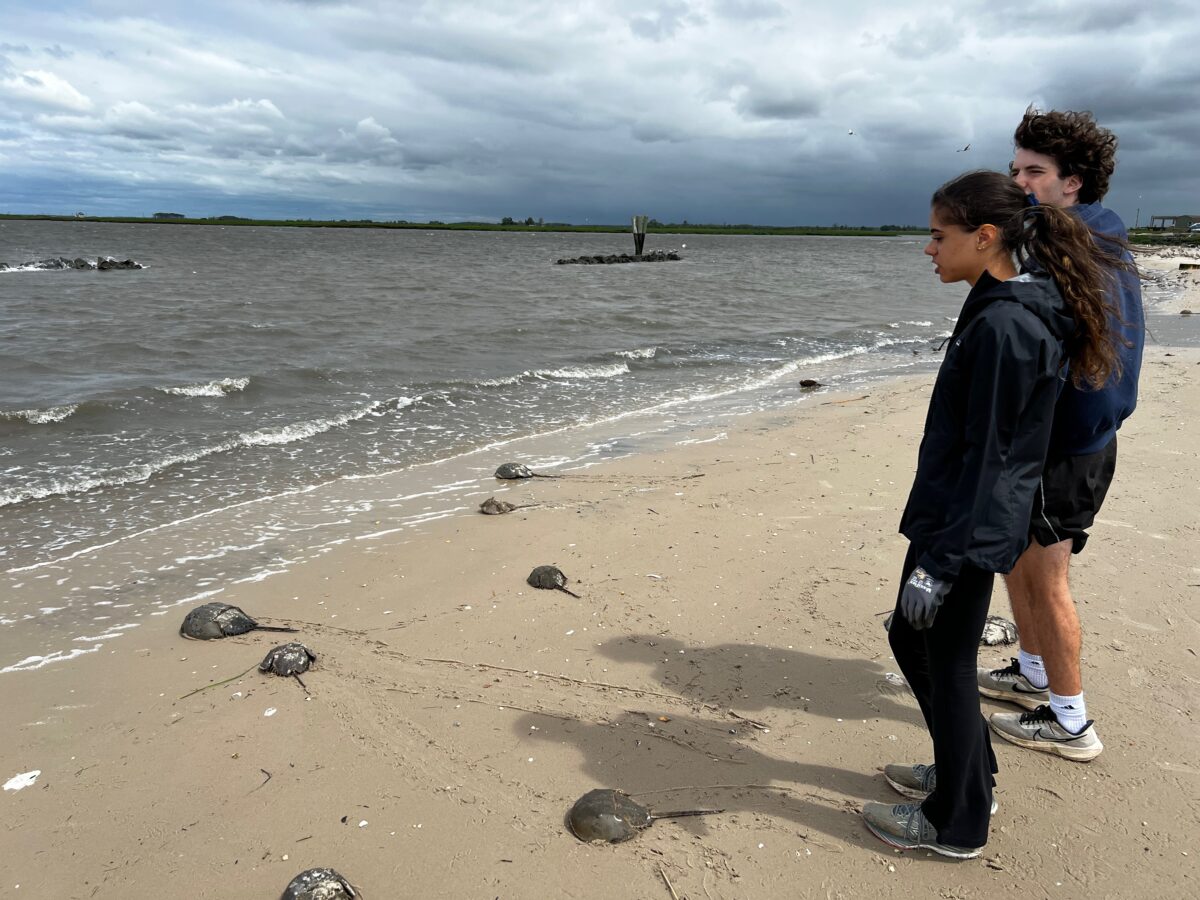
Black also took his Environmental Science 2 class to the Jersey shore for a day of service and learning. Students worked with reTURN the Favor, an organization that “…works to rescue horseshoe crabs on beaches open to the public, it primarily concentrates on rescuing crabs stranded on beach areas seasonally closed during shorebird migration and horseshoe crab spawning season occurring in May and June. Many horseshoe crabs spawn on these closed beaches and oftentimes become stranded, overturned, or even impinged behind natural or manmade structures. The reTURN the Favor program works with the New Jersey Department of Environmental Protection so that horseshoe crabs stranded on closed beaches can be rescued by sanctioned volunteer groups.”
Black shares, “Students witnessed the awe-inspiring spectacle as hundreds of thousands of Atlantic horseshoe crabs gathered along the Delaware Bay shore to engage in their annual spawning ritual—a tradition that has endured for hundreds of millions of years! The ecological significance of this event cannot be overstated. The eggs laid during this mass spawning serve as a vital food source for numerous species, including endangered migratory birds such as the red knot. However, the future of horseshoe crab populations hangs in the balance. Threatened by habitat degradation, overharvesting for pharmaceutical purposes and fishing bait, and historically utilized as fertilizer, these ancient creatures face significant challenges.
In an effort to safeguard this invaluable species, students took partk in a meaningful initiative known as the “Return the Favor NJ” walk. Our mission? To rescue trapped horseshoe crabs along the beaches of Cumberland County (NJ), flipping over stranded individuals to ensure their survival. Through this hands-on community science activity, students will also gather crucial data on the gender distribution of the rescued crabs, which will be reported to reTURN the Favor NJ for further analysis.
“The students had a very successful day, working hard to rescue a total 348 horseshoe crabs. While the abundance of crabs was fairly low, it is still early in their spawning season. The students also witnessed a great abundance of shorebirds at a few beaches which limited our ability to conduct rescues at these locations (the shorebirds take priority and we are careful not to move them). So while the horseshoe crab numbers were low, it was great to see robust shorebird activity. We collected data on the numbers of flipped/trapped male and female horseshoe crabs as well as deceased Diamondback terrapins (turtles). All of the data we collected was reported to reTURN the Favor.” If you’re interested in their findings, here is some of the data.
The third annual World Languages Week took place in April. As Bei Zhang, Chair of the World Languages Department, shares, “Some of our goals include promoting language acquisition, building cultural competency, providing students a platform to celebrate their success in their language education, and helping students envision their future career paths where they can apply their language skills and cultural knowledge.” Highlights of the week of special activities included captivating musical performances by Upper School language students in Community Collection, and a wonderful presentation by Kevin Wang ’18 on the power of language learning and his journey in app development (which includes Polaris, an app still used by Upper School students today). Wang’s career has combined technology with language—he now works for Duolingo. The Language Olympics were thrilling, with Team Chinese emerging victorious and Team Latin winning the Team Spirit award! Check out photos from the week here!
Students of Spanish sing at World Languages Week Assembly