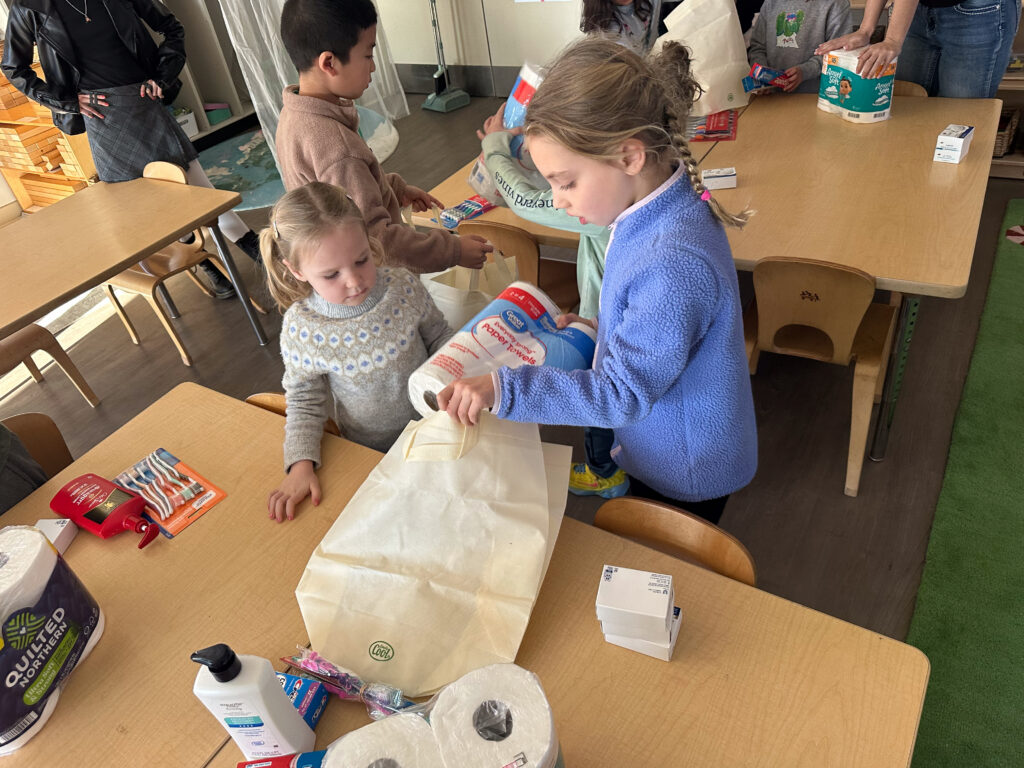
In honor of Martin Luther King Jr. Day, all three divisions studied his work and legacy. In Lower School, students had a Day of Service, collecting donations of basic necessities for families in need in partnership with the non-profit Circle of Giving 2020. Service is not only central to the mission of Westtown School, but also an essential part of our Quaker beliefs, alongside social responsibility, justice, and peacemaking. Lower Schoolers started their day in Gathering, honoring Dr. Martin Luther King Jr. and Civil Rights activists through readings, poetry, and song. Then they rotated through stations to package the donations and reflect on the shared readings.
Lower Schoolers putting together donations for their service project
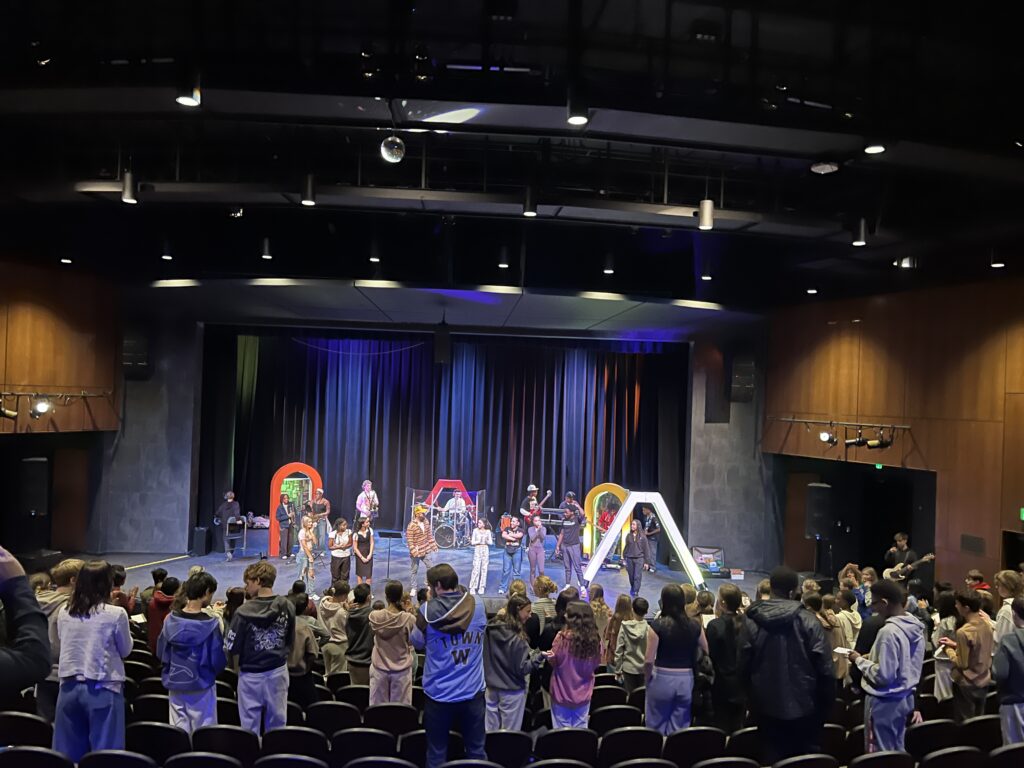
In Middle School, January was dedicated to community learning and celebration centered on the work of Dr. Martin Luther King Jr. Over the course of the month, the three grades each had a unique focus. Eighth graders learned about the role music plays in the Civil Rights Movement. Seventh graders focused on community by exploring the Ubuntu philosophy, a South African concept of “I am because we are.” Sixth graders learned about service, to begin to understand service learning, and engaged in service projects. Some of the activities included a performance of the musical Bridges by the Philly Sound Exchange, a special Meeting for Worship rooted in Dr. King’s teachings, and a visit from folks at CityWorks that prepared sixth graders for one of their service projects. Finally, seventh graders interviewed members of the school community, reflecting on the impact that we all have on each other.
Middle Schoolers on their feet during the Bridges performance by Philly Sound Exchange
In Upper School, students explored Dr. Martin Luther King Jr.’s philosophy of nonviolent direct action through a screening of the film Boycott, which chronicles the Montgomery Bus Boycott and Dr. King’s emergence as a national leader, before breaking into advisory groups for reflection and dialogue. Students examined Dr. King’s understanding of nonviolence as a disciplined, intentional practice rooted in moral courage and preparation—not passivity. Drawing clear connections to Quaker testimonies of peace, justice, and integrity, students reflected on the four steps of nonviolent action—information gathering, negotiation, self-purification, and direct action—and considered the responsibility each individual holds in working toward a more just and compassionate world.
In these Upper School discussions, students also examined how nonviolent movements can be strengthened, or undermined, by public perception. Drawing on research and historical examples, students explored how negative stereotypes and delegitimizing language have often been used to justify repression, even in nonviolent campaigns. They reflected on the importance of allyship, the role of narrative and moral clarity, and the responsibility individuals with privilege may hold in advancing justice. These themes echoed the film Boycott and Dr. King’s insistence that nonviolence is both a moral commitment and a strategic practice, grounded in courage, discipline, and collective responsibility. Students also reflected on the historical role Quakers played in shaping traditions of nonviolent resistance and the ways these practices continue to inform movements for justice today. Through discussion, students considered their own gifts, responsibilities, and the moral courage required to live out the values of peace, social responsibility, and active engagement—core commitments shared by Dr. King and the Quaker tradition.