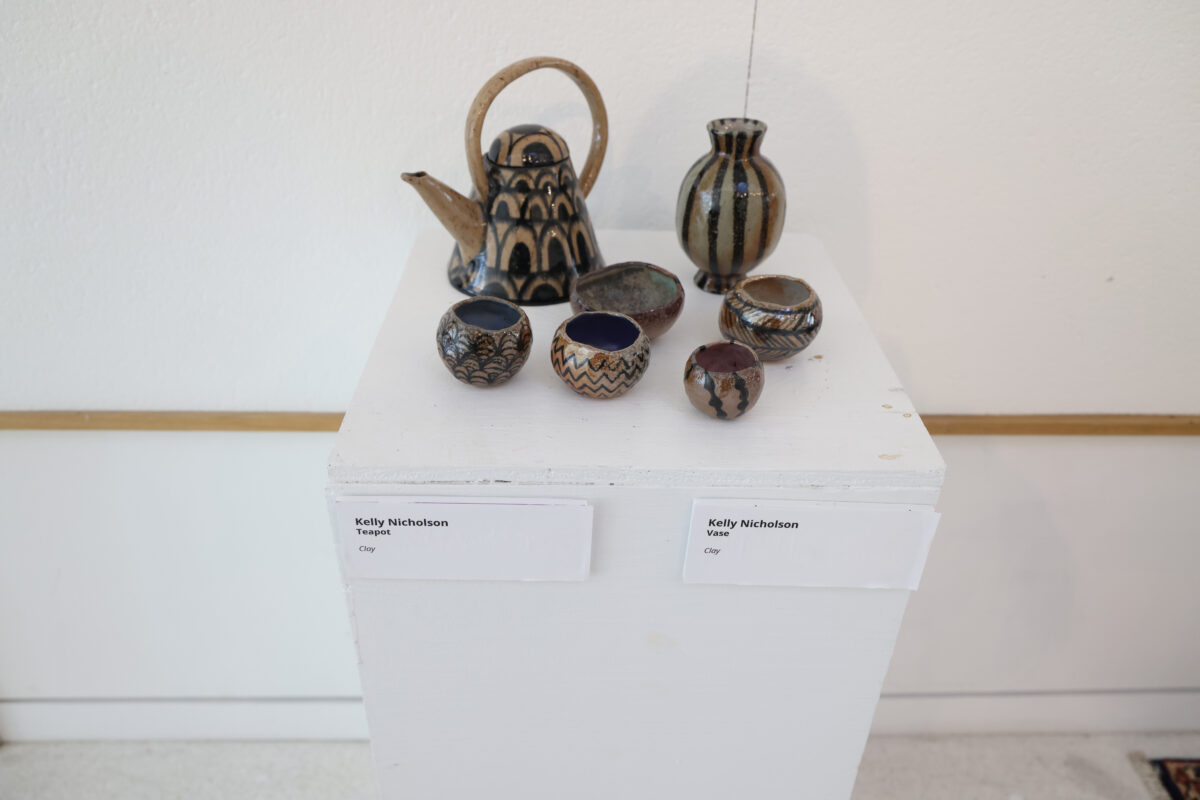
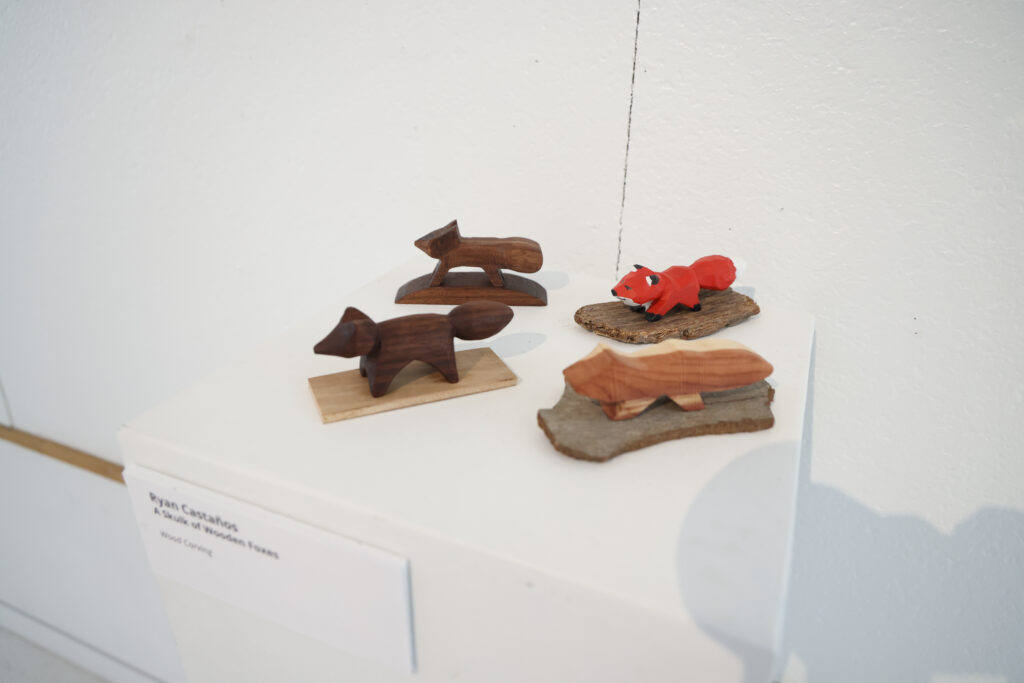
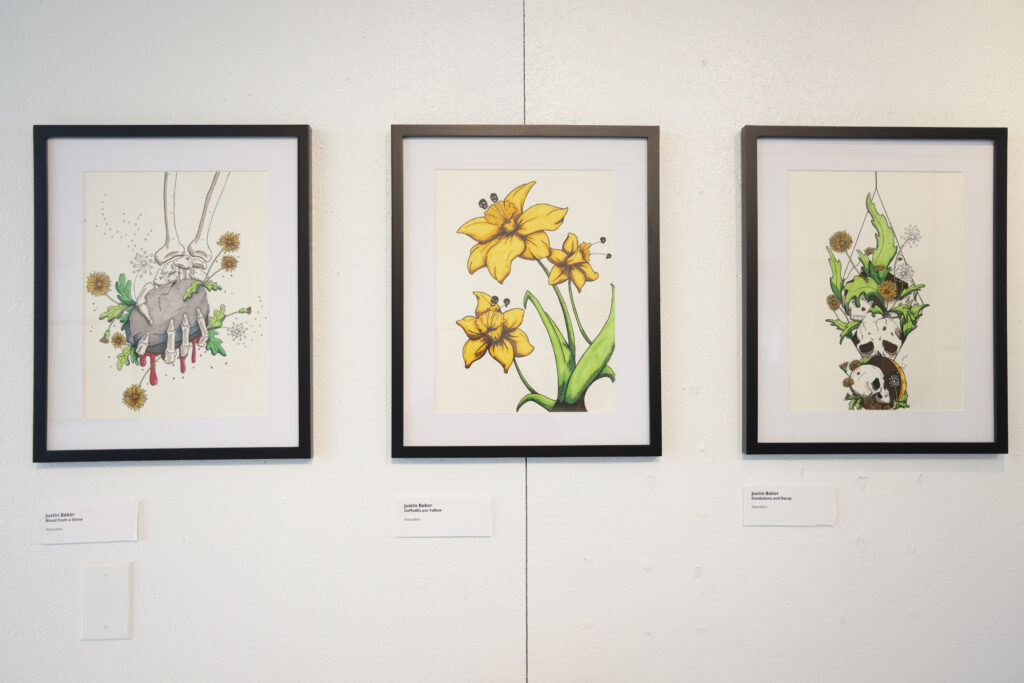
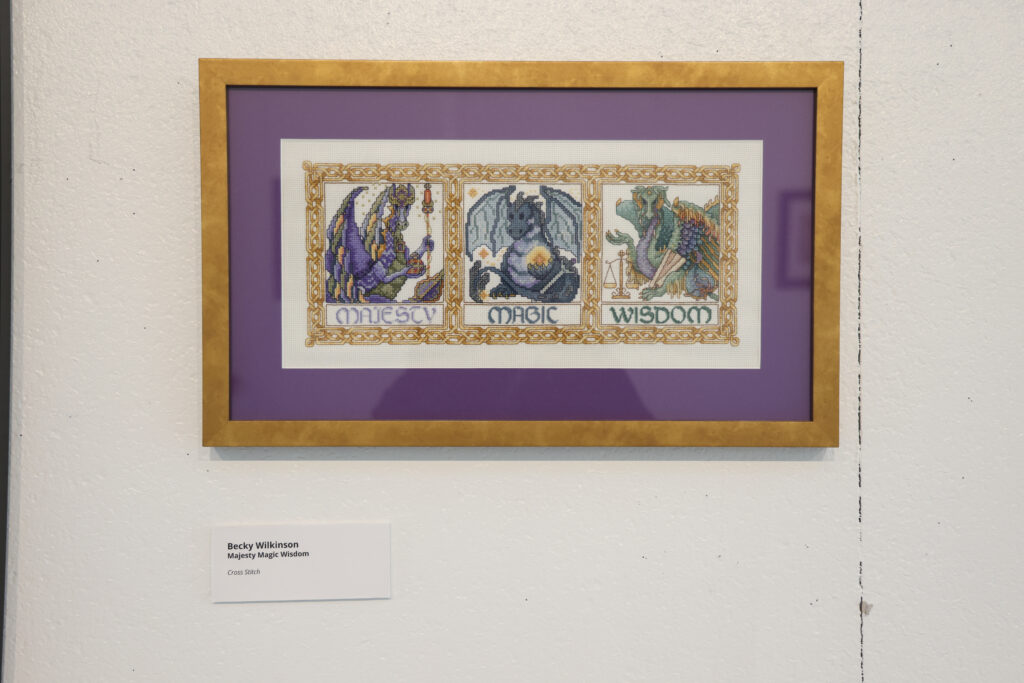
The Faculty and Staff Exhibit recently showcased what our staff and faculty have been creating! This exhibition brought together artwork from across departments and divisions—painting, sculpture, textiles, and more. It was an opportunity to see the ideas, experiments, and personal projects being explored by the adults in this community outside the classroom. From bold visuals to quiet moments of reflection, the show offers a behind-the-scenes look at the creative energy that drives our campus community. Enjoy their work here!
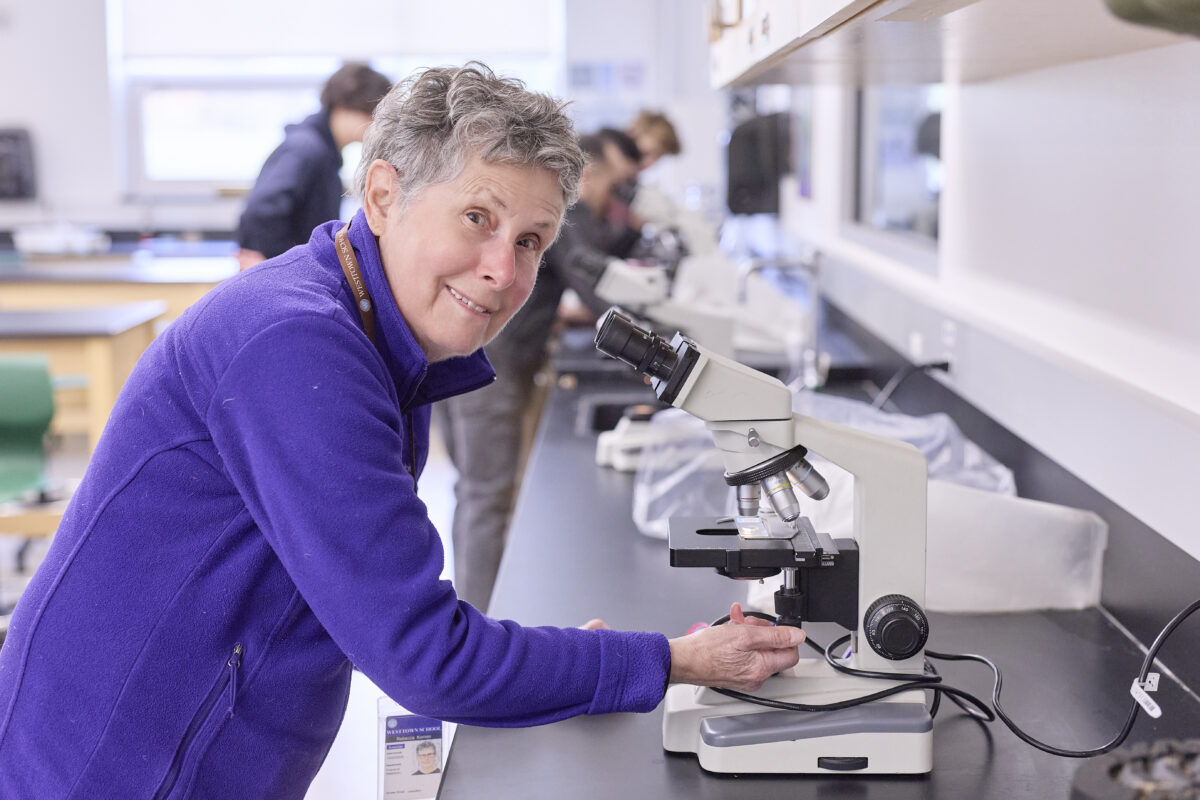
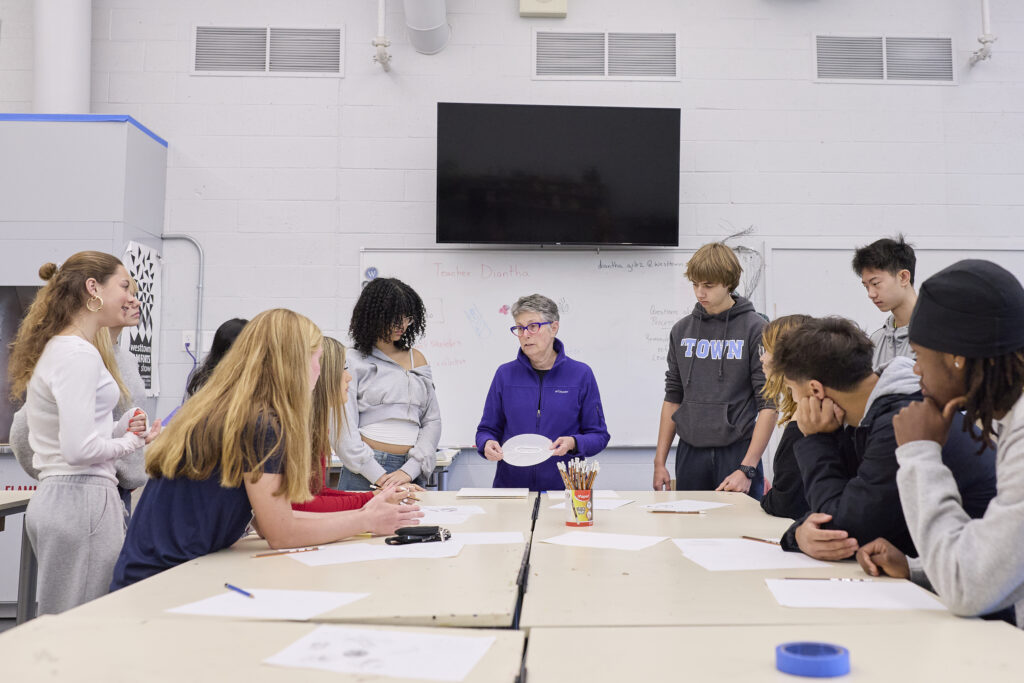
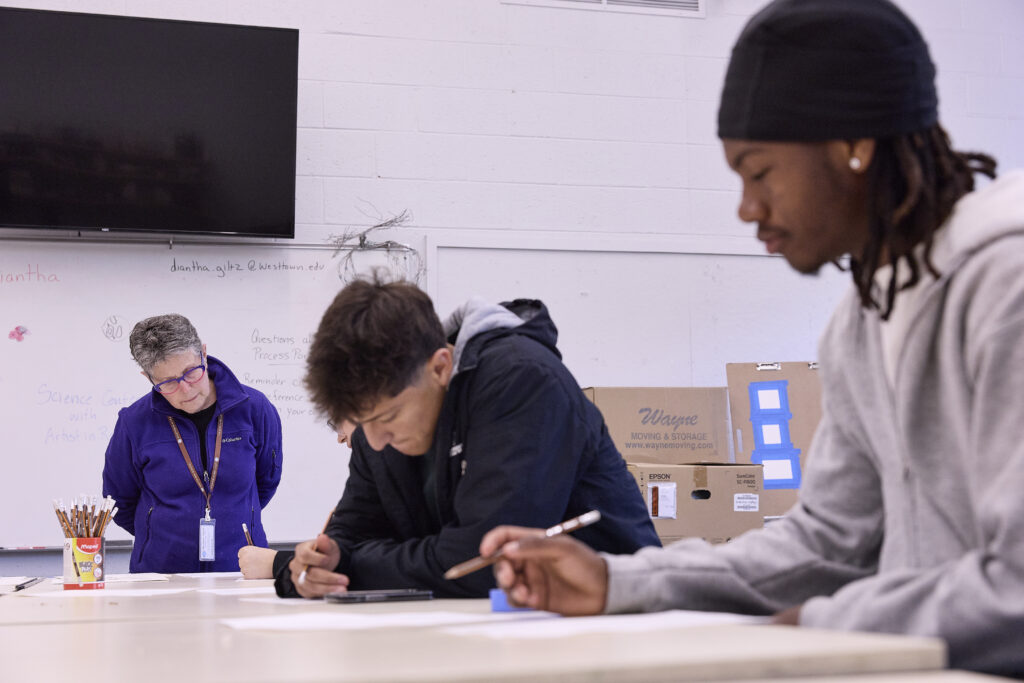
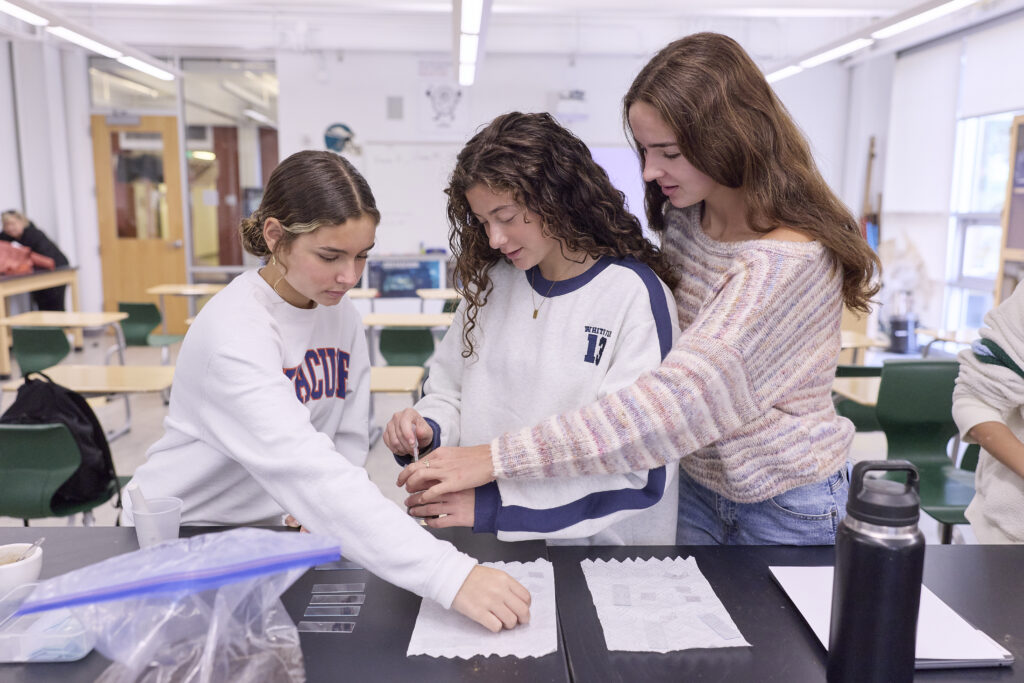
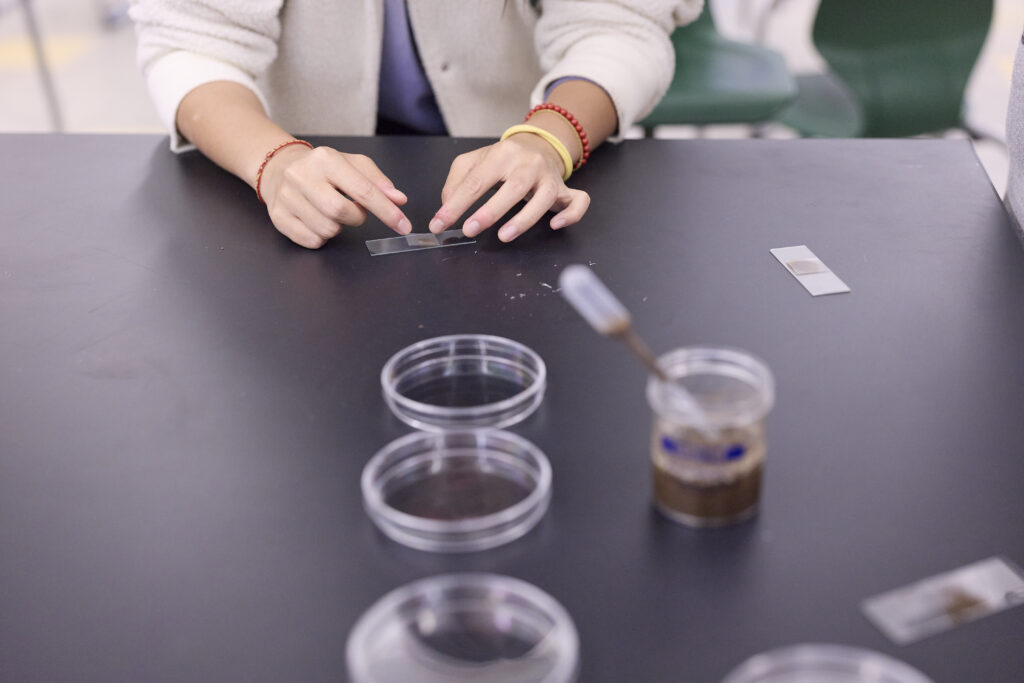
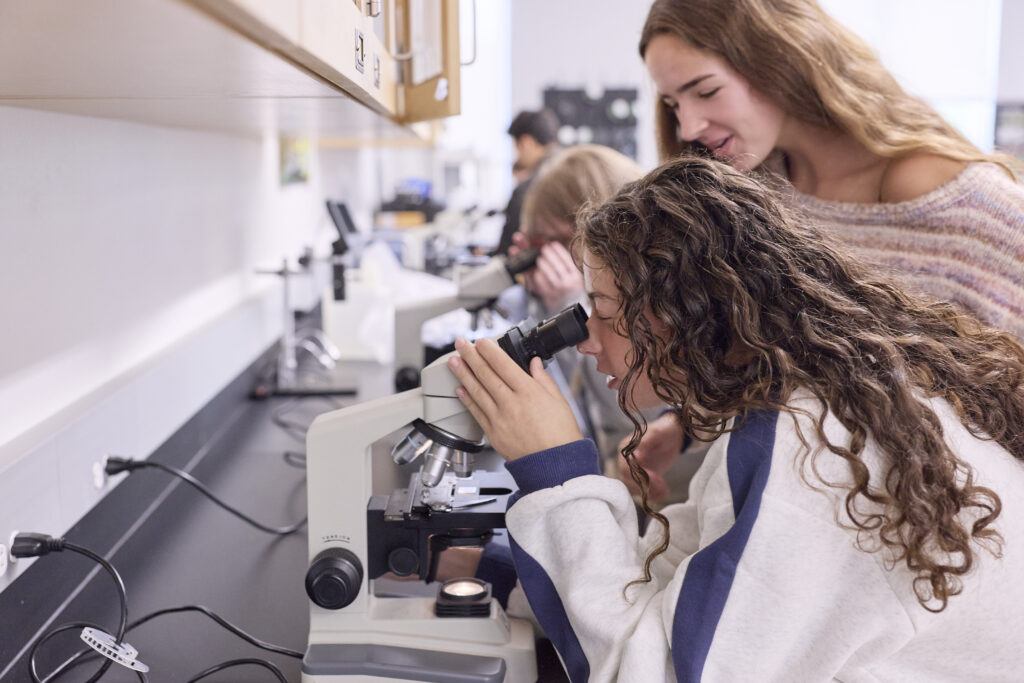
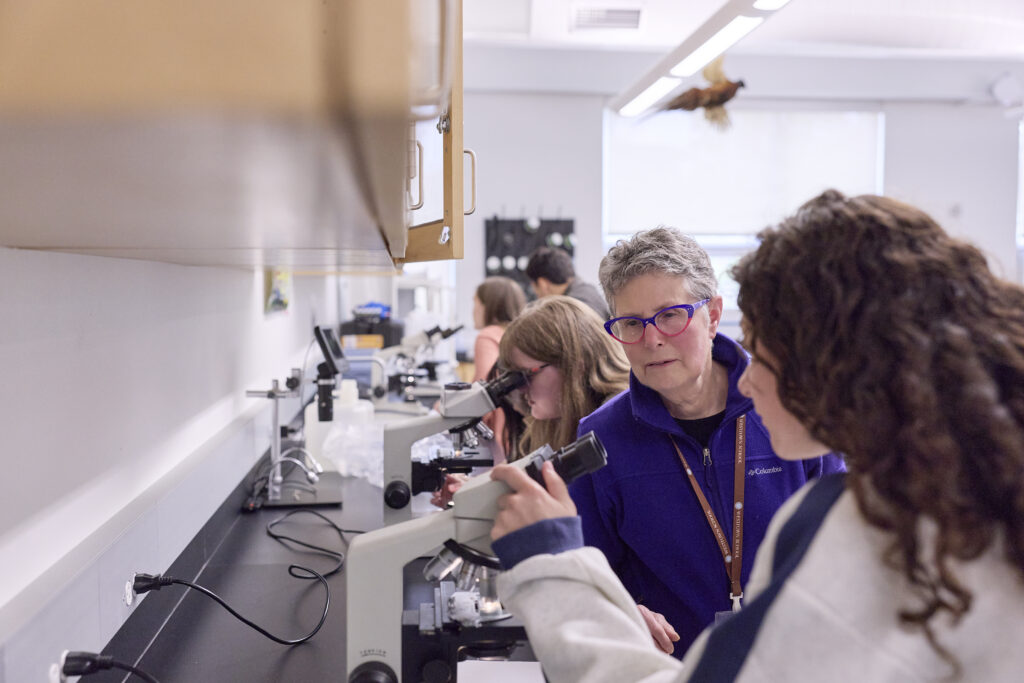
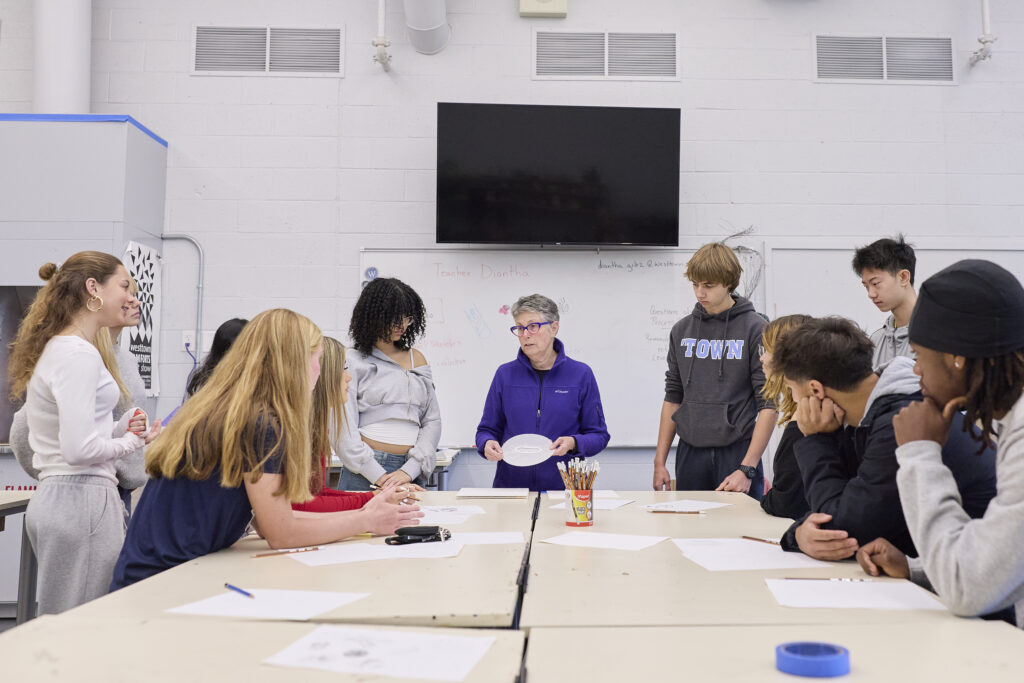
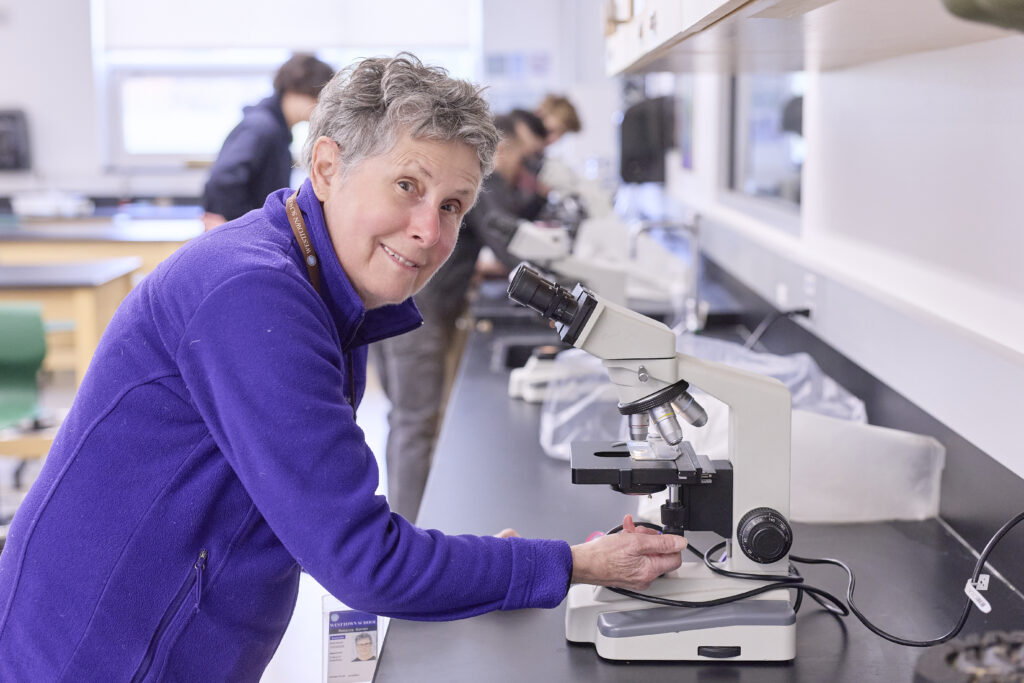
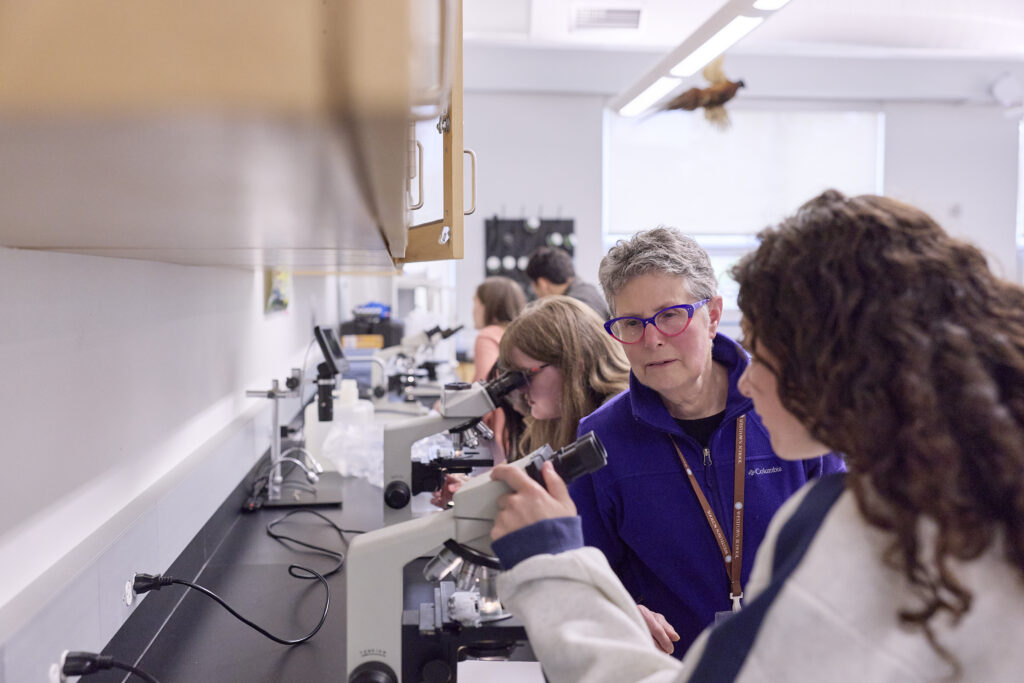
Through the support of the McLear Visiting Artist Fund, we were honored to welcome Rebecca Kamen this fall, an artist and lecturer on the intersection of art and science. Kamen says her “artwork is informed by wide-ranging research into cosmology, history, philosophy, and by connecting common threads that flow across various scientific fields to capture and re-imagine what the scientists see.” She worked with students from Diantha Giltz’s and Domenic Frunzi‘s art classes to explore these connections between art and the sciences. Students first visited the lab in the Science Center to look at various types of soil (and the organisms in it) through microscopes, then used what they saw as inspiration for their sketches and art pieces.
Kamen says she loves coming to Westtown and working with our students; this is her second visit. In fact, she was the inaugural artist in the McLear Artist-in-Residence program, though her residency was cut short by the pandemic. The McLear Artist-in-Residence Program was created in January 2019 to support a residency in the Upper School visual arts department. Artists-in-residence are chosen by the Upper School arts faculty, and preference is given to artists working in the visual arts, particularly those exploring the intersections between art and science.
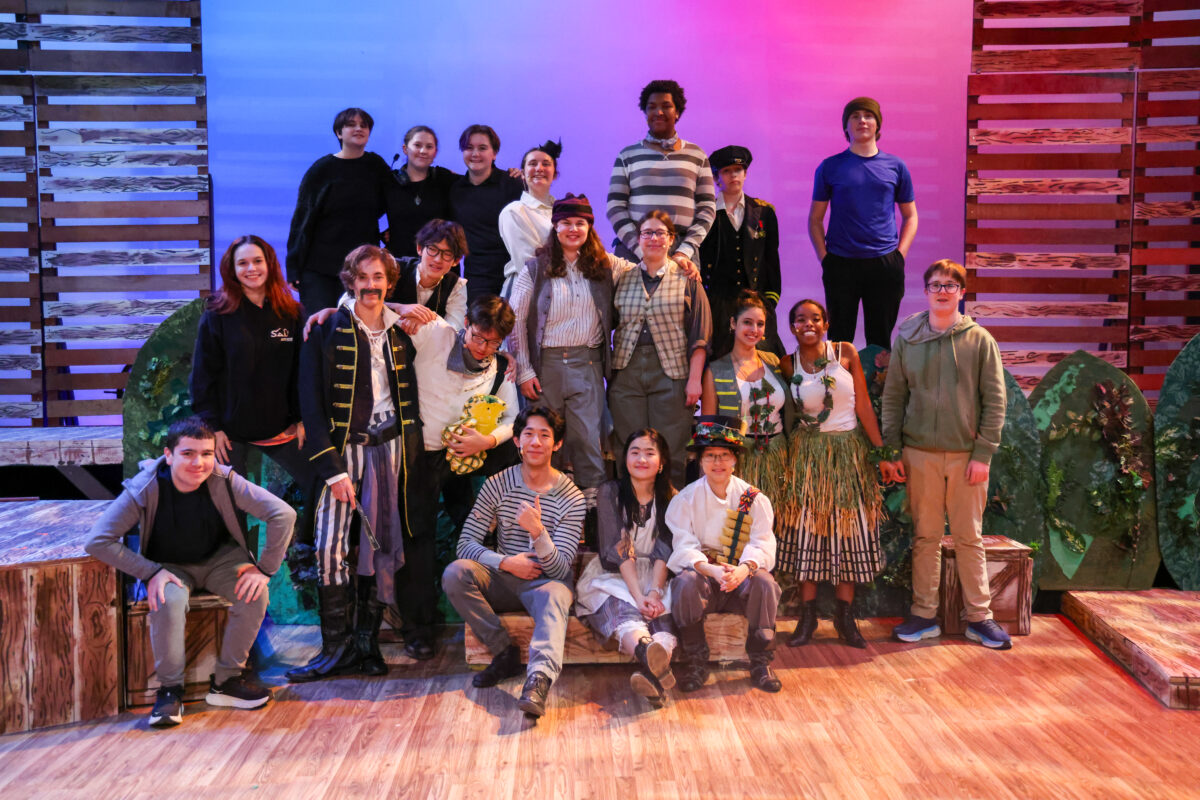
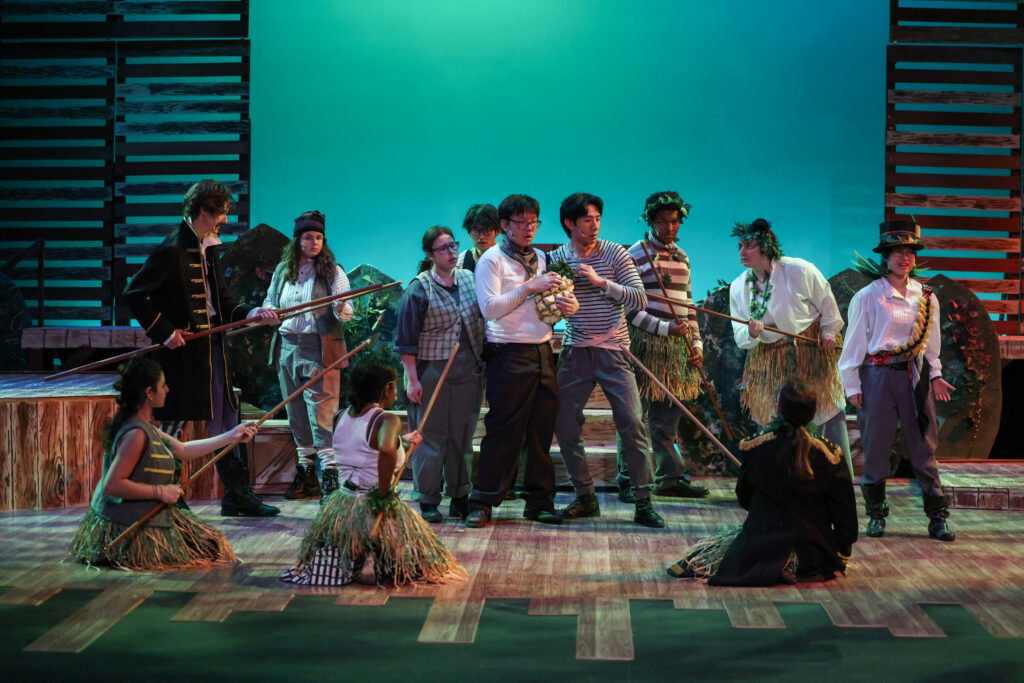
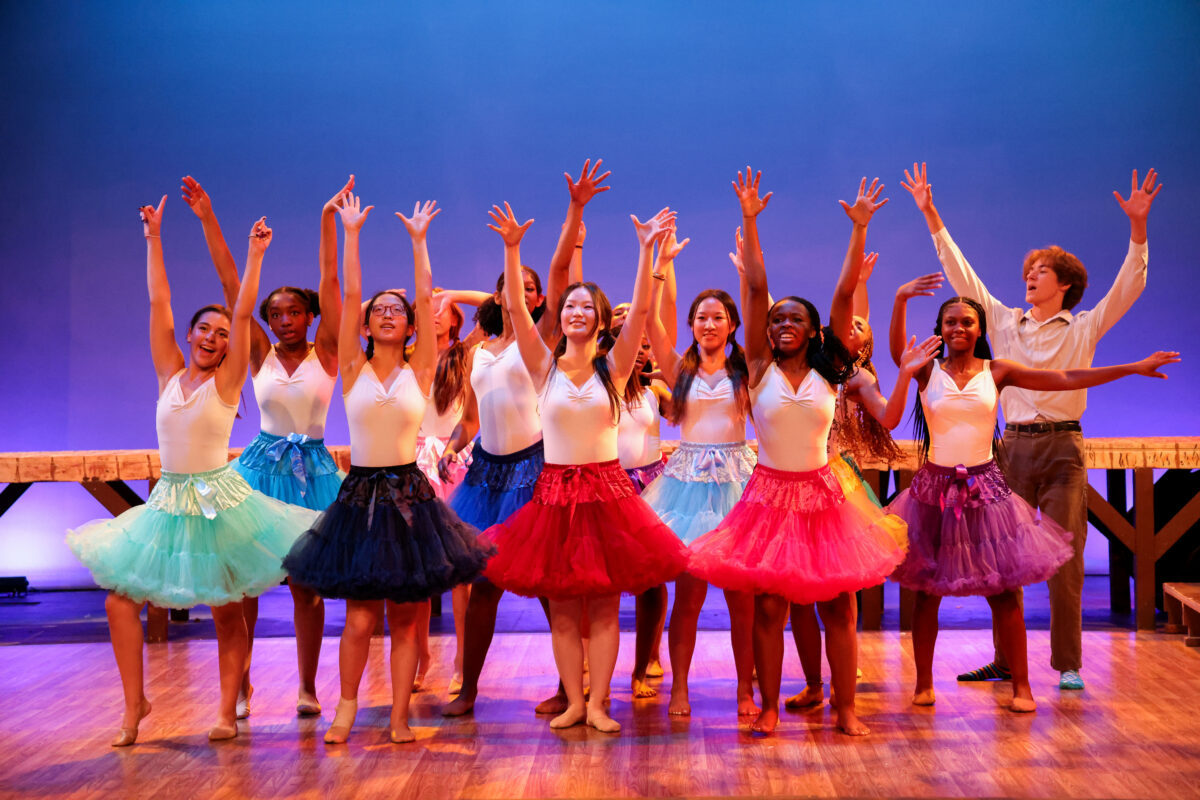
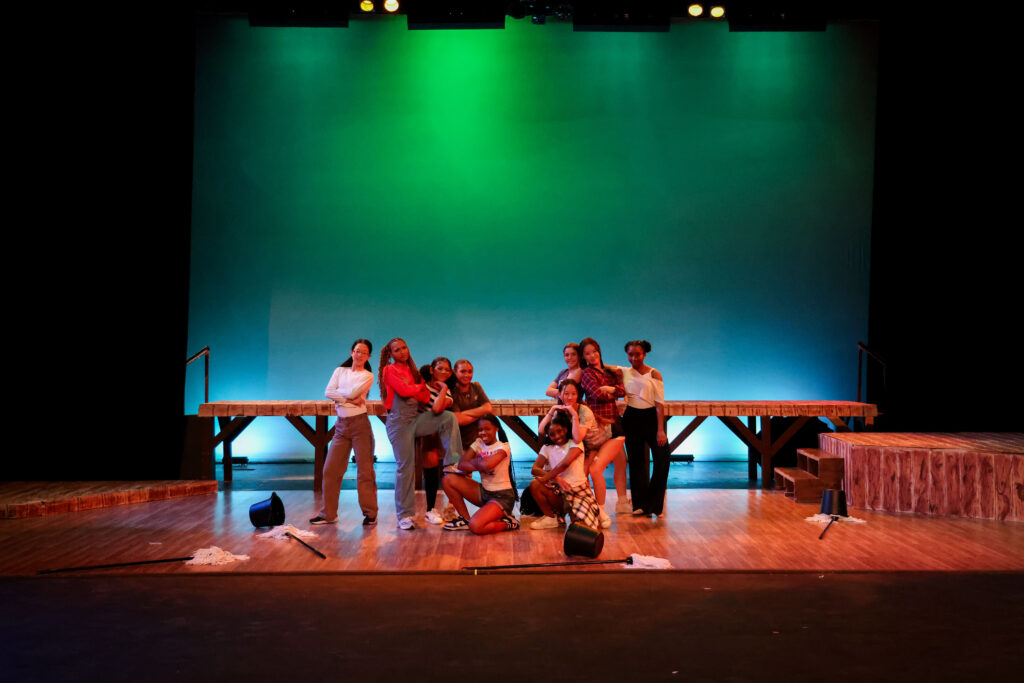
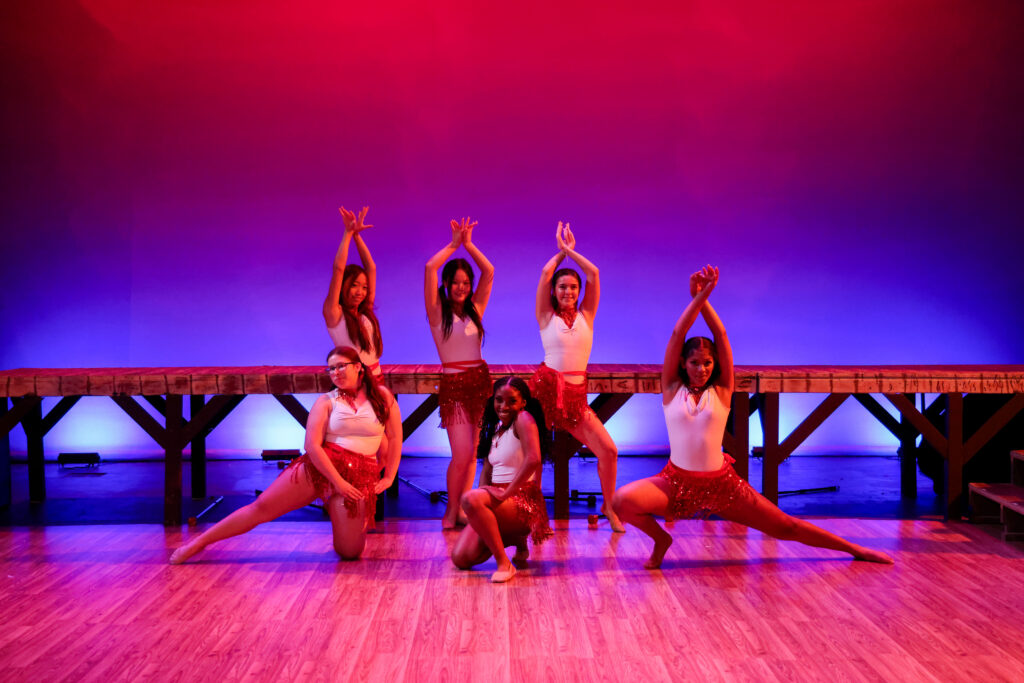
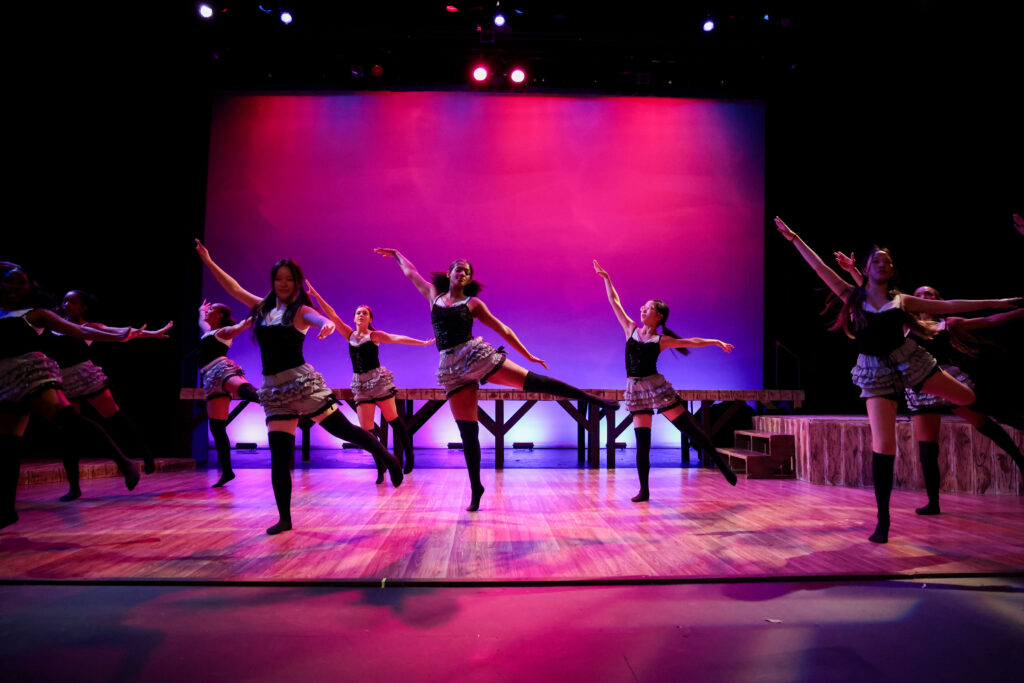
The Upper School fall play was Peter and the Starcatcher, a thrilling prequel to Peter Pan! The story begins as a young orphan and his mates are shipped off from Victorian England to a distant island ruled by the evil King Zarboff. They know nothing of the mysterious trunk in the captain’s cabin, which contains precious, otherworldly cargo. At sea, the boys are discovered by a precocious young girl named Molly, a Starcatcher-in-training who realizes that the trunk’s precious cargo is starstuff, a celestial substance so powerful that it must never fall into the wrong hands. When the ship is taken over by pirates—led by the fearsome Black Stache, a villain determined to claim the trunk and its treasure for his own—the journey quickly becomes a thrilling adventure.
Our thanks to Theater Director Shawn Rowley, and our amazing cast and crew for this excellent production!
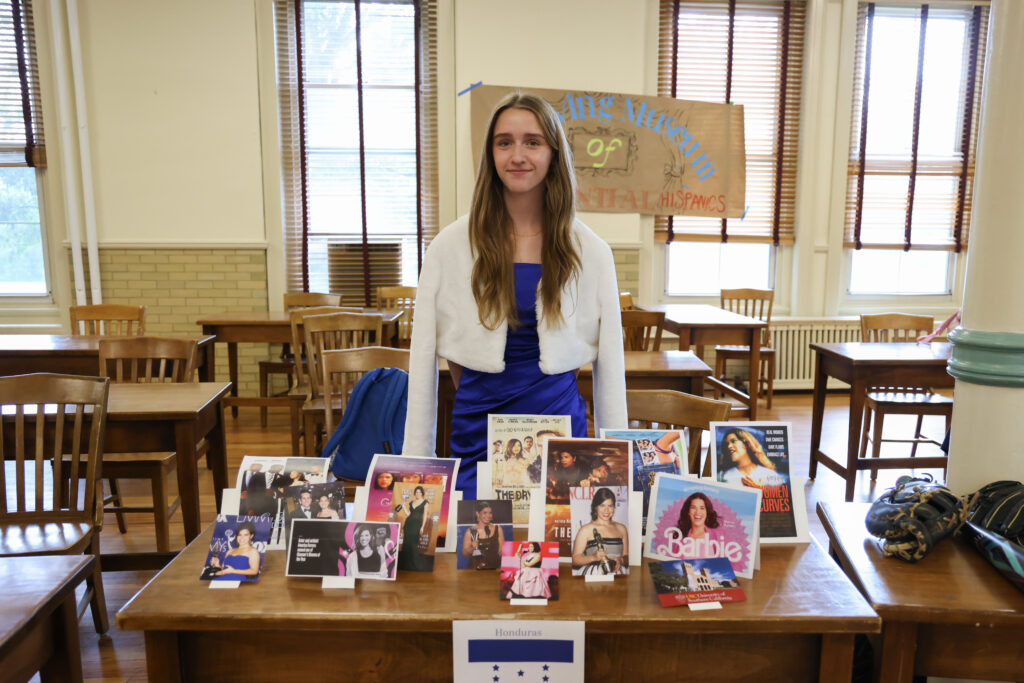
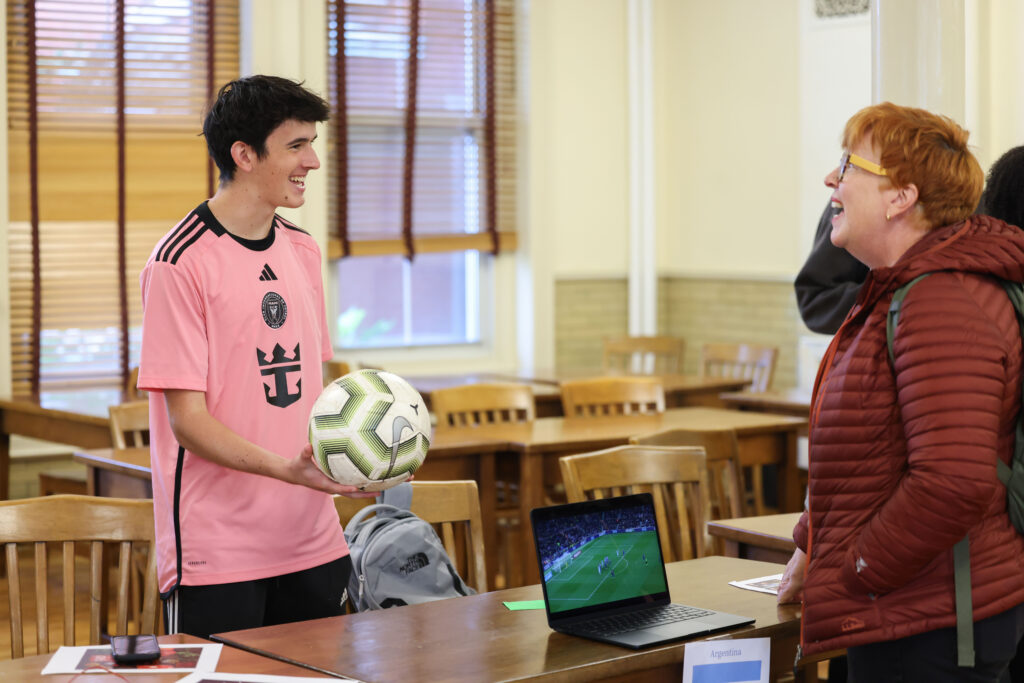
In their Museo Viviente (Living Museum), Spanish 4 students portrayed well-known figures of Hispanic heritage using costumes and artifacts. Teachers and fellow students were able to come to the “museum” and listen to the presentations on notable persons including Bad Bunny, Queen Isabella I of Castile, Luis von Ahn, and Lionel Messi. ¡Buen trabajo, estudiantes! See more here!
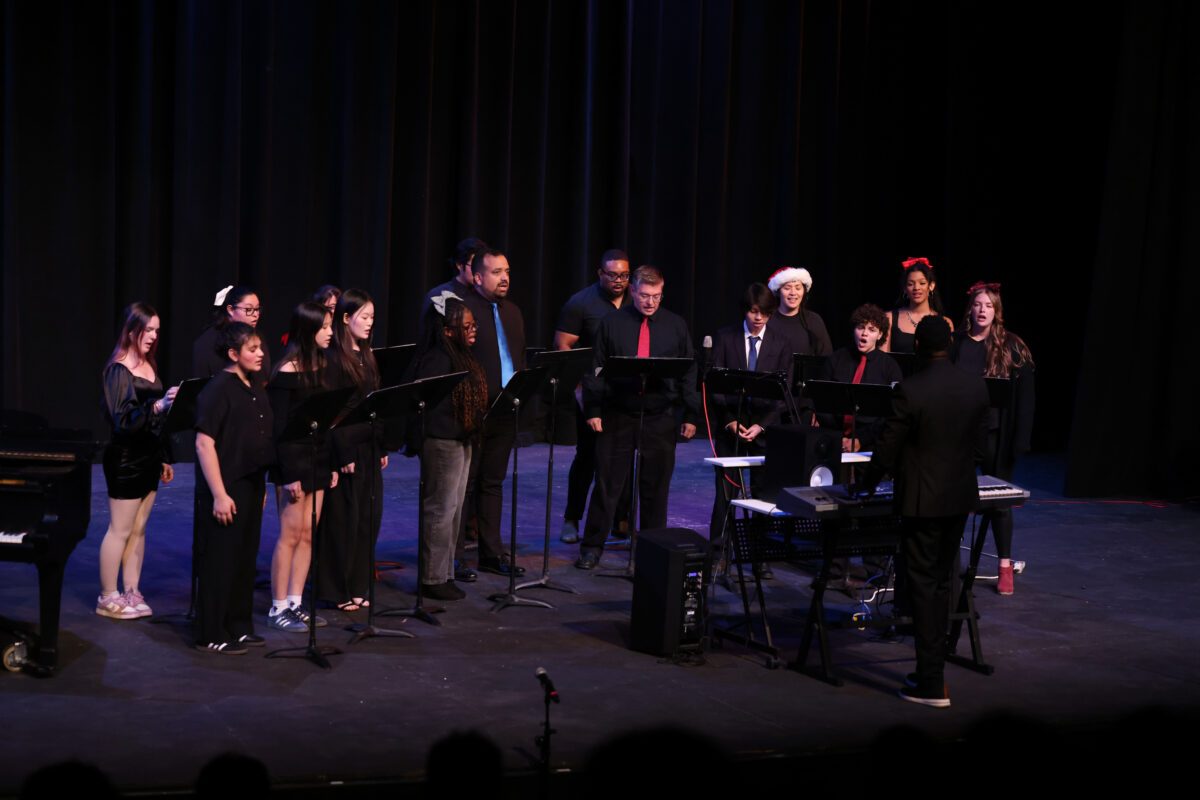
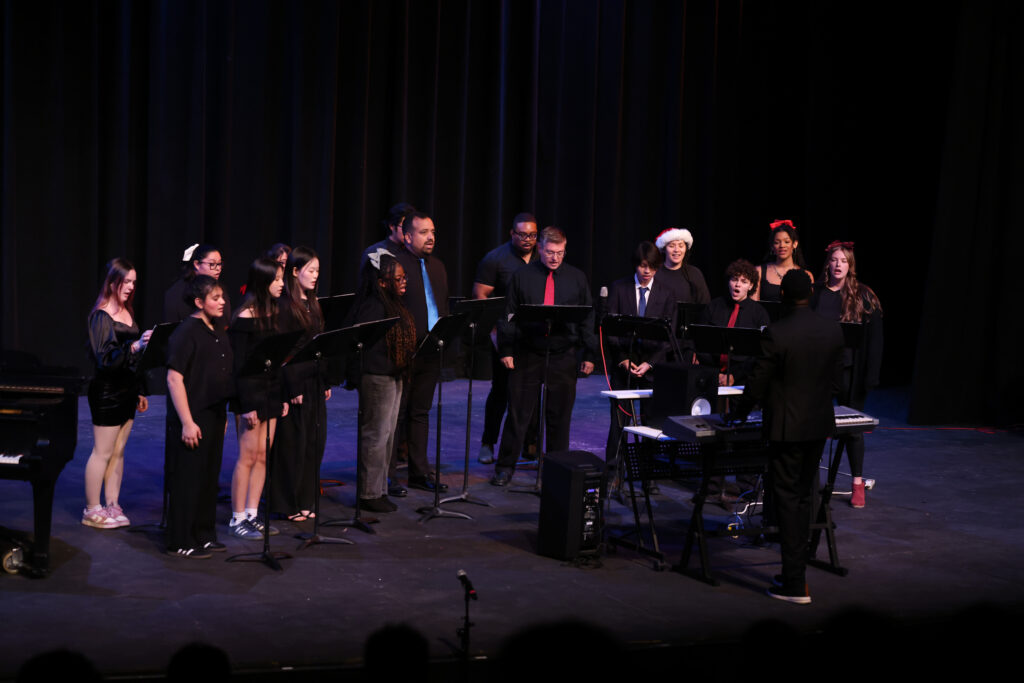
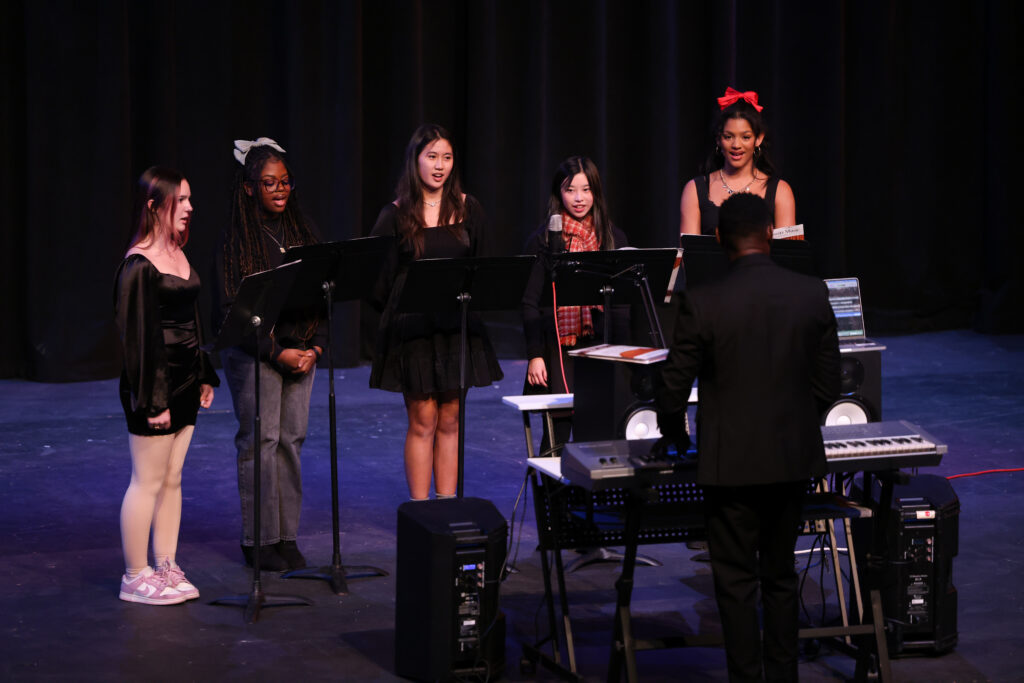
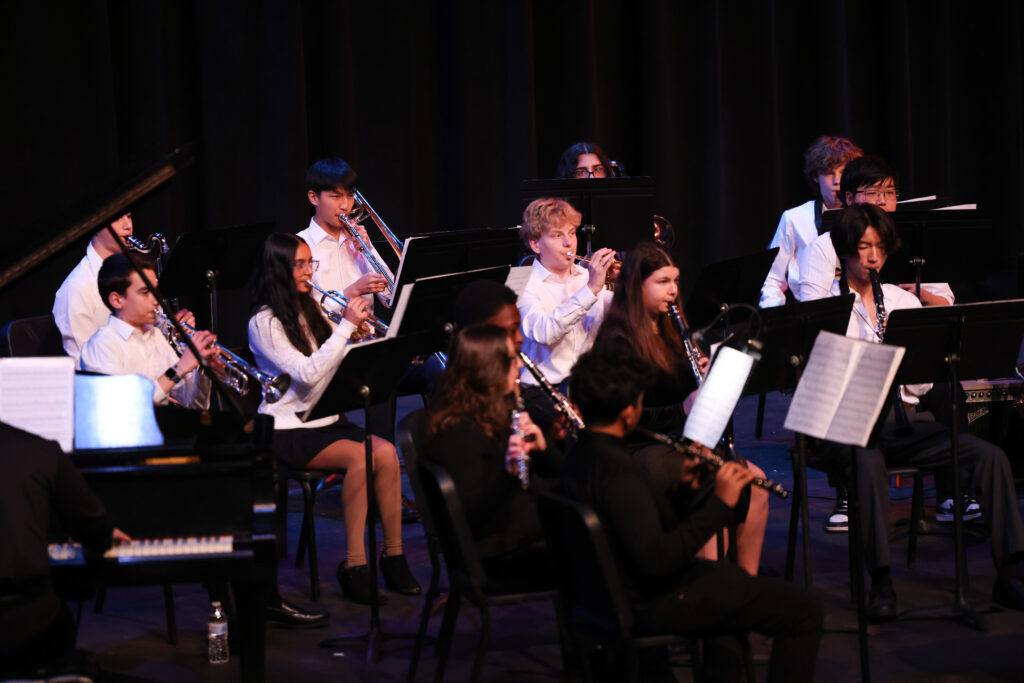
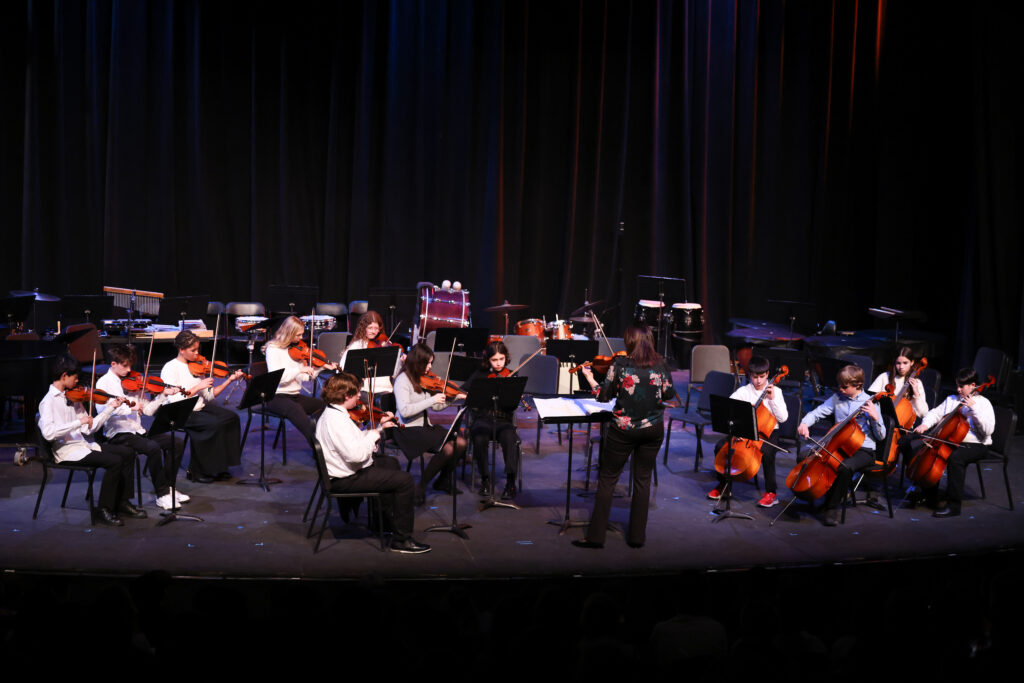
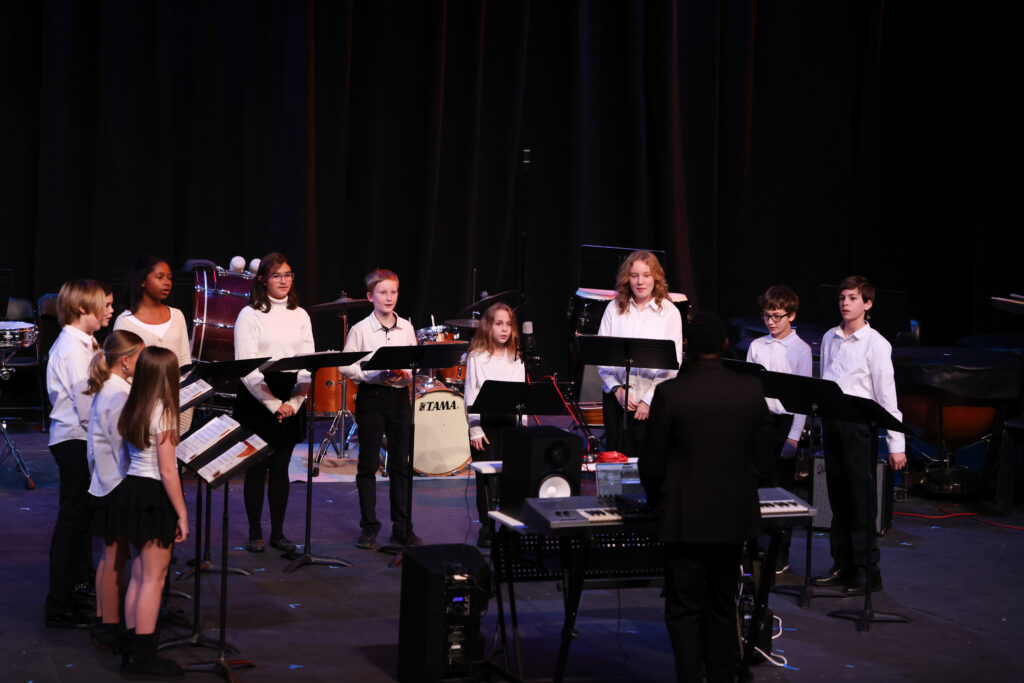
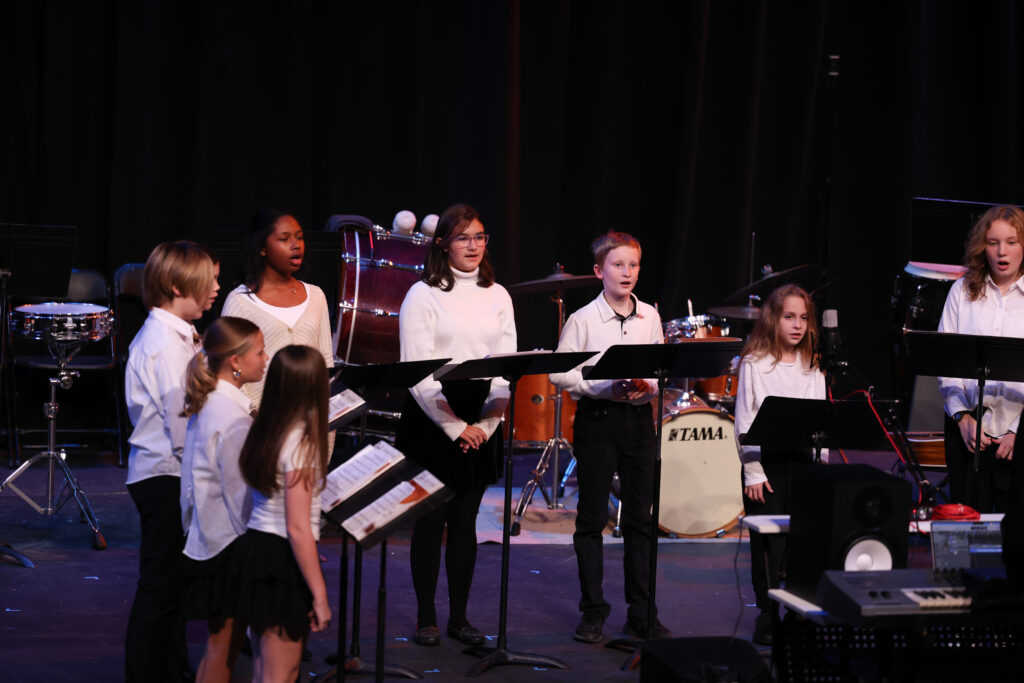
What are the holidays without the beautiful refrains of seasonal music? The community was treated to both the Middle School and Upper School concerts before the winter break, showcasing the work and talent of our students. You can enjoy the galleries of photos from the Middle School concert here and the Upper School concert here.
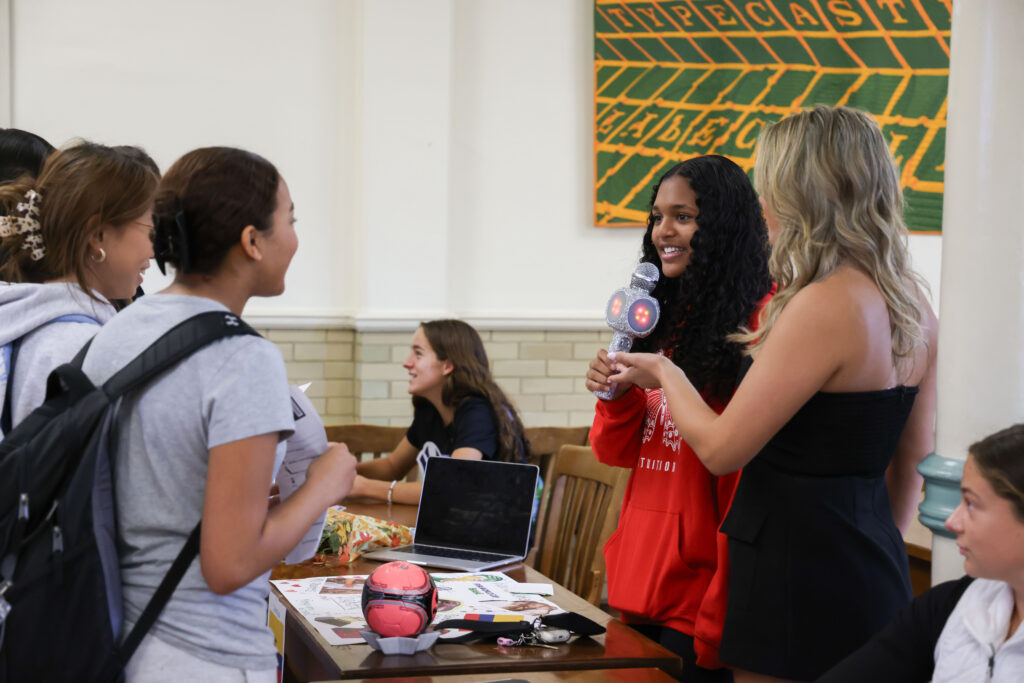
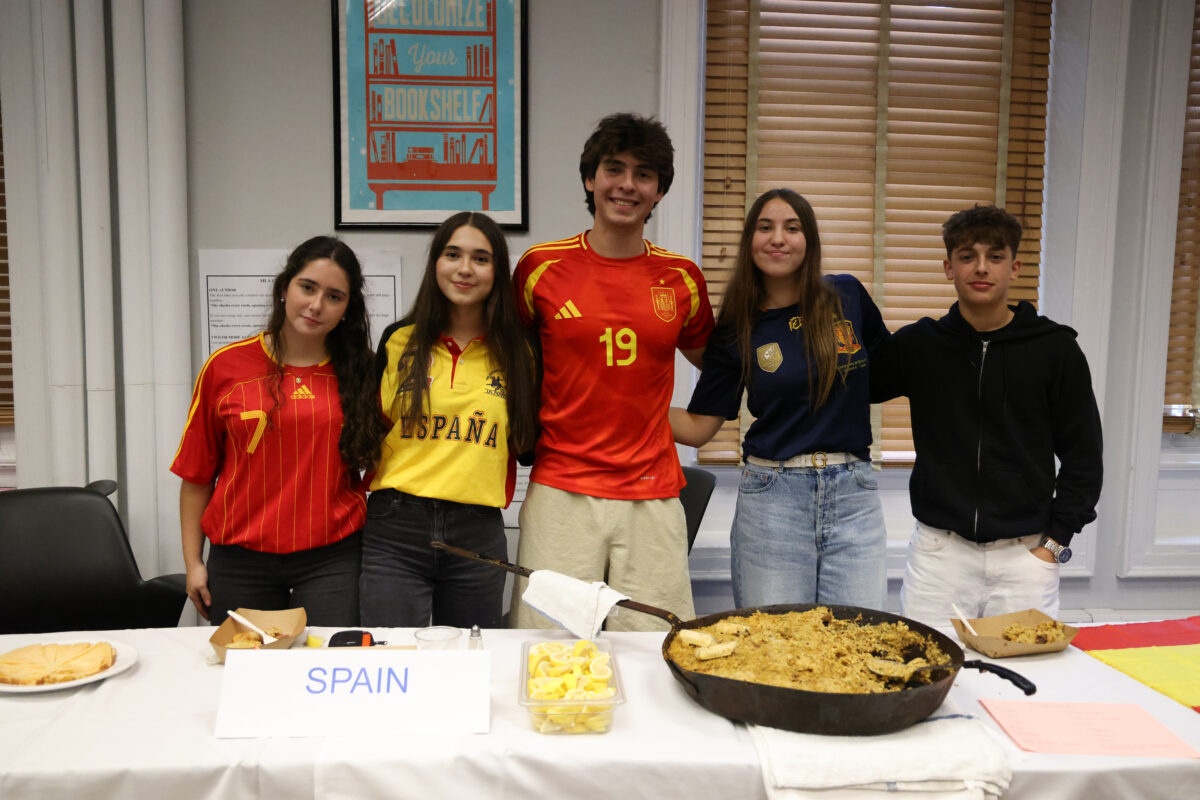
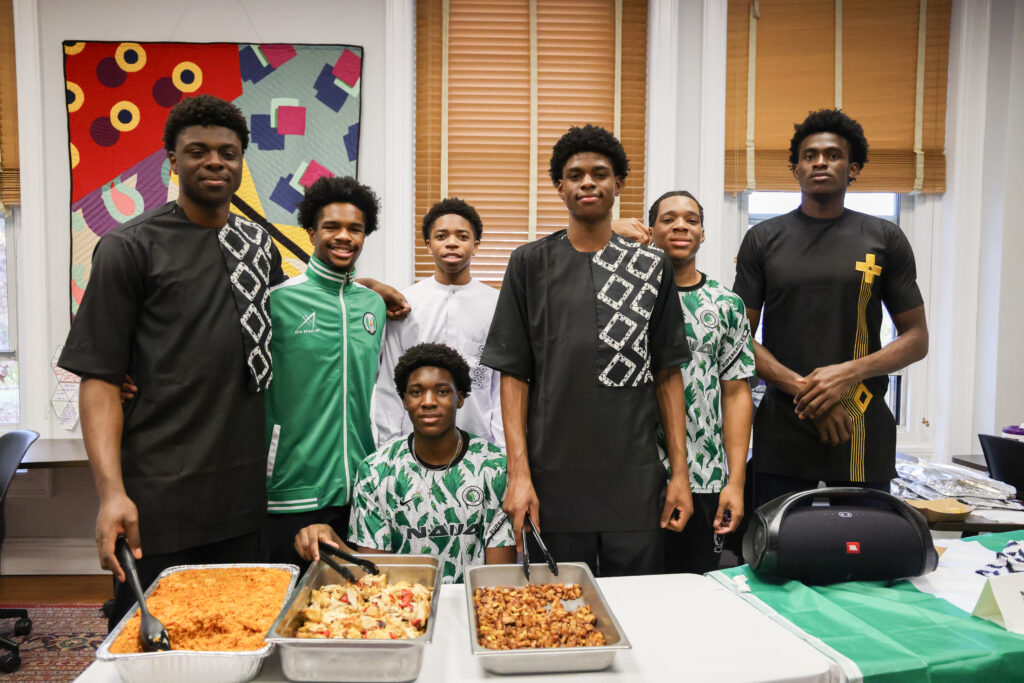
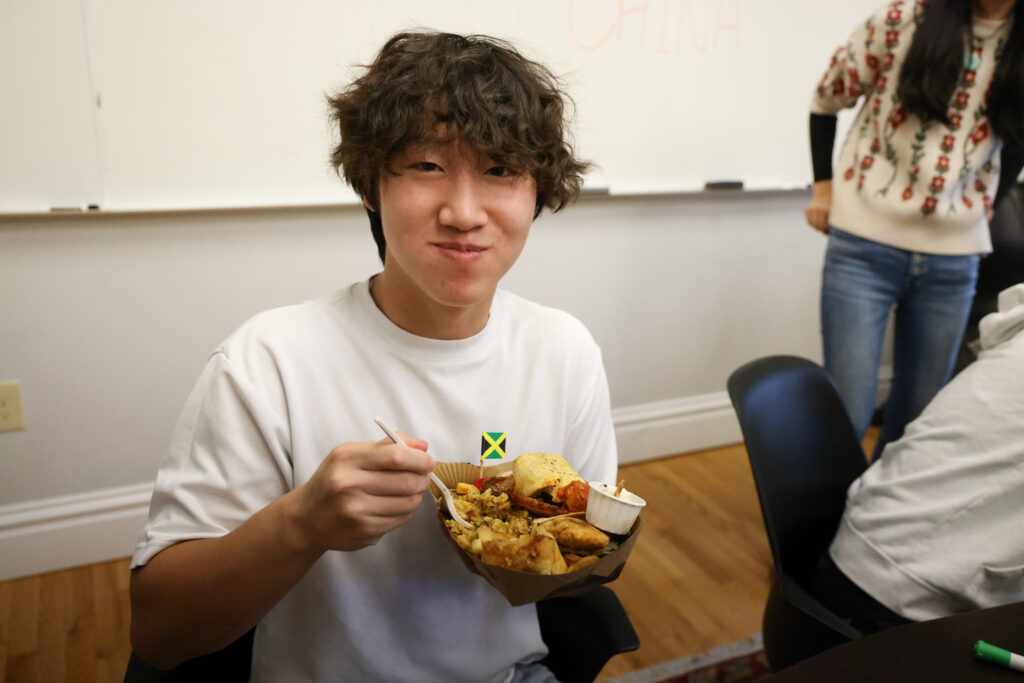
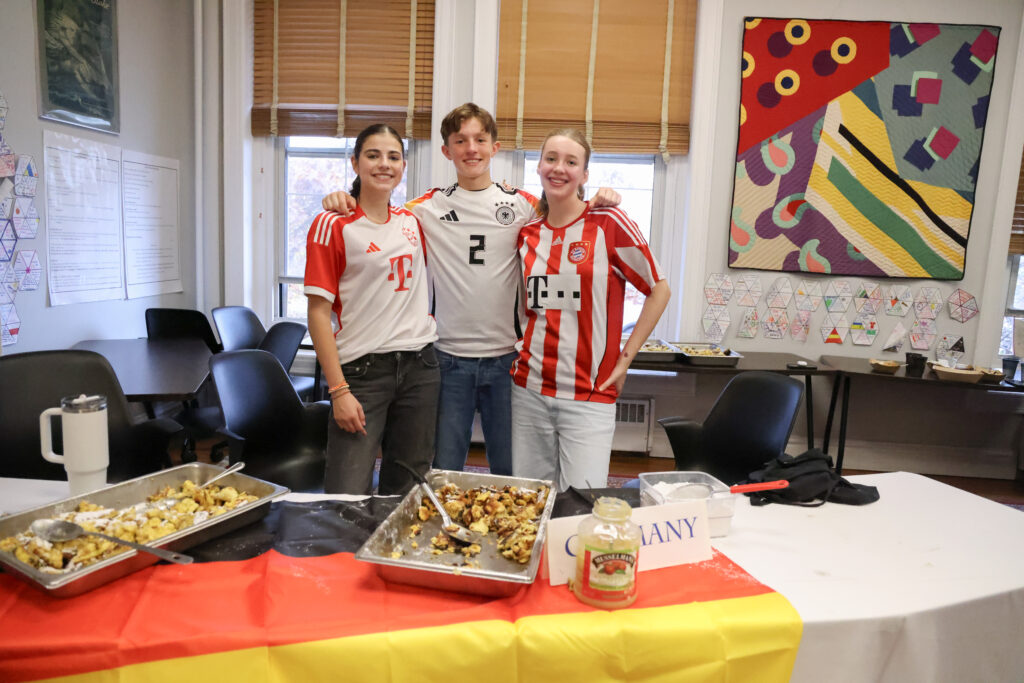
Our community recently enjoyed the annual International Festival, a wonderful event organized by the International Student Organization! Our students, families, and faculty set up stations in the Main Hall representing and celebrating their many cultures and countries, offering bites of food, games, presentations, music, dancing and opportunities for connection and conversation. Enjoy the gallery of photos here!
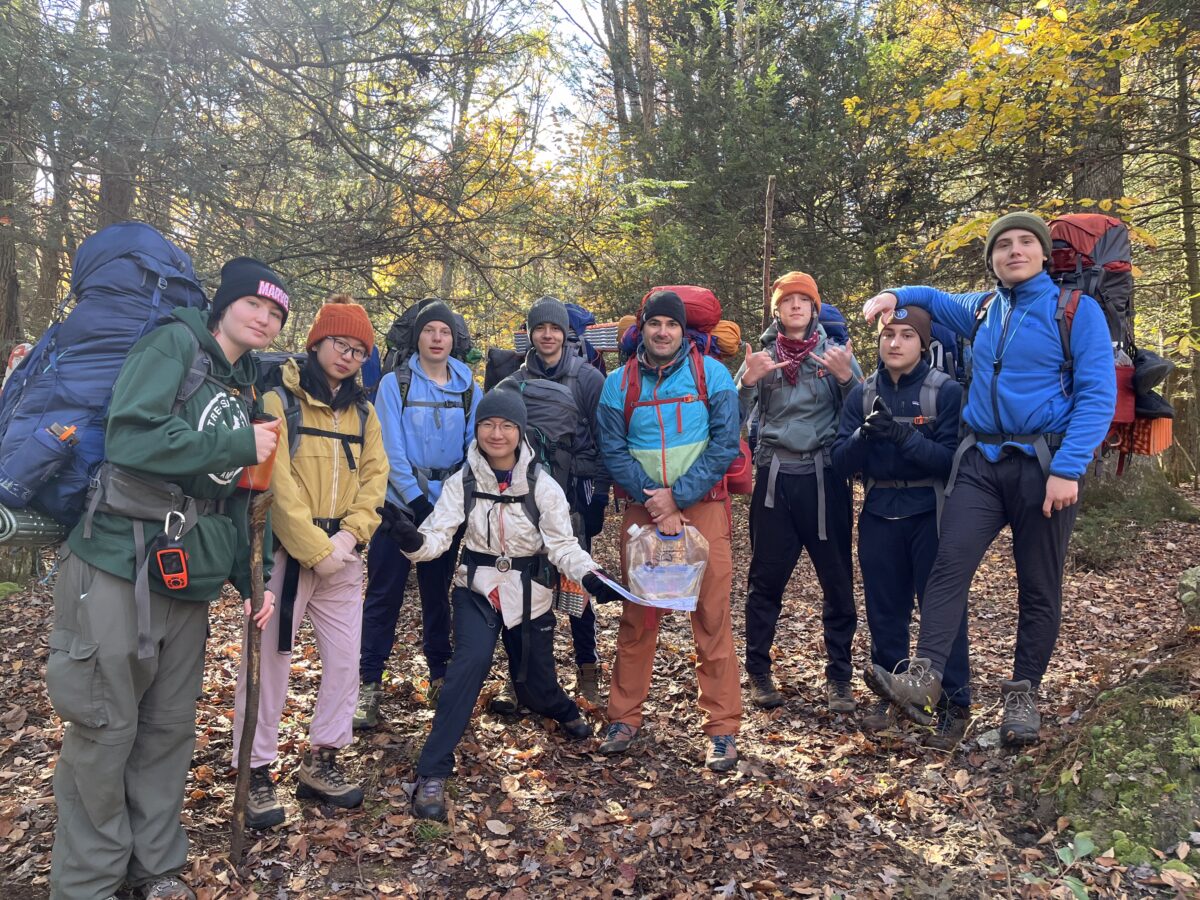
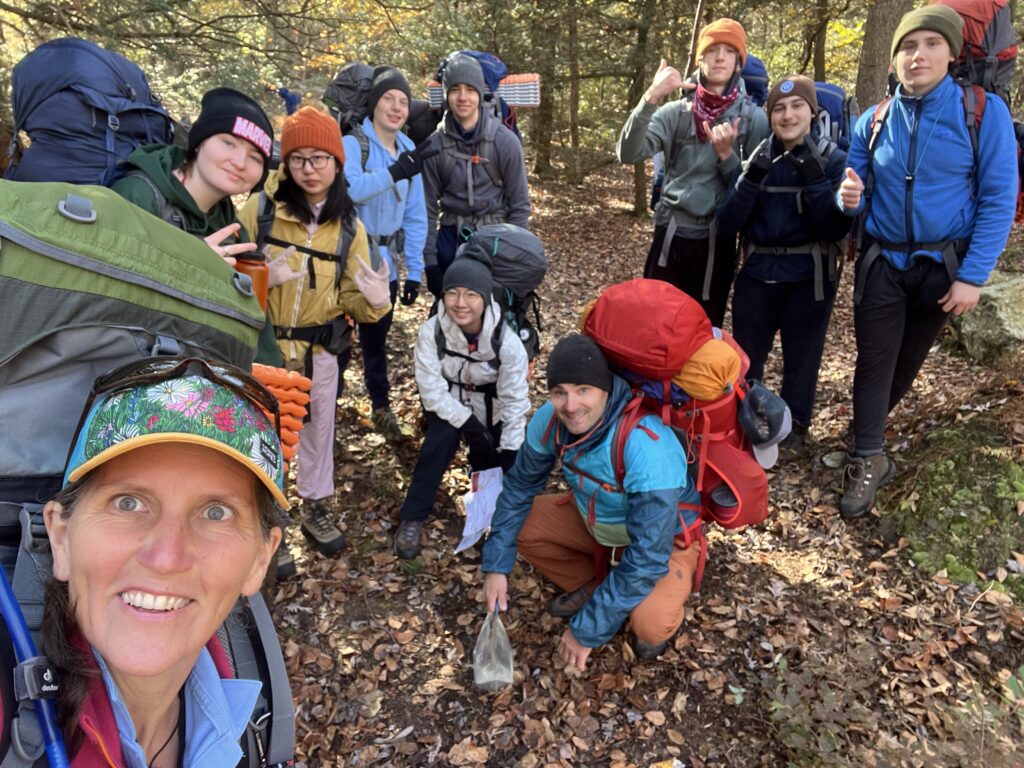
This year’s Upper School Outdoor Education Fall Backpacking trip was not only full but also had a waiting list! Students met the challenge of adventure as they hiked a section of the historic Appalachian Trail with steep, rocky terrain while wearing heavy backpacks. Students were completely unplugged as they worked as a group to set up camp, build a fire, protect their food from bears, navigate with a map and compass, and cook together.
The trip was led by Director of Outdoor Education Chris Costa and Middle School Outdoor Education teacher Tom Berrian. Costa shared that students were particularly resilient when, due to a lack of trail markers, they hiked an additional three miles with their full packs! “We are so proud of how they showed leadership and supported one another on their journey!” Check out more of their adventure here!
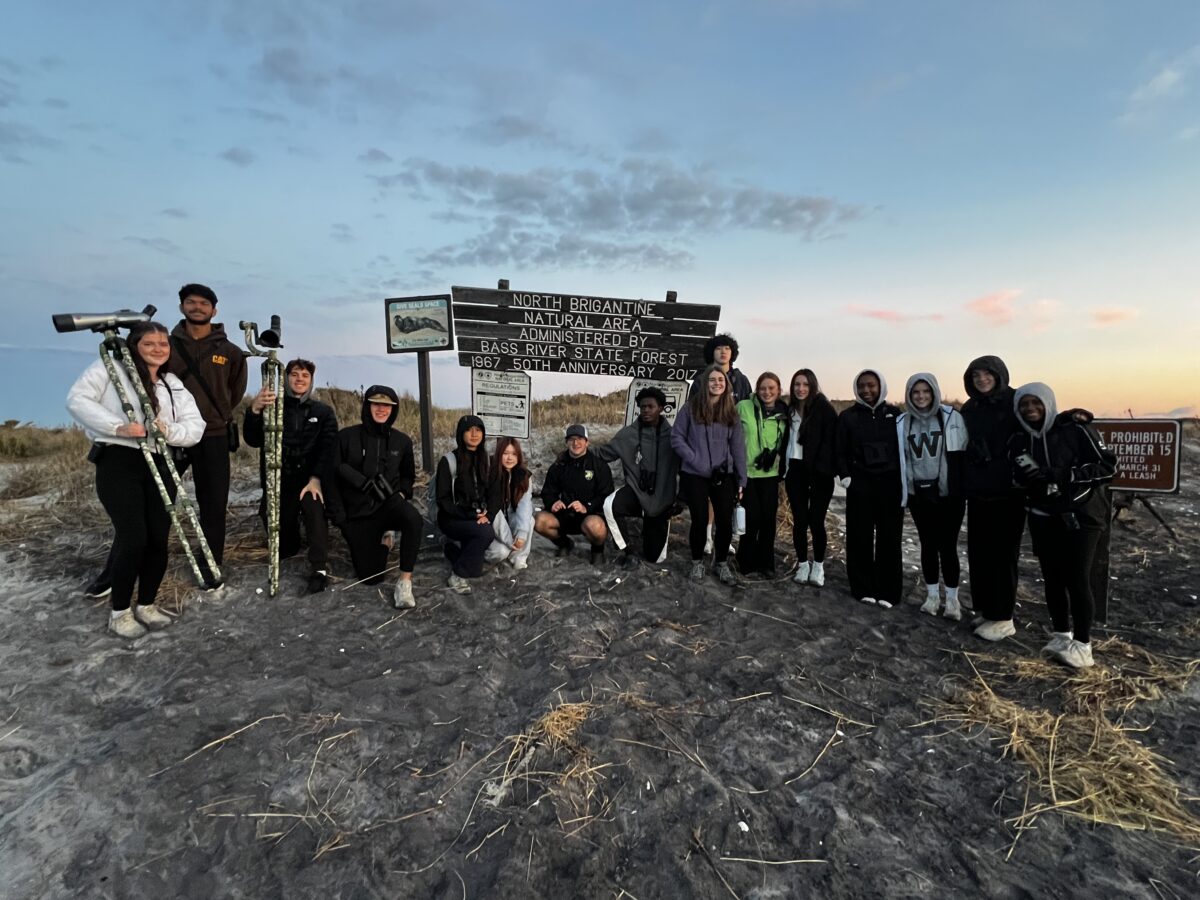
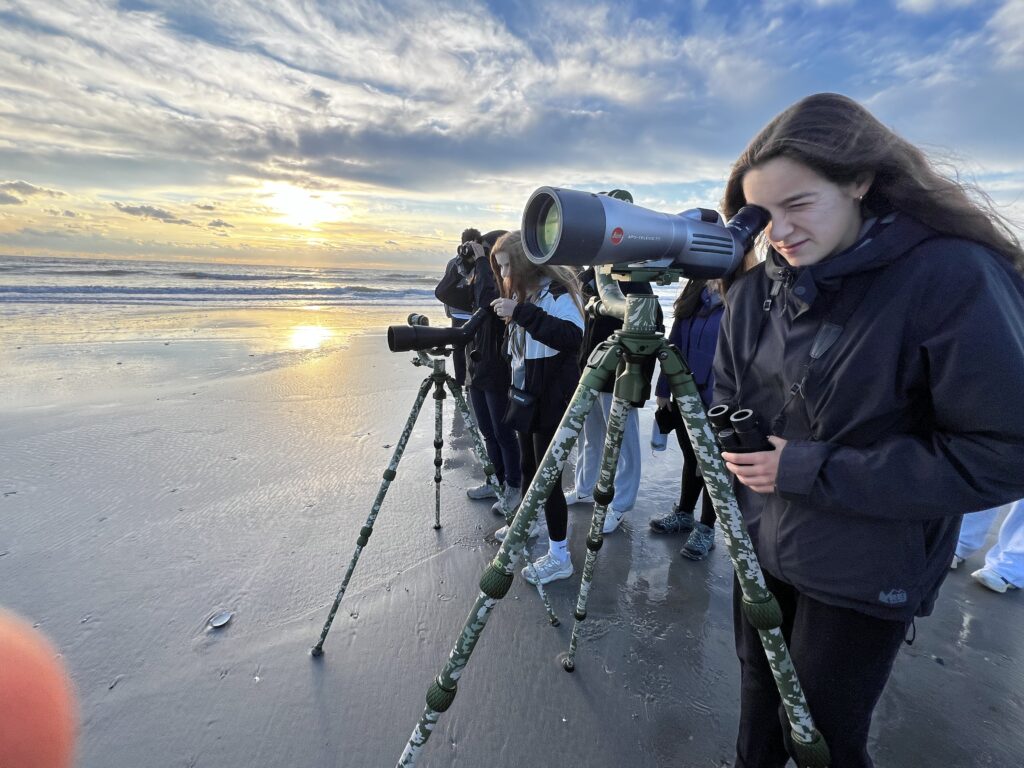
After a 4:oo a.m. departure from school on a cool October morning, the Environmental Science class arrived at the North Brigantine Natural Area at the Jersey Shore with the task of documenting shorebird species and doing clean-up. There were copious amounts of gnats, but still, a beautiful sunrise greeted the team and the students were quickly introduced to the reality of ecological fieldwork. Teacher Ryan Black shares, “They persevered and despite very low numbers along most of our three-mile survey, we were treated to a large abundance of shorebirds at the northern point. Approximately 20 endangered red knots, 198 American Oystercatchers (a New Jersey species of concern), and 220 Black-bellied Plovers were the highlight of the survey. The students helped count 1,657 shorebirds in total and identified nine different shorebird species after only seeing 50 sanderlings for the first three miles of our journey. It was a sight to behold! They removed 229 pieces of waste (mostly plastic debris) on the three-mile walk back.”
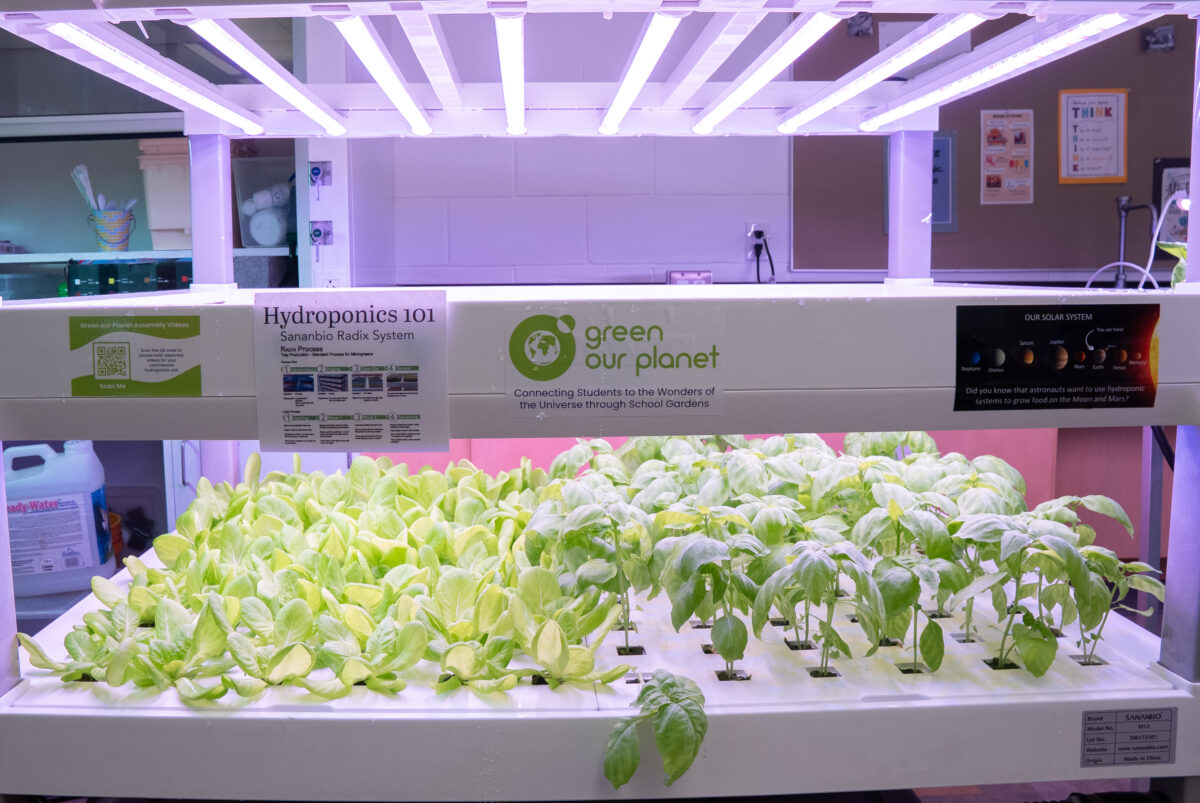
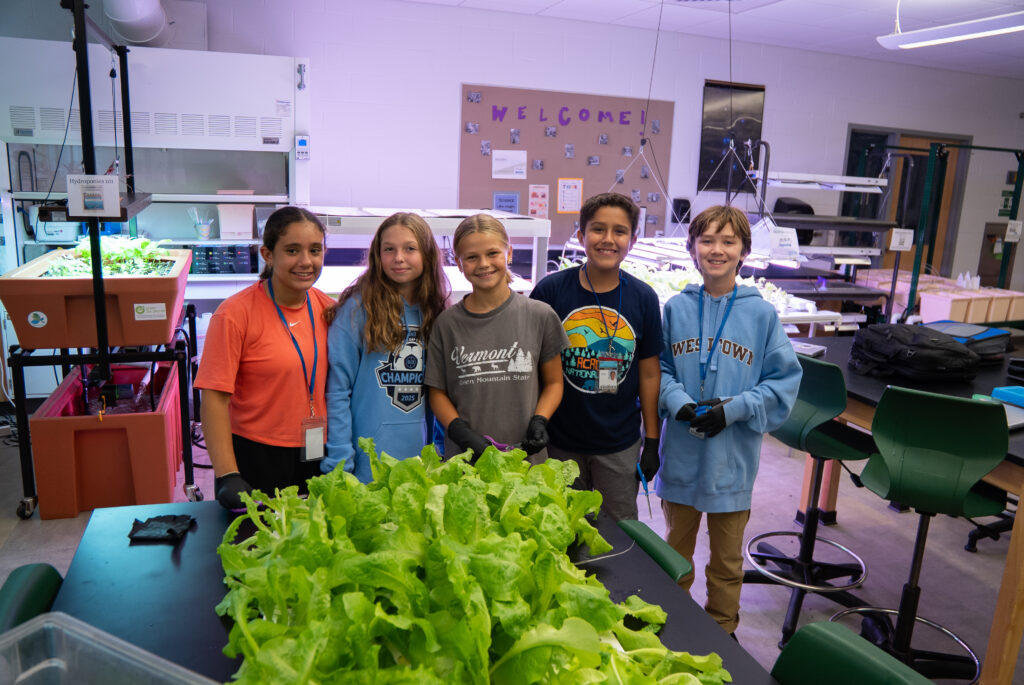
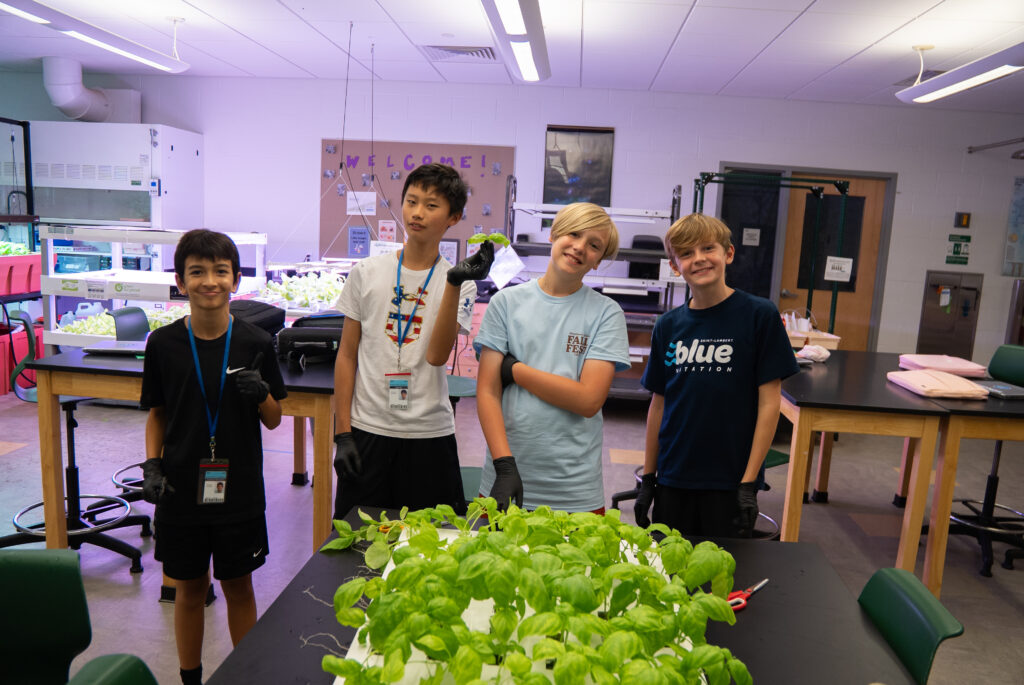
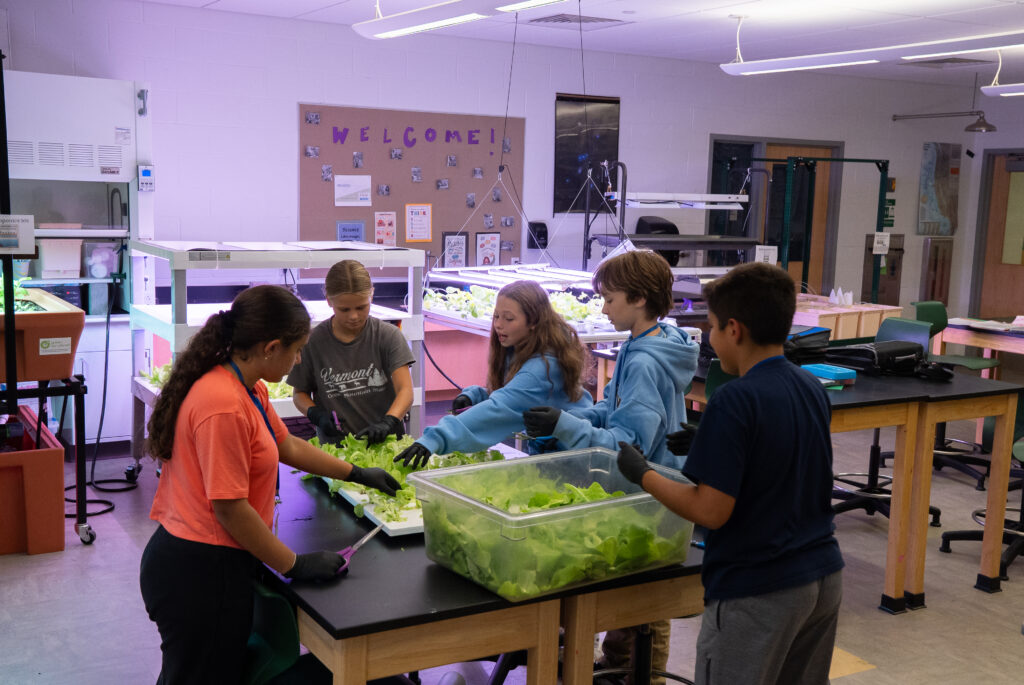
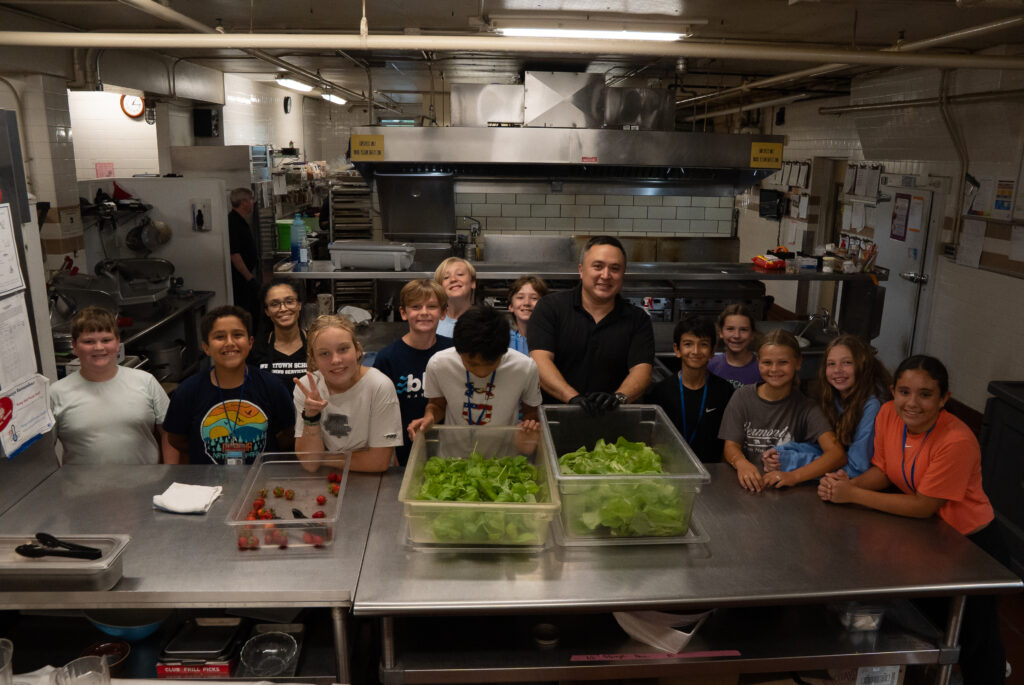
Sixth graders in Carlos Charriez’s science class worked with the kitchen to provide Westtown-grown lettuce, using a hydroponics growing system. Food and agricultural science are hallmarks of Westtown’s Middle School science program and are an excellent illustration of how our students learn. They have a hands-on educational experience steeped in problem-solving and critical thinking. Most importantly, the lived experience of the classroom opens the way for the development of essential understandings and skills.
Charriez shares, “When our students learn to cultivate food, they are not just learning about plants. They are also learning about chemistry and geology. These lessons prepare future science students for astronomy and physics classes and culminate in their Middle School capstone work on climate change and sustainability. They can apply this learning across the curriculum, like how it sharpens their understanding when they study agriculture in ancient cultures. They sharpen their skills in observation and collaboration, which support success in all of their academic and social learning. Learning stops being about a task to memorize and becomes part of their understanding of the world. This is a tangible example of what the Westtown approach to learning looks like—and, in this case, tastes like.”
Students delivered their crop of lettuce to Assistant Director of Dining Services Geoffrey Hillman where it was promptly used to help feed our community.