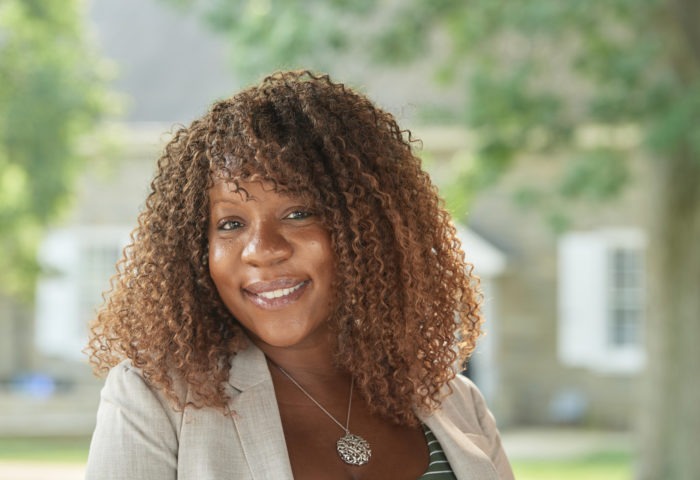
Kelly Yiadom, Westtown’s Lower and Middle School Director of Equity, Justice, and Belonging (EJB), was hosted on Lead at Any Level Amy C. Waninger’s #IncludingYou Podcast. In this episode, Kelly describes her work, that of the EJB team, and articulates why and how Westtown School integrates EJB priorities into curriculum and community life. We encourage you to have a listen to this excellent episode!
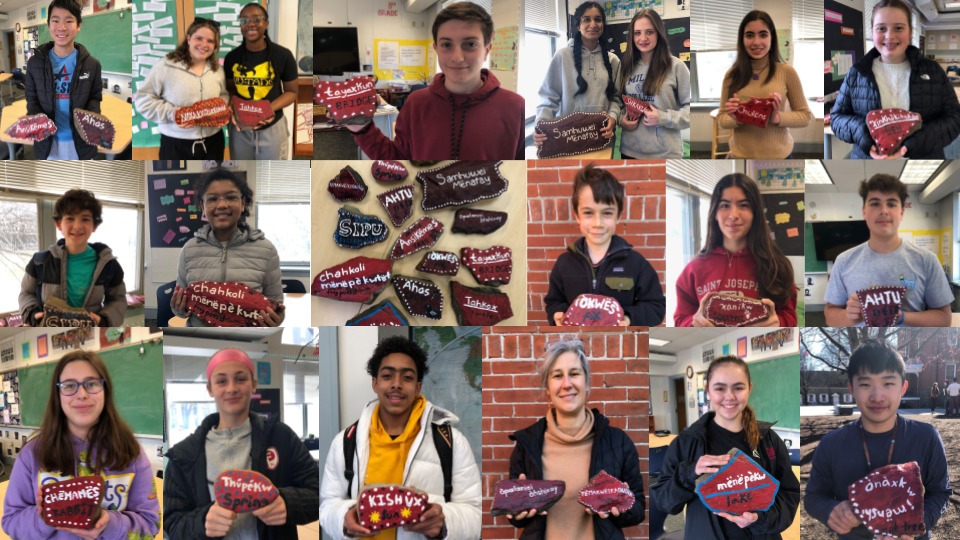
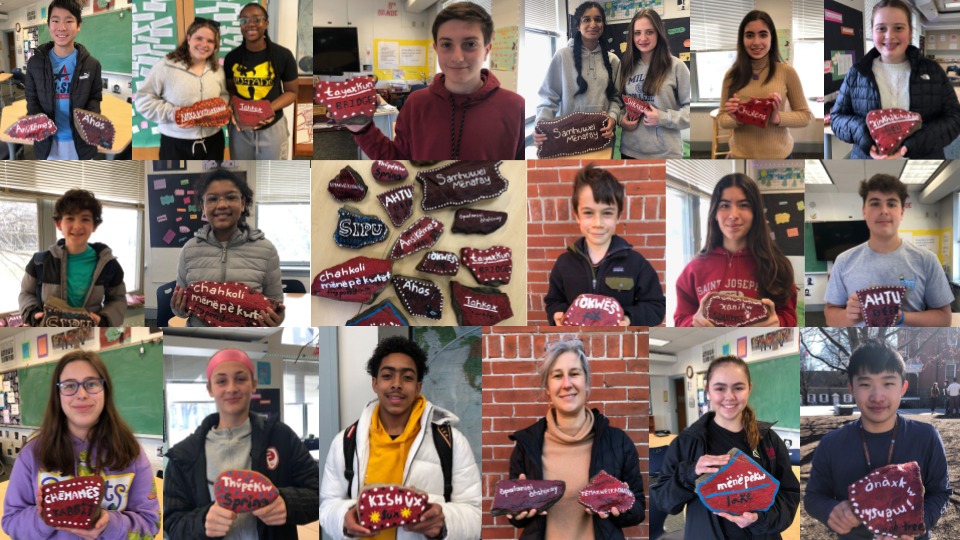
“Lenape Voices” is a Middle School arts and service project that seeks to honor over 10,000 years of Lenape stewardship of this land. As you walk around campus, you will see 21 different rocks (ahsëna) painted with relevant Lenape words and their English translations. We invite you to reflect on both the absence and presence of the Lenape people in this place. Please connect toThe Lenape Talking Dictionary to hear mother tongue Lenape speakers bring these words to life in their ancestral homelands.
We invite you to send us pictures of you at any of the rocks. If you visit all 21, your efforts will be celebrated with your own rock at the explanatory signs. You can email your images to Teacher Megan Rose. You can see more about this project on our website.
The Deep Dive Certificate Program honors Upper School students who are engaged in an intentional, organized, and well-documented arc of immersive learning and focused scholarship. Students create the path from initial interest to successful capstone projects. Upon completion of the program, students receive a certificate celebrating their sustained concentration and thoughtful synthesizing of a broad array of experiences and academic work. The designation is noted on the student’s transcript, providing our students with yet another way of standing out from the crowd. Students may pursue more than one Deep Dive.
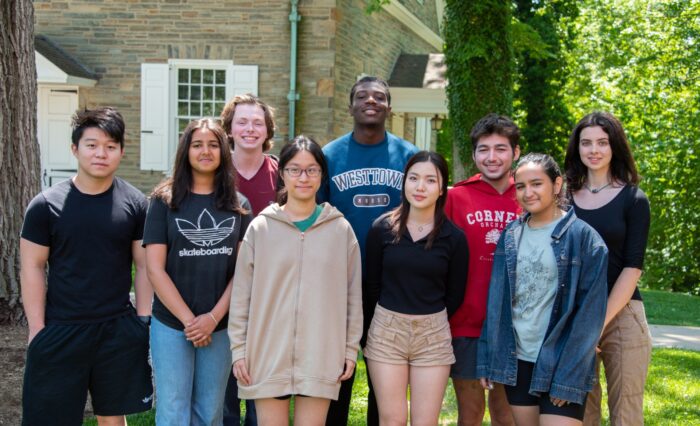
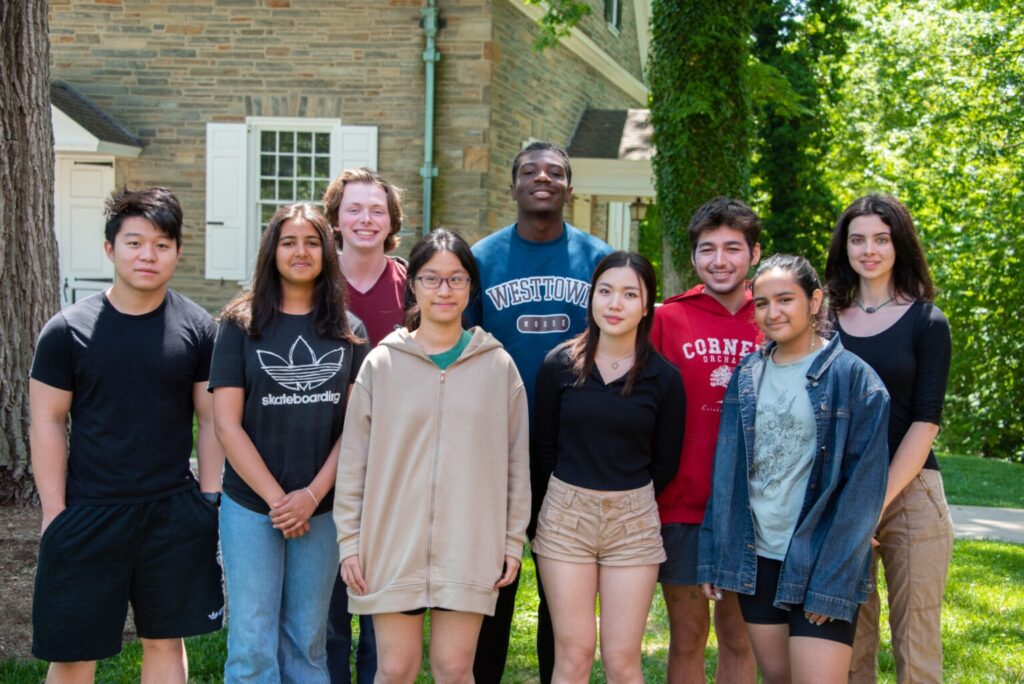
Congratulations to this year’s Deep Dive Certificate recipients! These students are noted below along with links to some of their presentations so that you can learn more about their specific courses of study and projects.
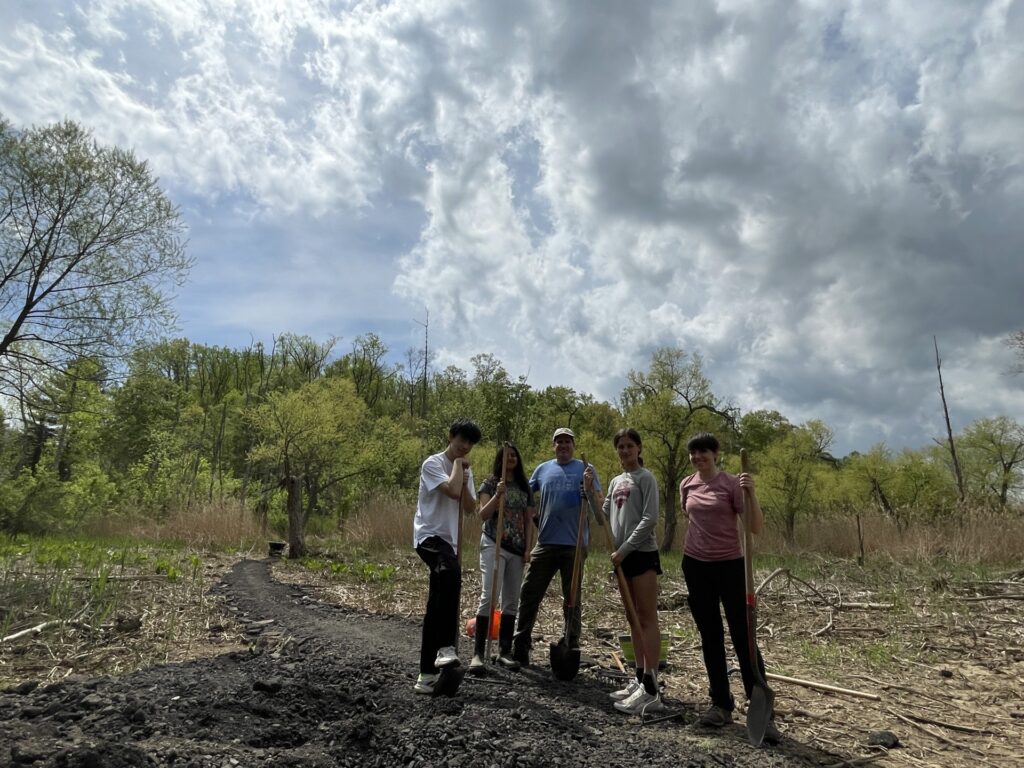
The Sustainability Committee, comprising faculty, administrators, and students, created a host of ways for the community to celebrate Earth Month and Earth Day, each with the overarching goals to “get people outside, interact with nature, and to intentionally inherit the Earth.” There was a shoe and clothing drive and on Earth Day, students and families gathered on campus and worked together to clear, sort, and size the donations to prepare them for delivery. Also on Earth Day, Upper and Middle School students and families did a creek clean-up and water restoration project, created a path to connect trails, and there was a plant swap/plant propagation station.
Throughout the month, students in all divisions engaged in a variety of projects and activities designed to help them appreciate the nature around them and to do service to our land. In one example, 8th graders explored the wonders of nature through art for their biomimicry art project. They spent time outside exploring, observing, and collecting examples of nature’s designs to inspire their pieces. Students used willow reeds and basketry to create the frames, then various types of paper mache, wool, thread, and other natural materials to tie the project together. Each piece was a beautiful reminder of the beauty and importance of our planet.
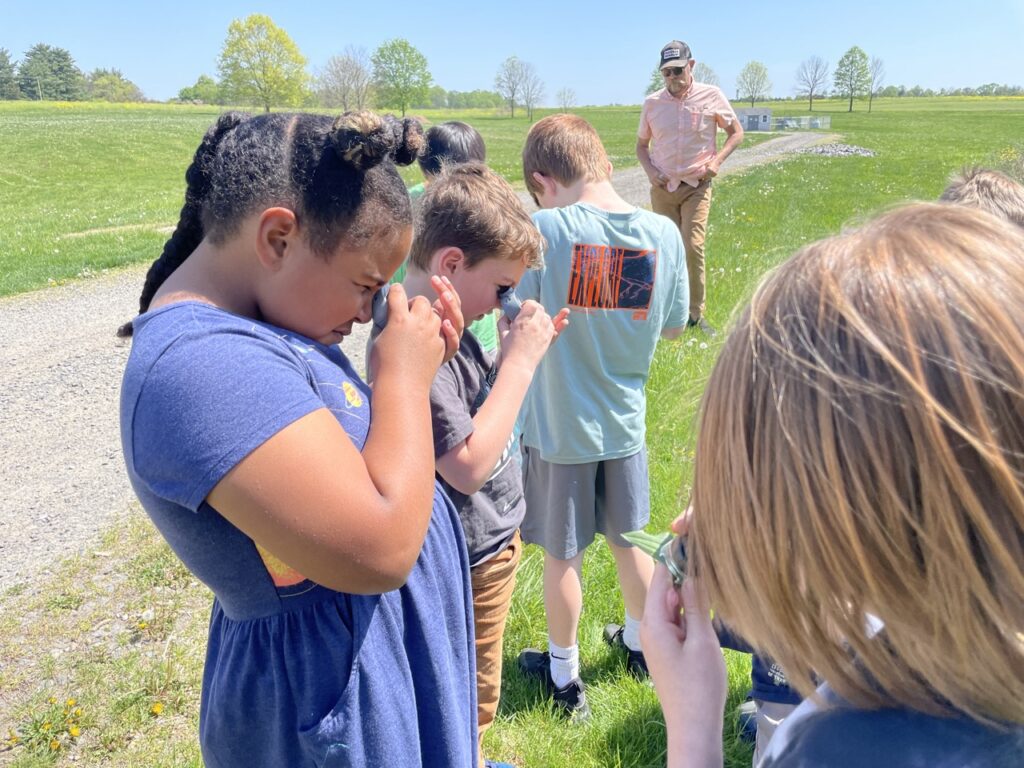
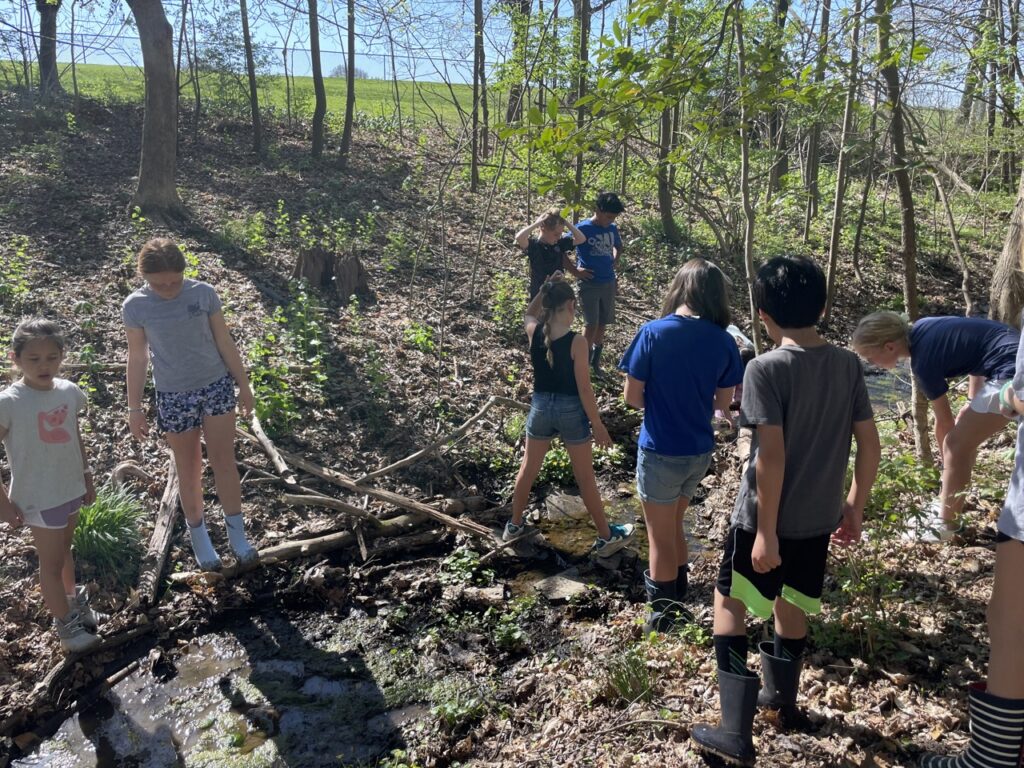
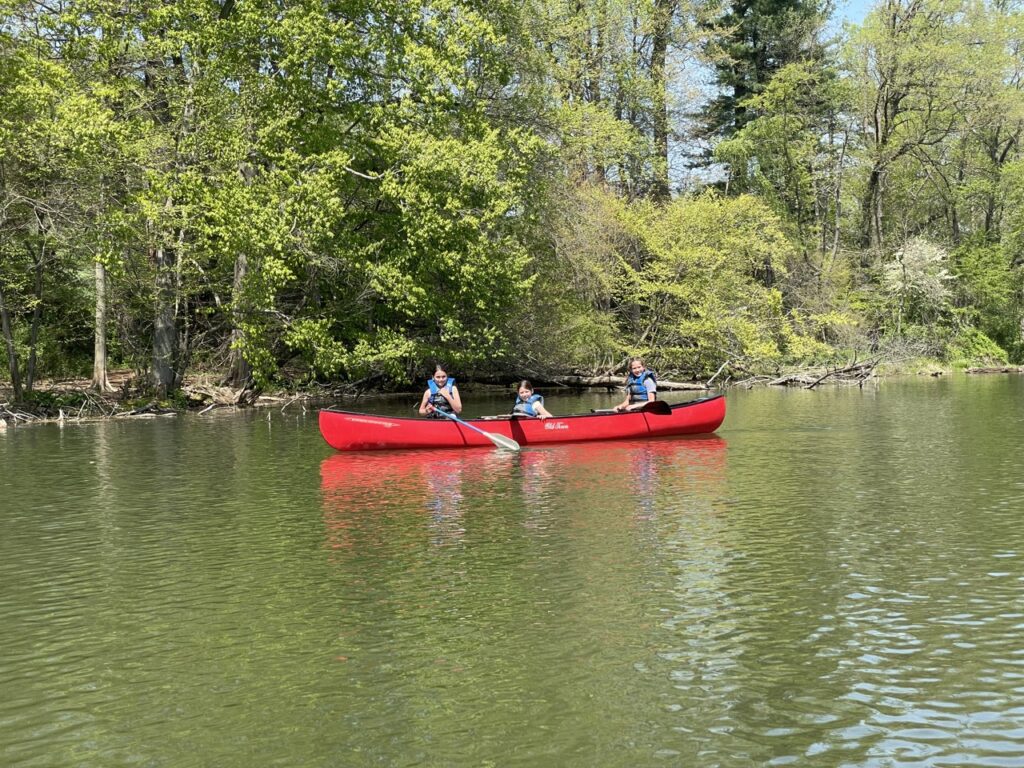
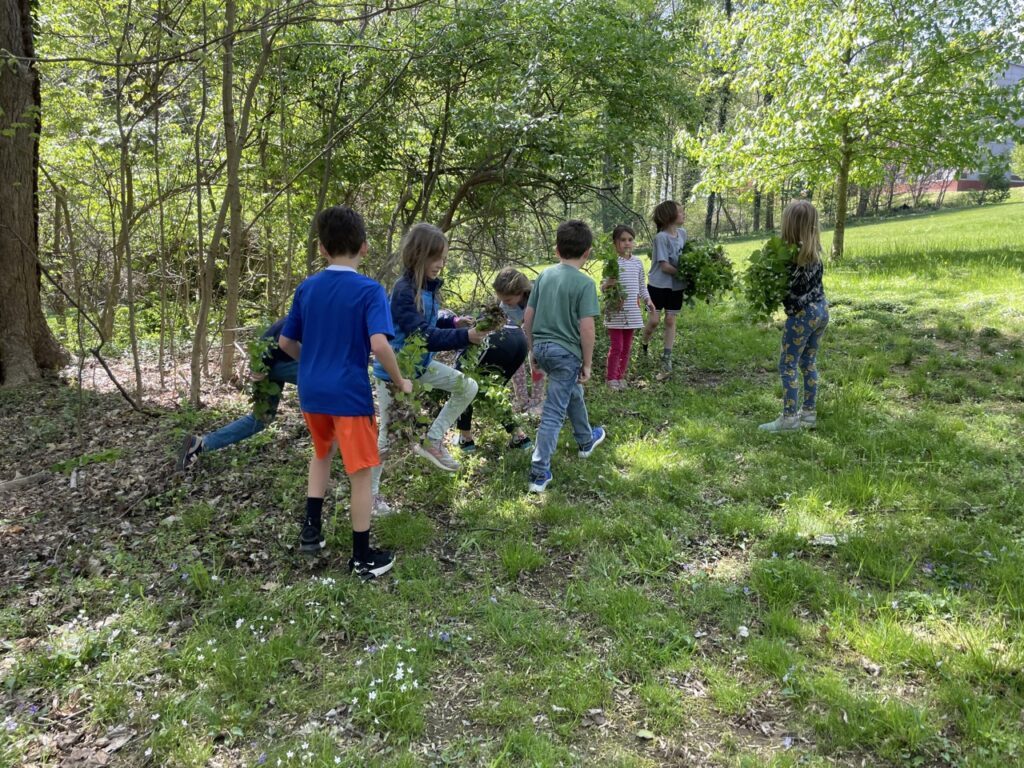
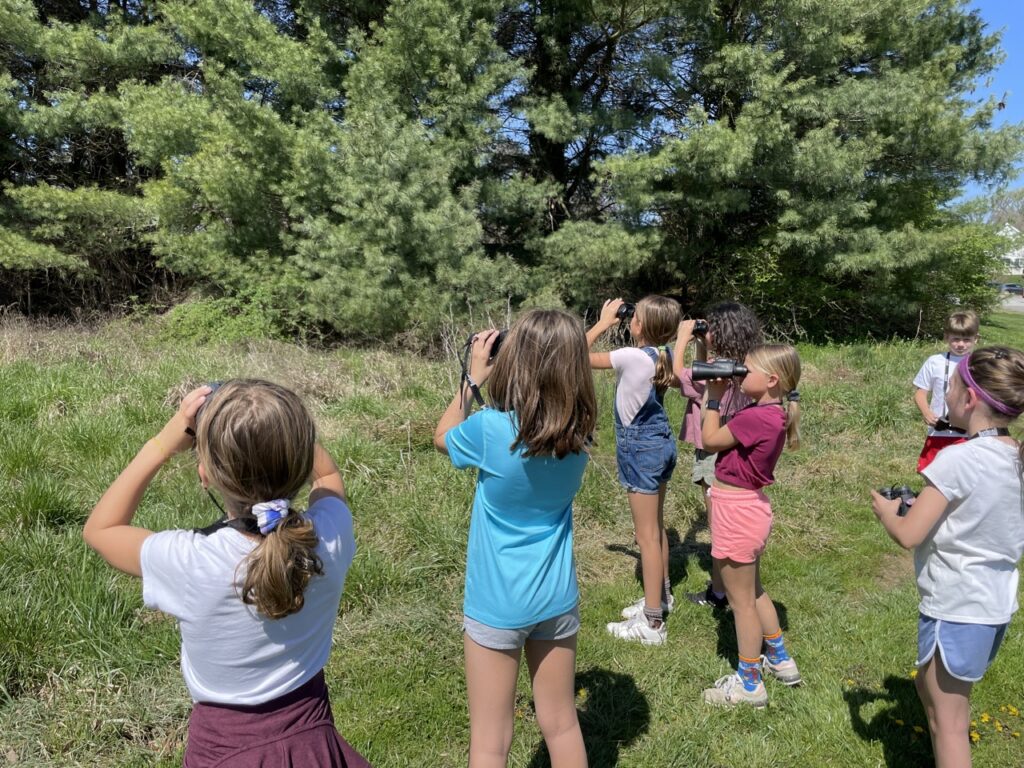
In Lower School, students explored the creek, lake, and frog pond, learned about plant life with Farmer Tim, did an invasive plant pull, enjoyed birdwatching, went canoeing on the lake, and more! They reveled in these opportunities to be outdoors and to learn experientially.
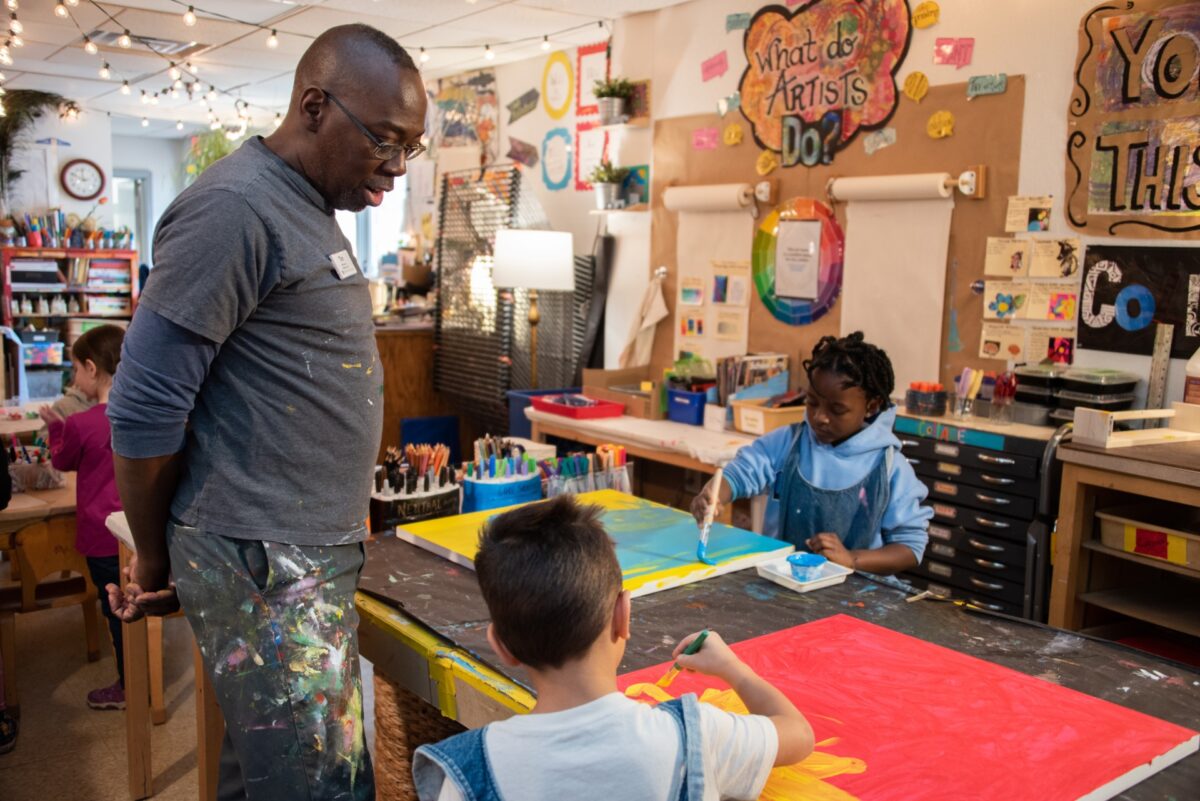
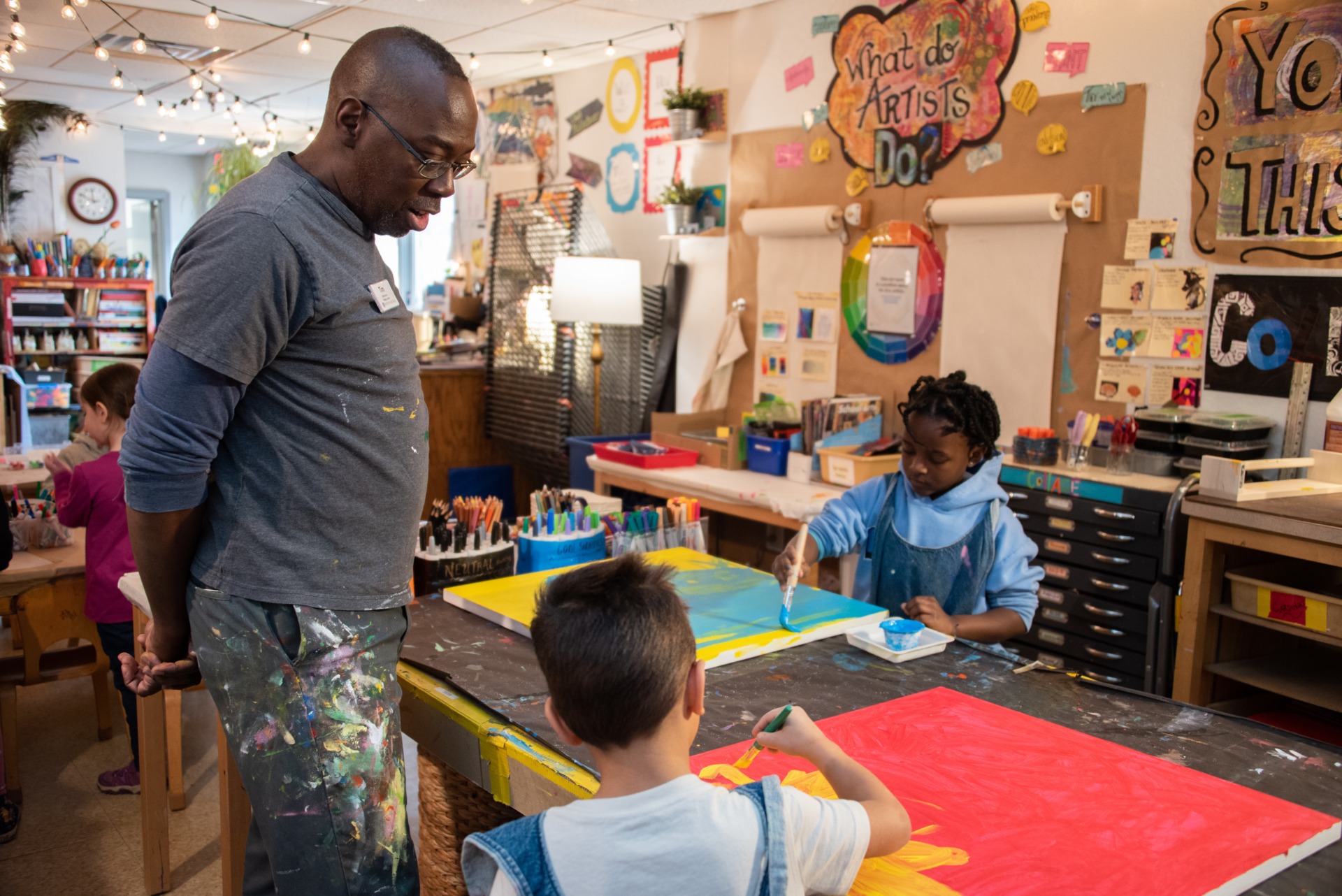
Recently, Philadelphia-based artist Tim McFarlane came to our Lower School to teach as the 2023 Candace Freeman Artist-in-Residence. Along with the students, he created four panels that will hang in the Lower School hallways. Tim’s paintings and collages include vibrant colors, layers, and expressive marks, or “glyphs,” that are representative of a unique visual language that Tim has developed over time. The Visiting Artist Program began over thirty years ago and focuses on bringing professional artists to Westtown’s Lower School who embrace a child-like approach to exploring their own creativity. The opportunity for young artists to work alongside a professional artist to learn about abstract art and explore varied art media is a valuable and an important piece of our arts curriculum. Enjoy the gallery of photos from McFarlane’s visit!
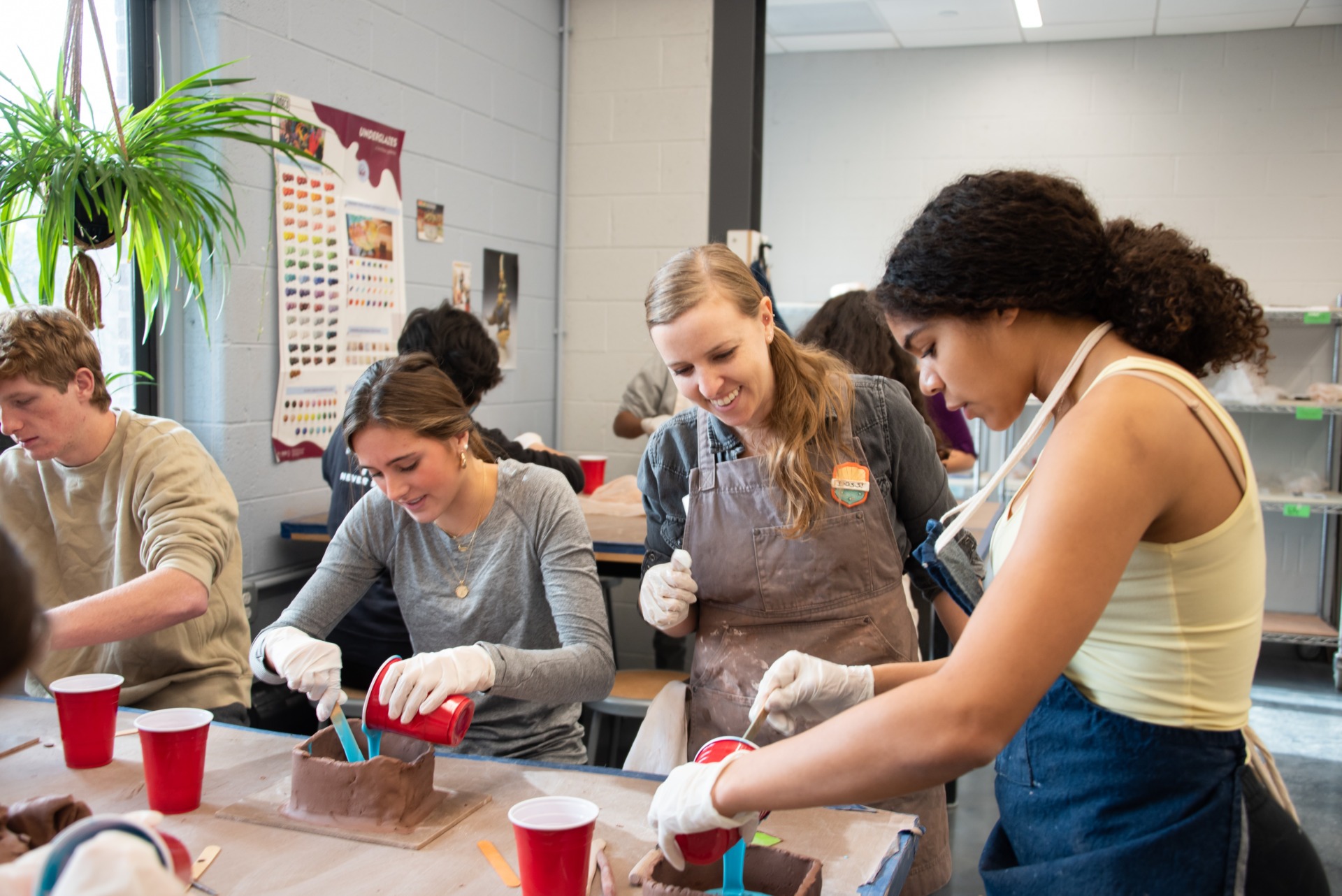
Thanks to the McLear Artist in Residence Fund, Westtown welcomed ceramicist and sculptor Kourtney Stone to Stephanie Wilhelm’s Upper School ceramics classes. Stone worked virtually for a time with Upper School art students teaching how to sculpt eyes and mouths on clay tiles. Then, during her week-long residency on campus, she worked with students on making silicone molds of their tiles and instructed them on pressing and molding techniques to make multiple clay casts. Through this project, students learned about close observation, creativity, and the unique history carried within every person. You can see examples of student work and photos from Stone’s time on campus here. Stone’s work, along with the work students did with her, will be featured in an upcoming show in the gallery. She will return to campus for the opening reception on April 28, and will once again visit Wilhelm’s classes.
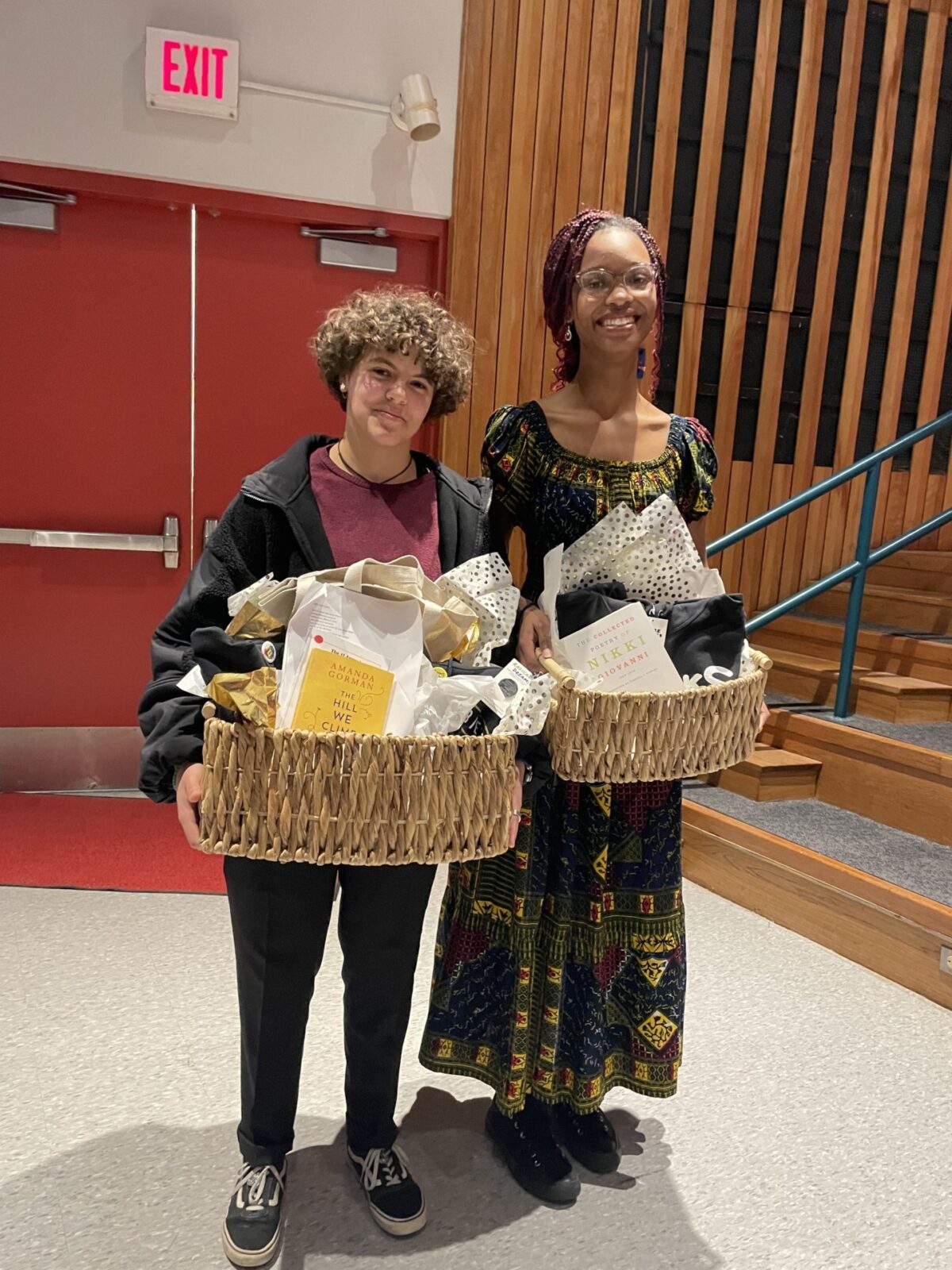
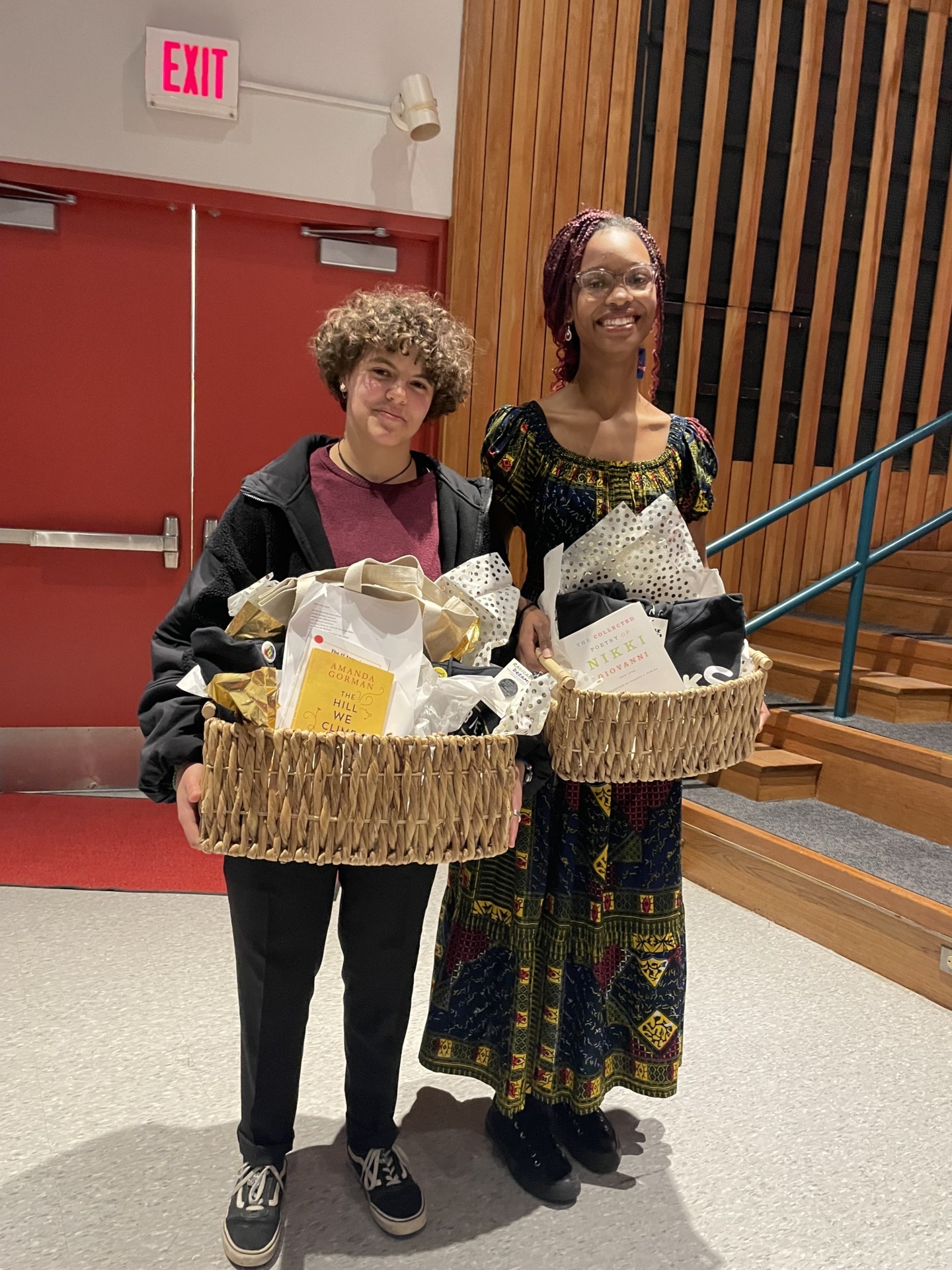
In the Lower and Middle Schools, celebration of Black History Month centered on the themes of Black joy, Black Excellence, Black Achievement, and Black families. Kelly Yiadom, Director of Equity, Justice, and Belonging for Lower and Middle Schools, engaged students in a series of activities throughout the month around these themes. Students learned about Black inventors and entrepreneurs—Frederick McKinley, Granville T. Woods, and Dr. Patricia Bath, among others—as well as the achievements of Black Americans. Fifth graders visited the Archives to learn about Black history at Westtown. Students in each grade read a variety of works from the poetry of Amanda Gorman and books like Hair Love and Put Your Shoes on and Get Ready by Raphael Warnock. Primary Circle students had a special visit from 8th grader Ryder Tookes, who read I’m Loving Me, which was written by his aunt and uncle, Dr. Clarissa Henry-Adekanbi and David D. Henry II. In addition to readings, third graders listened to music, watched StoryCorps videos and Hidden Figures. All of these activities across the grades led to robust discussions among students. Queries in Meeting for Worship in both divisions centered around why celebrating Black History Month is important. In addition to readings, discussions, and classroom activities, Middle School students learned about the incredible life of Thurgood Marshall in a one man-show at the People’s Light Theater.
Eighth grader Jamila Burgos was invited to compete in a Black History Month oratorical contest at Penncrest High School. Jamila competed against five high school students and took home the grand prize with her performance of her original poem which was inspired by Nikki Giovanni’s Rosa Parks! Congratulations to Jamila!
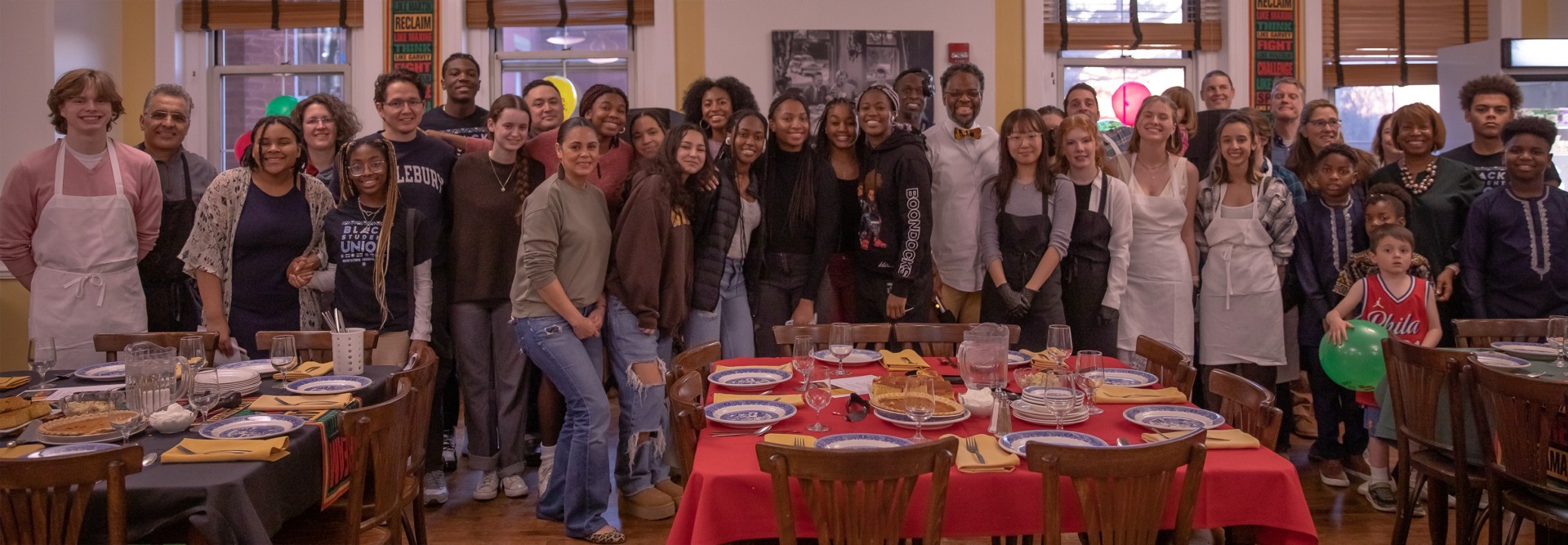
Upper School students, faculty, staff, and families came together for our Black History Month Community dinner. The Black Student Union worked with the Dining Room staff to coordinate the dinner, decorated the Dining Room, and planned a delicious menu that included sweet tea, mac and cheese, greens, and sweet potatoes. It was a joyous event that included singing, shared poems, and dancing together in celebration of Black culture at Westtown. Enjoy the gallery of photos here (photo credits to Coco Chen ’25)!
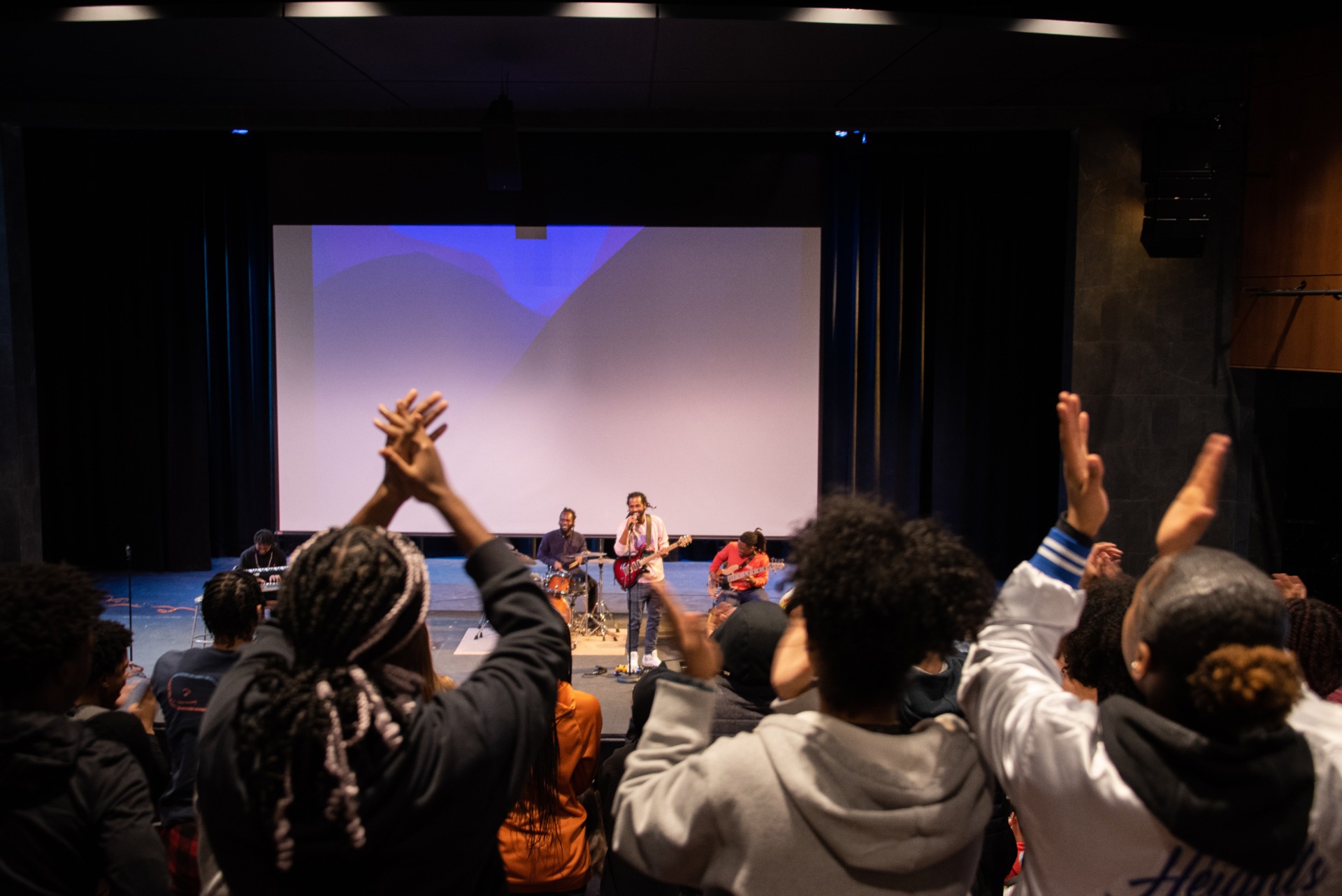
The Upper School wrapped up Black History Month with an assembly featuring a performance by Amari Rebel and the Movement which honored Black culture and celebrated the history of Black music. Students and faculty were singing and dancing to this lively, lovely performance in the Barton-Test Theater! Our thanks to DeVon Jackson, Director of Equity, Justice, and Belong for the Upper School, for bringing this talented group to campus! See images from this performance here.
The assembly was a joyful end to the month that also celebrated Black love in Community Collection, and Meetings for Worship that centered around the five senses of Black excellence. In collaboration with DeVon Jackson, each of the Black affinity groups—Black Women Affinity Group, Multicultural Student Union, In the Know (young men), and Black Student Union—presented queries at a Meeting for Worship aimed at sight and touch (identity, being seen), taste and smell (cultural cuisine, scents), and sound (the impact of Black music). Within these Meetings were also queries about Blackness at Westtown, the impact of Black women in our daily lives, the ways in which Black men impact our lives, and considering which achievements or stories from Black history resonate with us individually.
By Louisa Egan Brad, Dean of Equity, Justice, and Belonging
At a parent speaker series talk and at a faculty/staff Opening-of-School session this fall, I opened with the following quote from the American Friends Service Committee (AFSC). After you read it, I’d like you to guess what year it was written.
The need for [action beyond nondiscrimination] derives from the fact that discrimination is embedded in our societal patterns of education, housing, employment, social interaction, and political participation. These patterns are so pervasive that frequently neither their perpetrators nor their victims realize when and how discriminatory acts are being committed. AFSC is part of this society and has, generally unwillingly, fallen into some of the very activities and behavior patterns it seeks to avoid in itself and to change in others. In these circumstances, policies of nondiscrimination alone are inadequate to achieve inclusiveness and full participation. Special efforts and procedures to reach out to previously excluded groups are necessary…AFSC believes that the greater inclusiveness which is the goal of [action beyond nondiscrimination] is necessary for us to do our work effectively as a Quaker organization seeking to understand and address questions of oppression, empowerment, justice and peace…The objective of the plan is to change those patterns which have not so far produced the inclusiveness we seek and to try new ways to reach long established goals.
American Friends Service Committee “Affirmative Action Plan” 1978
To me, this statement reads as though it could have easily been written sometime after the murder of George Floyd. The recognition of discrimination throughout American society, the acknowledgement that individuals may participate in and perpetuate discrimination unconsciously, the appreciation that inaction itself reproduces societal inequities–all of these ring true as realizations that have dawned on many in our country only since the summer of 2020.
And yet, Quakers stated these truths plainly over 40 years ago. Is this simply an accident of history? The introduction of the affirmative action plan indicates not, stating that “Implicit in both Quaker faith and practice is the belief that God is an active force, using men and women as instruments in order to bring society to a more perfect state…To be instruments of Divine Will, men and women need to be free of the weight of oppression and harmful discrimination.” Such sentiment underlies a long history of Quaker social activism–while certainly not every Quaker has always been on the right side of history, Quakers have been trailblazers with respect to social justice, with respect to abolition, women’s suffrage, gay rights, and other issues.
At Westtown, our Quaker identity and mission guide our equity, justice, and belonging work and our commitment to working towards an anti-bias, anti-racist (ABAR) community. This work for us is not a digression from our purpose or a mere reflection of broader American culture in our time. Rather, it is central to the work and privilege of teaching and learning in a Quaker school.
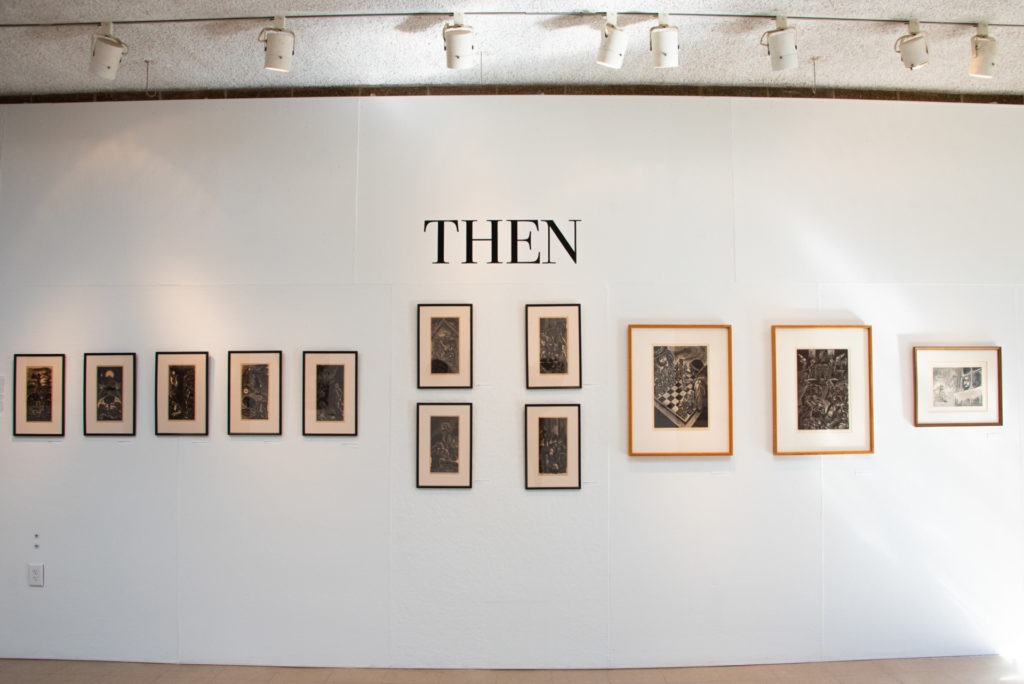
This fall Westtown’s Center for the Living Arts Gallery hosted the “Art and Faith” Exhibit to mark the 70th anniversary of Fritz Eichenberg’s Art and Faith Pendle Hill pamphlet, which considered the role of art at Westtown School. The exhibit featured original prints by Eichenberg from Westtown’s permanent collection, and works by Quaker artist Todd Drake, students, and faculty.
In 1954, Fritz Eichenberg, a German-born committed Quaker—and one of the most prominent visual arts educators of his time—visited Westtown’s campus to speak about the arts as an extension of the school’s essence. Two years prior, Eichenberg published his thoughts in a Pendle Hill pamphlet, Art and Faith. This is the 70th anniversary of that radical little work.
Fritz Eichenberg (b. 1901, Cologne, Germany; d. 1990, Rhode Island) was a popular German-American illustrator, speaker, and educator. Eichenberg held prominent posts at the Pratt Institute in New York City and the University of Rhode Island. He fled the rise of Nazism in 1933 and was involved in the Works Progress Administration’s Federal Arts Project during the Great Depression. A committed Quaker, Eichenberg’s art often focused on social justice topics. As a writer, Eichenberg composed radical pamphlets for the nearby Quaker education and retreat center, Pendle Hill. As a teacher, Eichenberg was well-known for his “The Art of Teaching Art” lecture. Perhaps, though, Eichenberg is best known as an illustrator of classic novels and for Dorothy Day’s The Catholic Worker radical newspaper. In the 1950s, Eichenberg visited Westtown’s campus as part of his ongoing participation in The Society of Friends and arts education.
Todd Drake (b. 1961, North Carolina) is an American interdisciplinary artist, activist, and educator who lives in New York City. The recipient of multiple grants and fellowships, Drake has traveled globally to facilitate social justice-oriented arts projects. Alongside his wife, Drake is the co-operator of a Quaker intentional community in Manhattan, Penington Friends House. Drake’s most recent solo exhibition was “Rising,” a series of prints and pen and ink drawings dealing with the issue of Global Warming. His surrealistic imagery links his experiences growing up on the Outer Banks of North Carolina with his concerns for what will be lost due to the rising tides of the Climate Crisis. Recently, Friends Journal published Drake’s “The Leading of Hope.”
Director of Visual and Performing Arts Alex Ates was instrumental in bringing this exhibit to life, and the idea came to him during his visit to Pendle Hill, a Quaker retreat and conference center. “The exhibit was inspired when I read Eichenberg’s Pendle Hill pamphlet Art and Faith while I was on retreat there,” says Ates. “I was stunned by the clear and vigorous way that Eichenberg connected Quakerism and art. I was further surprised to learn that Eichenberg has strong ties to Westtown, as the school invited him to speak on campus in the 1950s and purchased several of his prints for our permanent collection. When I visited the pieces in Westtown’s Archives, I was struck by the fact that Westtown has been exploring the relationship between artistic creativity and faith for quite a long time—and the past can help embolden our future as we continue those conversations today. And, it just so happened, this year marked 70 years since Eichenberg’s pamphlet was published! Immediately, I knew to pull in my colleague Lizzy Oxler, who just completed her doctoral research on Folklore, to support this exploration as curator.”
The Art and Faith exhibit ran from September 16 through October 22, 2022. The exhibit’s opening celebration included remarks from curator English teacher Lizzy Oxler, Head of School Chris Benbow ’90, and Pendle Hill Executive Director, Westtown trustee, and parent Francisco Burgos, along with an original piano composition entitledLooking for the Light, by Mandy Zhao ’24. During the exhibition, students from across divisions had interactive experiences with the work, from an image scavenger hunt and question series for Lower School students to reflective writing prompts for Upper School English classes.
As highlighted in the exhibit’s opening note: “Eichenberg wrote that while he lives in the Age of the Atom ‘under the shadow of the Terrible Cloud,’ he remains hopeful at the promise of art and what art can do, noting that art itself ‘has survived all cataclysms.’ In our own community, we reflect on our own version of the ‘Age of the Atom.’ We continue to live in a world of nuclear volatility and political vulnerability. And, not to mention the ever-present hum of the COVID-19 pandemic. Still, we came together during Meeting for Worship, we still created productions; those practices continued and they can live together—they do right here, right where you stand. This exhibit is a timeline of the progression of these twinned spaces of art and faith, a meditation on the relationship as perceived by members of the community.
The arts have flourished at Westtown. We live in a space where art and faith are intertwined and cohesive. Bold arts education will grow at Westtown because the seeds have already been planted. So, we invite you to look forward to our past and our present.” Please enjoy photos of the exhibit here.
At Westtown, service learning is an integral part of curriculum and all students have a variety of opportunities to engage in service projects throughout their school careers. In the Upper School, Service Network, a co-curricular offering, provides regular and ongoing projects for students. This fall, students in Service Network and a group of upper-level Spanish students took on some special community projects.
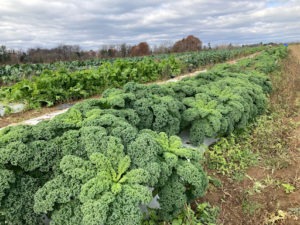
Last spring, Service Network students worked with Farmer Bill on the Chester County Food Bank farm (grown on the Westtown School farm in partnership with Farmer Pete Flynn). They planted kale, beets, and a variety of greens—about 900 plants in total. Just before Thanksgiving this year, the plants were harvested providing quite a bounty for the CCFB.
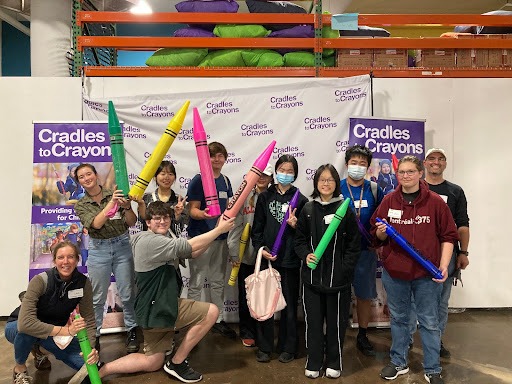
The Service Network’s partnership with Cradles to Crayons has also continued. Students recently spent an afternoon at the Philadelphia location to rehabilitate and clean used shoes to be distributed to children in the area. Service Network Coordinator Lara Freeman shares, “The work was tedious and required much elbow grease but the students were joyful and committed to the task!”
Throughout the fall, Service Network offered donation boxes around campus collecting items in support of the West Chester Food Cupboard. Students drop off donations a couple times each season. So far this year, over 150.5 pounds of food and personal care items have been donated. If you’re on campus and would like to contribute, there is a box on the East End of the Main Building.
Service Network co-curricular students also provide tutoring for the New Directions Program at the Melton Center in West Chester twice a week, they work at the SPCA in Brandywine once a week, and they make regular visits to volunteer at the Habitat ReStore on Saturdays to support the fundraising leg of Habitat for Humanity. Upcoming service opportunities will include a build project with Habitat for Humanity and a seed sorting project through the Cooperative Gardens Commission in which students will sort and make small packs of seeds for individual gardeners that will be sent to Seed Hubs around the country. Last year, this volunteer-led effort provided food for 20,000 people.
Beginning in September, 10 students have participated in a unique service partnership at the Iglesia Buen Samaritanos in West Chester. The members of this church are primarily Spanish speaking and a number of them wanted to either improve their English or begin to learn English for the first time. Students involved in this project are: Alena Zhang ’24, Luke Cogswell ’24, Dane Clunk ’23, Noah Bay ’23, Chloe Costa-Baker ’23, Melanie Flynn ’23, Antonio Ubiera ’25, Bailey Tuckman ’25, Helena McConatha-Rosle ’24, and Maya Jain ’24, all of whom have completed Level 4 or above of our Spanish program and wish to practice both their linguistic and cultural competency in Spanish in the local community.
Each Monday evening, these students met with Spanish teacher Cynthia Voorhees to reflect on the previous week, and make their lesson plans for the week. On Tuesday evenings, they went to the church to teach English from 7:00-8:30 p.m. Voorhees stresses that this is a significant time commitment for students on top of their regular course work.
Eight students were paired with adults or children at the church to teach them English, and two students also taught a basic technology skills class to the Spanish-speaking adults in the community. These classes were to help adults become more comfortable with creating gmail accounts, sending emails and files, and creating Google slide presentations. All teaching in this program was done in Spanish. The tech class has now concluded, but the English classes will continue through mid-January. In February, our students will be volunteering as child-care givers while adults in the church community are engaged in another course at the church.
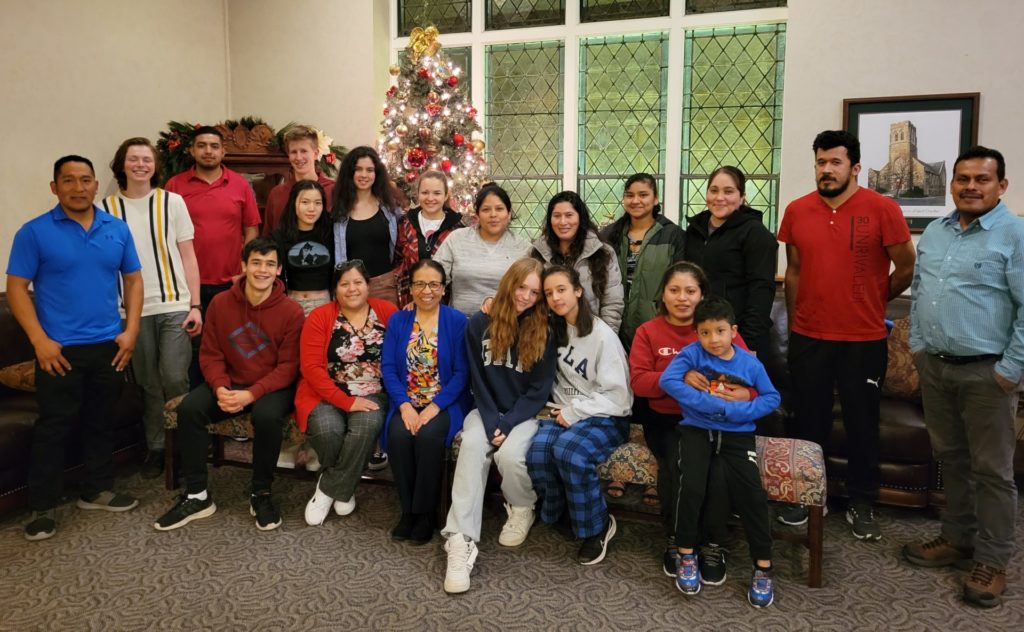
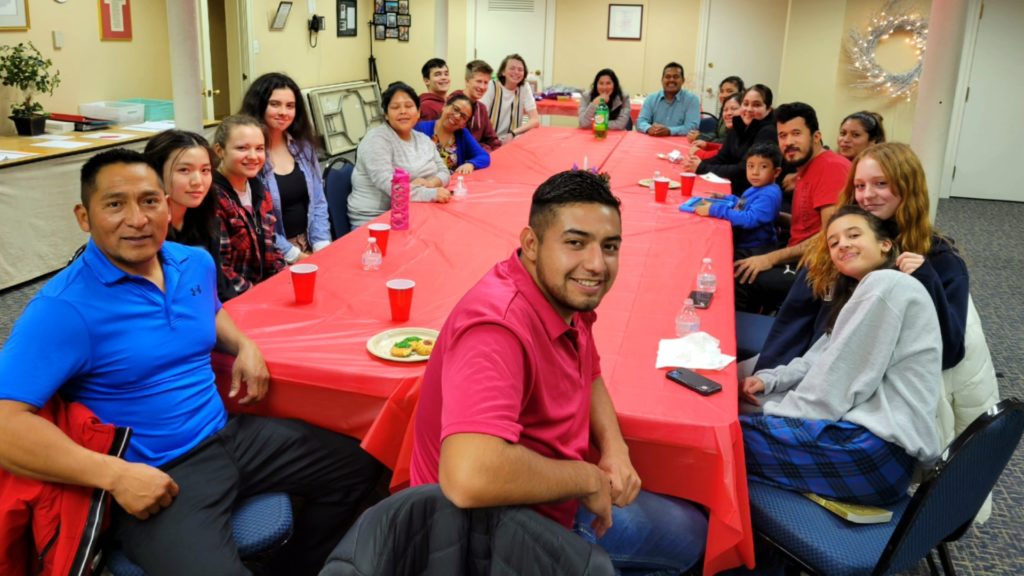
Voorhees shares, “The mutually beneficial partnership that we have formed with this church is truly a beautiful thing. We are serving them, but they are also serving us by allowing us to learn more about their culture, practice our Spanish, and to grow as teachers and care-givers. Some really beautiful friendships have evolved between our students and the folks at the church. I love that our kids are making friends outside their age-bracket, socio-economic bracket, and their own culture.” Just before Winter Break, students gathered with the members of the church enrolled in the English program for a holiday dinner sponsored by Lara Freeman and the Service Network program.
The World Languages Department, chaired by Bei Zhang, created a series of activities and events to promote language learning and immersion during the first-annual World Languages Week celebration at Westtown. Activities included Collection-sharing, a pep rally, a special assembly, a club period with language and cultural activities and displays, guided discussions with faculty, and the Language Olympics. Zhang says, “Some of our goals included promoting language acquisition, building cultural competency, providing students a platform to celebrate their success in their language education, and helping students envision their future career paths where they can apply their language skills and cultural knowledge.” For the special assembly, Westtown welcomed Eliza F. Al-Laham ’86. Al-Laham, who speaks Spanish, Arabic, Chinese, and French, Zoomed from her residence in Mexico to share about her career in which fluency in several languages is necessary. She is currently Consul General to Guadalajara, and throughout her career has held a variety of State Department posts around the globe, including Israel, Jordan, and China. Her fascinating presentation concluded with a Q and A session with students.
Though World Languages Week was planned by language teachers, it was an all-hands-on-deck undertaking, as all Upper School faculty took part in facilitating events. This week-long celebration was also a unique way to assess and build language acquisition. Students made posters and cheered on their teammates in the languages they are studying, they created language and cultural activities, and teachers created special World Languages Week assignments for students. In one example, Spanish 1 teacher Samantha Godoy asked students to complete a research project on a Latinx musician or artist, which led to an interesting encounter for Kien Dang ’24, who chose to do a project on artist Rocio Navarro. “I noticed how little information I was able to get from the internet as she’s a very new artist…I was able to find Rocio’s Instagram [and] Profe Sam encouraged me to reach out to her,” says Dang. “To my surprise, she did reply! Rocio expressed a lot of excitement, as she was very eager to help with my project. I sent Navarro my questions about her life and her art. I immediately noticed that we have a lot of similarities and had an instant connection to Navarro. She often paints portraits and through these portraits she expresses her emotions. We both love using art as a form of communication and through that also explores our identities, too. I was really happy because through this project, I was able to connect with another artist that also shares the passion for art. I really have to thank Profe Sam because throughout the whole process, she encouraged me and supported me [and] the project introduced me to new vocab words that were very useful for expanding my knowledge of Spanish.” Dang displayed his painting at the cultural stations hosted mid-week, along with works from other students. Other cultural stations included Chinese fan dances, Mardi Gras mask making, a Hannibal exhibit, merengue dance lessons, and many more.
Finally, the week concluded with the Language Olympics, a field day competition between the four languages: Chinese, French, Latin, and Spanish. There were many event stations, among them a faculty relay race, tug of peace, volleyball, tic-tac-toe relay, rock-paper-scissors race, and more. Students reveled in the friendly, sometimes rowdy competition, and in the fun and unique ways to employ the languages they are learning. Many hats off to Zhang, the World Languages teachers, and the Upper School faculty for this exciting series! You can find lots of photos of the events of the week here.