Second Graders Explore Marine Life

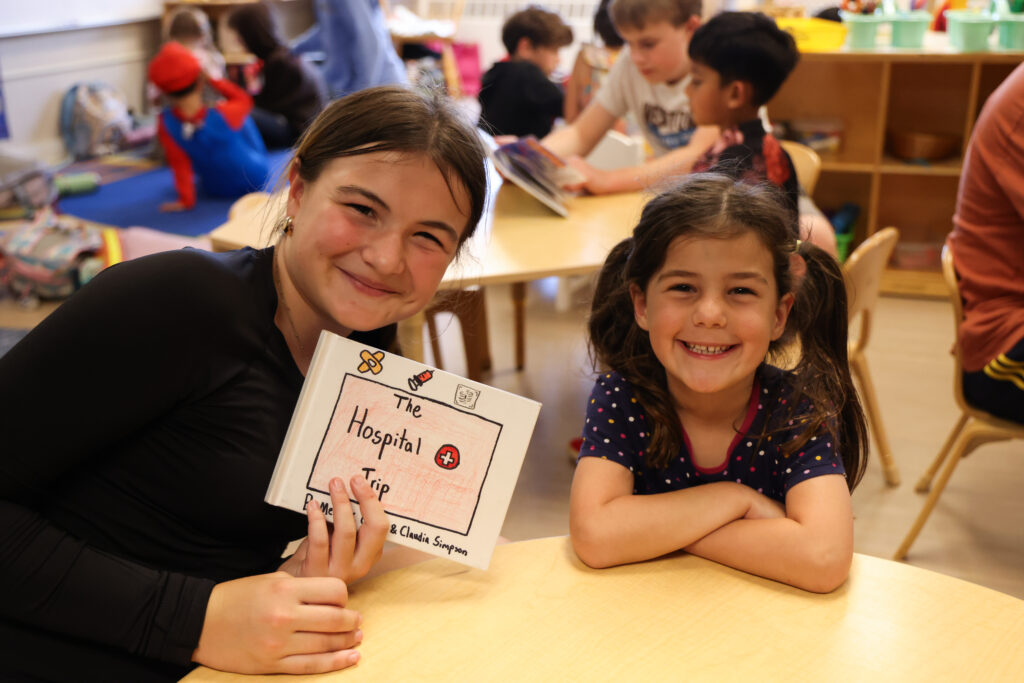
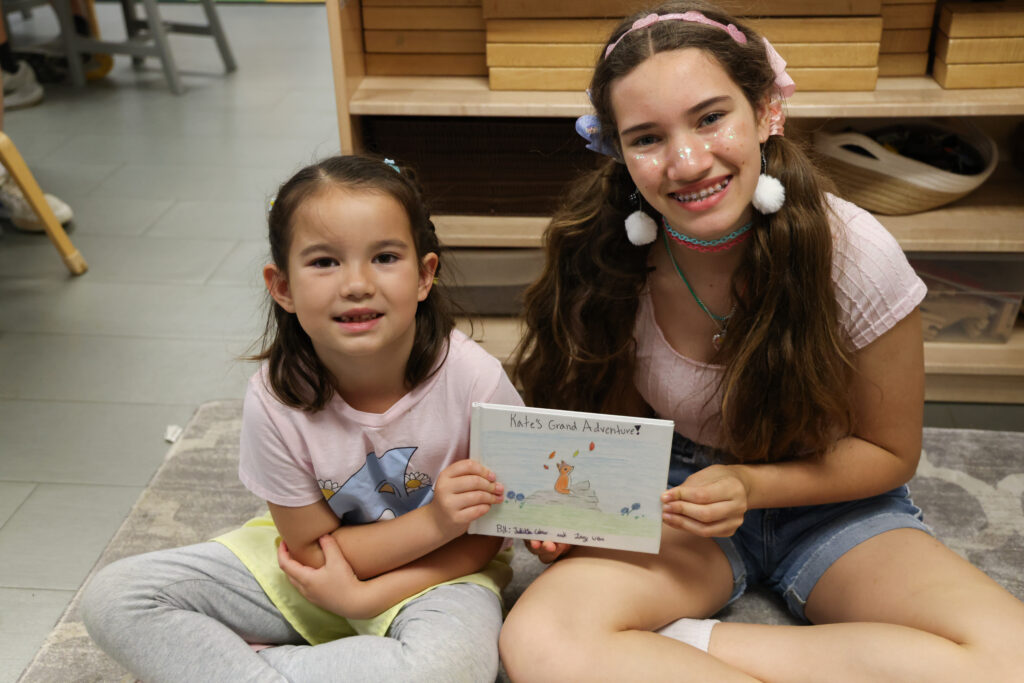
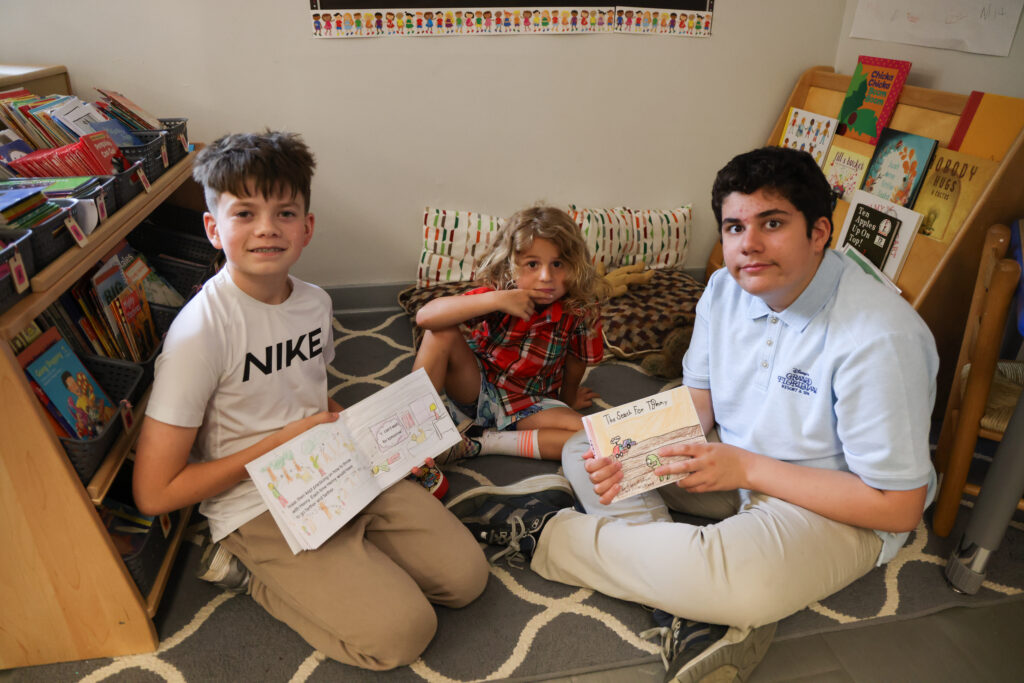
The Second Grade turned the Lower School Gathering Room into an aquarium! Each student researched a sea animal and wrote a book about their topic, then made dioramas or stop motion videos in art class to show the animal in its habitat. Other Lower School classes came to learn about the different sea creatures, ask questions, and admire the projects. Great job, junior marine biologists! Enjoy the whole photo gallery here.

Lunar New Year Celebrations

Students in all divisions celebrated Lunar New Year, including a special Community Dinner in Upper School. Students worked with Dining Services to create a delicious meal that included special performances and even a dragon dance!

We thank the parents who decorated the Lower and Middle School lobbies, and the Lower School parents who came in as guest readers and did special activities for students! During Gathering, Lower School students and teachers had an incredible time donning their red clothing, symbolizing good luck. They listened intently to 6th grader, Stella, read a selection about Lunar New Year. Fifth grader, Chris, explained the folklore behind the tradition of children receiving an envelope of lucky money. Lower School students Bowen, Tiarra, Chris, Charles, Cali, Cami, Jeremiah, Carolina, and Amelia shared their traditions in this video. Immense joy filled the room as students saw their classmates sharing an incredibly important part of their heritage with the greater community.

Enjoy more photos of Community Dinner here and of Lower School activities here!

Honoring Dr. King

Students across all three divisions learned about and honored the work of Dr. Martin Luther King Jr. by engaging in a variety of activities both on MLK Day and throughout the month. 

In Lower School, students rotated through various activities and special programming focusing on reflection, art, service, and action planning. Students worked in multi-age groups and 5th graders acted as assistant teachers. They read and reflected on the book The Sweet Smell of Roses by Angela Johnson. For their service project, students created bags of toiletries from the donated items from Lower School families and wrote cards to include with the bags that were then donated to Circle of Giving. (Watch the 5th grade EJB team video to learn more about the service project!) Singing has long been a form of social justice movements, so in Gathering, students and faculty sang “Ain’t Gonna Let Nobody Turn Me Around,” an historical protest song, and “If You’re Out There,” a modern empowerment anthem by John Legend. The Lower School community worked on a collaborative visual arts project—a large-scale 3D flower that was installed in the main lobby. Finally, groups discussed how individuals and communities can plan to take action to make positive change in the world, then made empowerment posters that reflected messages of affirmation and action. Later that week, Lower Schoolers took their handmade protest signs and marched from the Lower School, down the Granolithic, entered the West Collecting Room, marched the entire length of Main Hall, exiting the East Collecting Room, and ending at the Meeting House for their weekly Meeting for Worship. Although many Upper School students and faculty were in classes, they paused to line Main Hall to cheer on the Lower Schoolers. Enjoy the photos here and here

In Middle School, students studied Dr. King’s legacy throughout the month of January. In 6th grade, students engaged in learning experiences to understand the importance of service within the Quaker community and to learn about the historical factors that have caused economic inequities in the areas served by various organizations. They hosted Executive Director Richona McKnight from CityTeam in Chester, who spoke about the organization’s mission to “restore lives and rebuild communities through innovative programs that provide food, shelter, clothing, training, and spiritual transformation.” Additionally, Cory Long, Executive Director of the Making a Change Group (MACG), shared how MACG supports individuals and families in Chester, PA, and surrounding municipalities in their pursuit of positive change. After hearing from these impactful leaders, many 6th graders were inspired to continue their service work, which they undertook in February. Seventh graders explored the interdependence of the Westtown community by asking questions such as, “How do we impact others, and how do they impact us?” This inquiry involved learning more about the Civil Rights Movement, reaching out to people beyond their usual “circle of concern,” and understanding how their signature 7th-grade service program, Think, Care, Act, connects to both their Westtown community and external communities. Eighth graders focused on the work of individual activists while learning about sustainable solutions to injustice and violence in our world. This work ultimately aims to create the Beloved Community, where “injustice ceases, and love prevails.”

In the Upper School, students gathered in advisory groups for discussion on Dr. King’s teachings, and enjoyed a special Community Collection, an assembly, and workshops. The Assembly featured “Lift Every Voice and Sing,” poetry recitations by students Nia Foote ’25, Liana Jimenez ’25, Tiantong Hu ’26, and Mari Villa ’27, a snippet of Dr. King’s speech “I’ve Been to the Mountaintop,” and a virtual tour of Dr. King’s life in the Sweet Auburn District of Atlanta, Georgia. The remainder of the day included two workshops. The first asked students and faculty to discuss quotes and queries based on Dr. King’s speeches and writings. Conversations were rich, and some advisors shared that students continued these conversations throughout the week in the halls, dorms, and dining hall. The second workshop involved the creation of dream boards inspired by Dr. King’s “I Have a Dream” speech. These boards helped groups to continue the conversations that started before lunch. Students were able to hone in on their personal dreams and individual responsibilities to our community.

International Festival

Just before Thanksgiving break, our community enjoyed the annual International Festival. This event, organized by the International Student Organization (ISO), was a wonderful success! Our students, families, and faculty set up stations in the Main Hall representing and celebrating their many cultures and countries offering snacks, games, presentations, and opportunities for connection and conversation. Our thanks to ISO and all who participated! Enjoy the photos here!

Outdoor Ed Backpacking Trip

Chris Henwood-Costa, Director of Outdoor Education, and teachers Tom Berrian and Courtney McKinley led the Upper School fall Outdoor Ed backpacking trip. This group hiked a section of the Appalachian Trail with steep and very rocky terrain while wearing heavy backpacks which  carried everything they needed for three days. Henwood-Costa shares, “The [students] were completely unplugged. They learned how to live and travel in the backcountry including how to work with a group to set up camp, build a fire, protect their food from bears, navigate with a map and compass, and cook delicious food for one another. They spent time getting to know each other, enjoying the views, and reflecting together. They showed great leadership in their support for one another and their ability to meet and push their edges.” Henwood-Costa says they left experience feeling empowered and resilient, and knowing that they are capable of more than they thought possible before the trip. All of the students expressed so much gratitude for the opportunity to challenge themselves in this way. Enjoy the whole gallery of photos from their trip here!

Spiritual Journey Project

Religion teachers Lara Freeman and Jonathan Ogle combine art and spirituality in their Quakerism course in the Spiritual Journey Project. For this project, students create an artistic representation of their spiritual identity. In this Quakerism course—an Upper School requirement—students are asked to reflect on their own relationship with spirituality and religion and consider the influences on their lives that have shaped the identity and beliefs they claim or are exploring at this point in time. “We invite them to see themselves as more than just embracing or rejecting a particular label, but as a unique person engaged in figuring out what spirituality and religion mean to them and how they see the world,” shares Ogle. “There are so many pressures in our society that either dictate specific ways to talk about these things, or work against talking about our spiritual and religious lives at all. The collage project moves students out of the usual verbal modes of communication and forces them to engage with these questions in an unaccustomed way that is often unexpectedly revealing to them in their understanding of themselves, as well as creating interesting, varied visual expressions of parts of their inner lives that are often hidden.” 

For the Spiritual Journey Project (an idea first shared with Ogle by fellow religion teacher Tom Hoopes of George School), students create a 2D collage or 3D sculpture that depicts their spiritual identity at this moment of their journey thus far. Ogle and Freeman ask students to consider: Have your beliefs changed or what is your perspective on them? What do you focus on? What are your questions? What people and experiences have influenced your your journey?  At the conclusion of the project, students presented their art and shared their journeys with the class. “Another purpose of the project is to open a space of curiosity about the diversity of ways their peers have experienced and are thinking about these topics,” continues Ogle. “It’s much more comfortable to ask someone, ‘Can you explain what that green yarn in the corner represents?’ than to say, ‘Tell me what you believe.’ It’s more comfortable to answer, too. Through this, and other activities, we want students to develop more skill and comfort living in a world and in communities where people may openly have many different relationships with spirituality and religion. This project can set the stage for more open, authentic conversations in class as the year goes on. That skill and comfort can be transformative in the communities they will live and work in throughout their lives, including Westtown.” 

Westtown Students Shine in Math Competitions

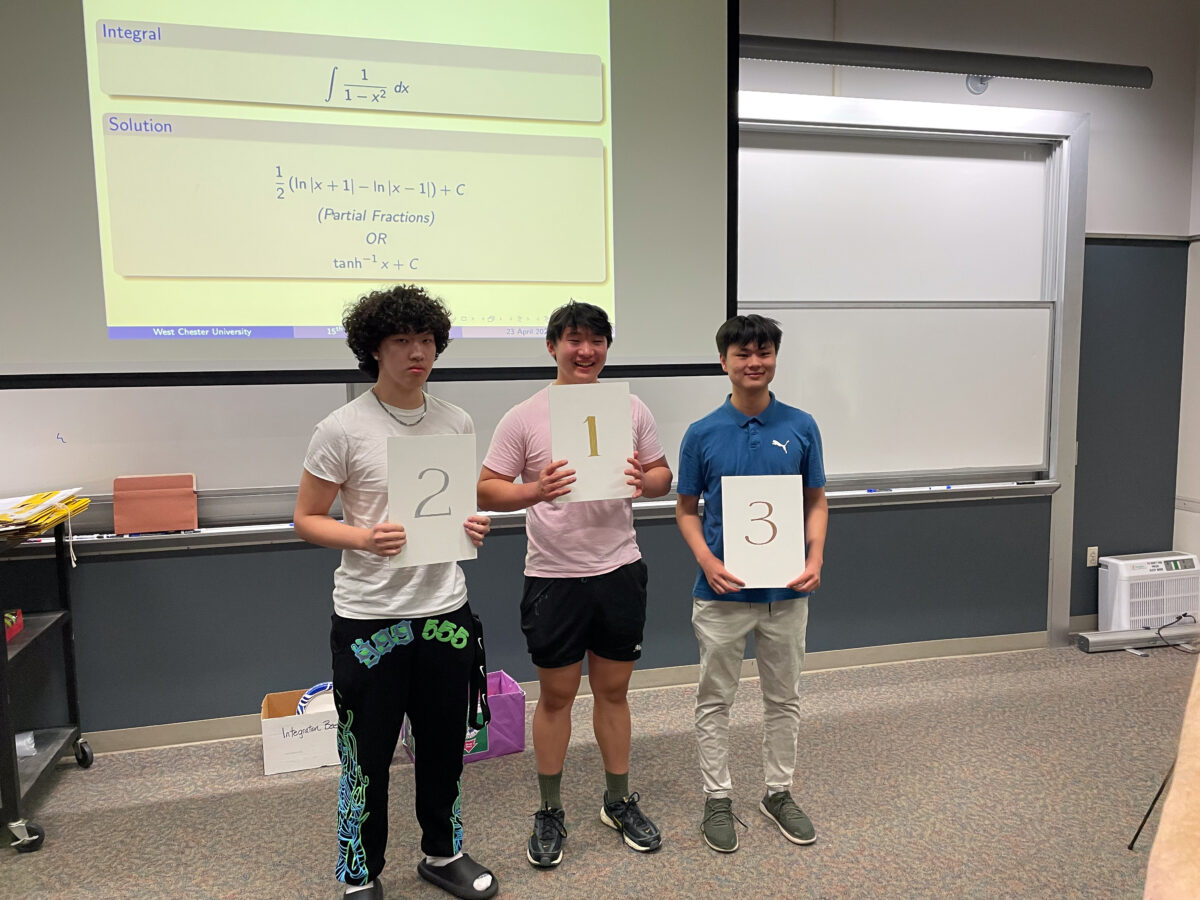
On Friday, December 6, Westtown’s Math Department hosted the Philly Math League Olympiad. This was the first time Westtown School has hosted the Math Olympiad. There were teams from George School, Hill, Penn Charter, Episcopal, Baldwin, Agnes Irwin, Haverford, Masterman (for the first time), Springside-Chestnut Hill, Shipley, and Friends Central.  

The olympiad is the culminating event of the Philly Math League season. Every team competes during every round of six questions, which could either be individual based (where the top five scores of a team are added together) or cooperative (where students work as a team to submit one solution set). It was a great opportunity for Westtown’s team to see the participants they’ve been competing against all fall. 

The energy in the Uptown Lounge was palpable as students spent the morning solving and discussing diverse math questions alone and working in teams of eight. The Westtown team finished in the top four schools in the competition, with a very close semifinal loss to Episcopal Academy, who eventually lost by one point to George School, the three-time defending champion. Math teacher Jake Norton and Math Department Chair Susan Waterhouse share, “Our young team has a lot of depth and we are looking forward to continuing to build strength in the coming year!” 

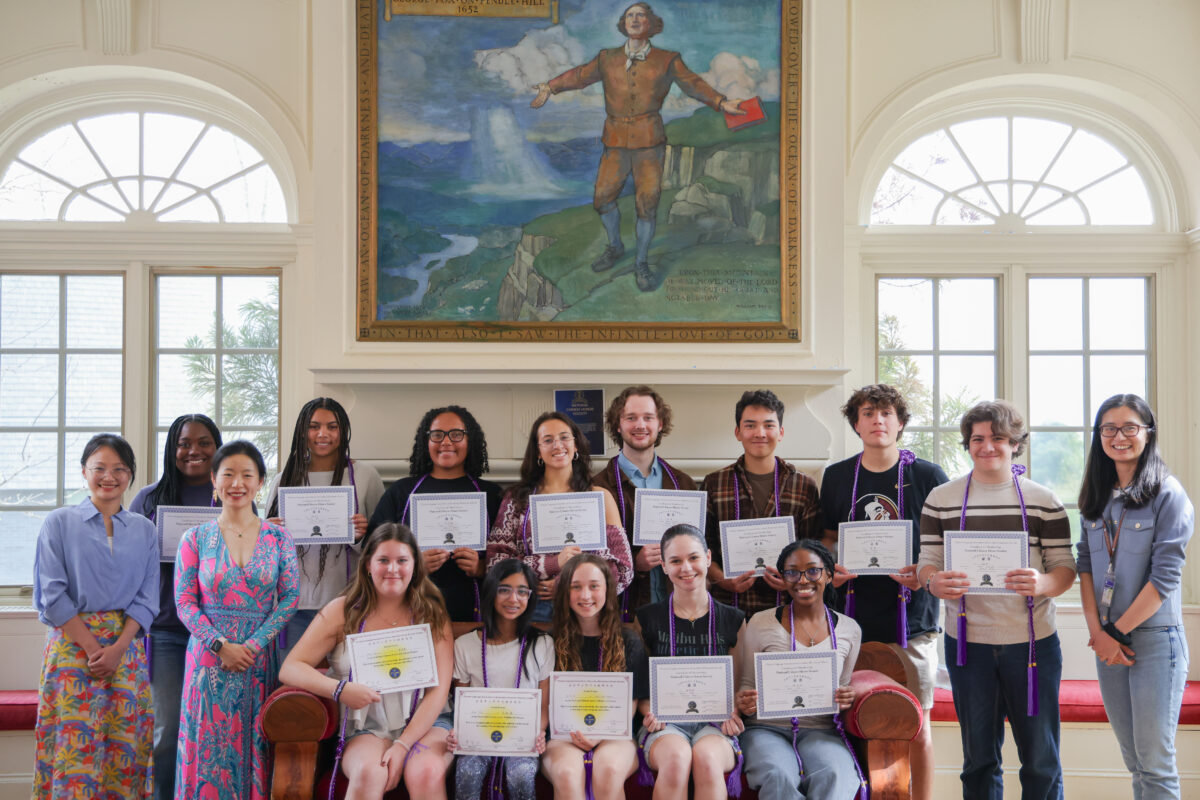
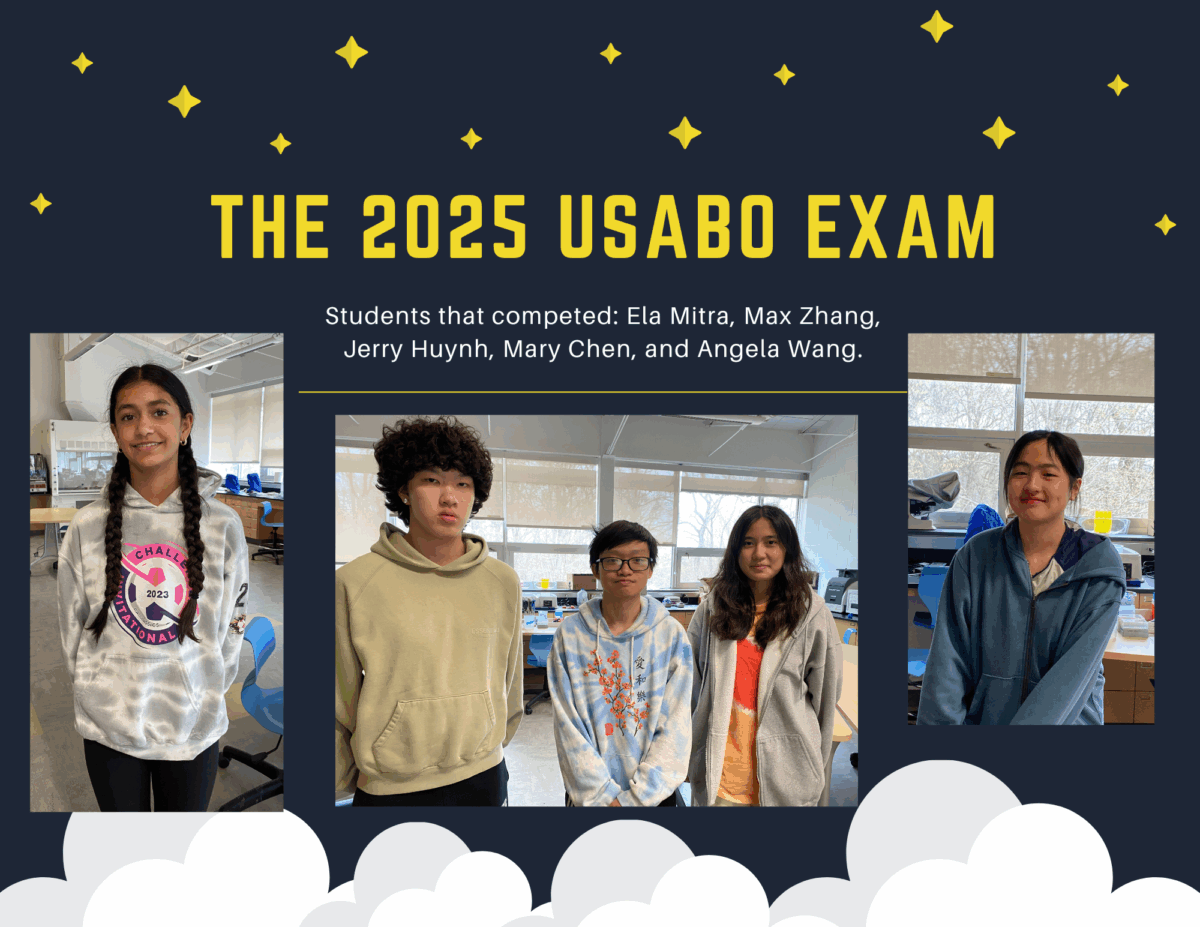
Congratulations to Westtown’s team: Tiantong Hu  ’26, Isabella Jin  ’27, Jamie Lee ’27, Jayden Qin ’28, Jerry Rao ’27, Bailey Tuckman ’25, Angela Wang ’26, and Max Zhang ’27! 

Enjoy other photos from the Olympiad here

In Other Math News: American Mathematics Competition

The American Mathematics Competition (AMC) is a series of math examinations designed to challenge middle and high school students with engaging problems, aiming to identify mathematical talent, foster a love of math, and develop critical problem-solving skills through friendly competition; essentially, it’s a national program focused on strengthening future generations of mathematicians by providing engaging math challenges across different levels of difficulty.

The top three AMC 10 (for 9th and 10th graders) scores were: 
1. Isabella Jin ’27
2. Jayden Qin ’28
3. Max Zhang ’27

The top three AMC 12 (for 10th and 12th graders) scores were: 
1. Jamie Lee ’27
2. Angela Wang ’26
3. Tiantong Hu ’26

Additionally, Jamie Lee ’27  received a Certificate of Achievement for his score on the AMC 12 as a 10th grader; received a Certificate of Distinction as a top 5% score in the country; and, qualified for the AIME (American Invitational Mathematics Examination). Junior Angela Wang qualified for the AIME (American Invitational Mathematics Examination) and sophomore Isabella Jin received a Certificate of Distinction as a top 5% score in the country; received an Honor Roll of Distinction as a top 1% score in the country; and qualified for the AIME (American Invitational Mathematics Examination). Congratulations to all!

Environmental Science Students Explore Off Campus

This fall, teacher Ryan Black took Environmental Science students traveled to the North Brigantine Natural Area along the southern New Jersey coast. This area is a critical shorebird habitat, home to several rare and endangered species, and part of the longest stretch of undeveloped barrier island beach along the New Jersey coast. Students learned how to identify different species and estimate population sizes with the goal of reporting this data to state agencies and conservation groups. “They were able to identify seven shorebird species (including endangered red knots) and counted 1,810 birds over the course of our two surveys,” shared Black. “Combined with the data from Episcopal Academy and Haddonfield Memorial HS students, we have counted over 7,000 birds so far this migration season at the North Brigantine Natural Area.” They also documented human activity and other disturbances to investigate the impact on the shorebird species. The data collected (and data to be collected in the future) will be used for a lab report / field study assignment.

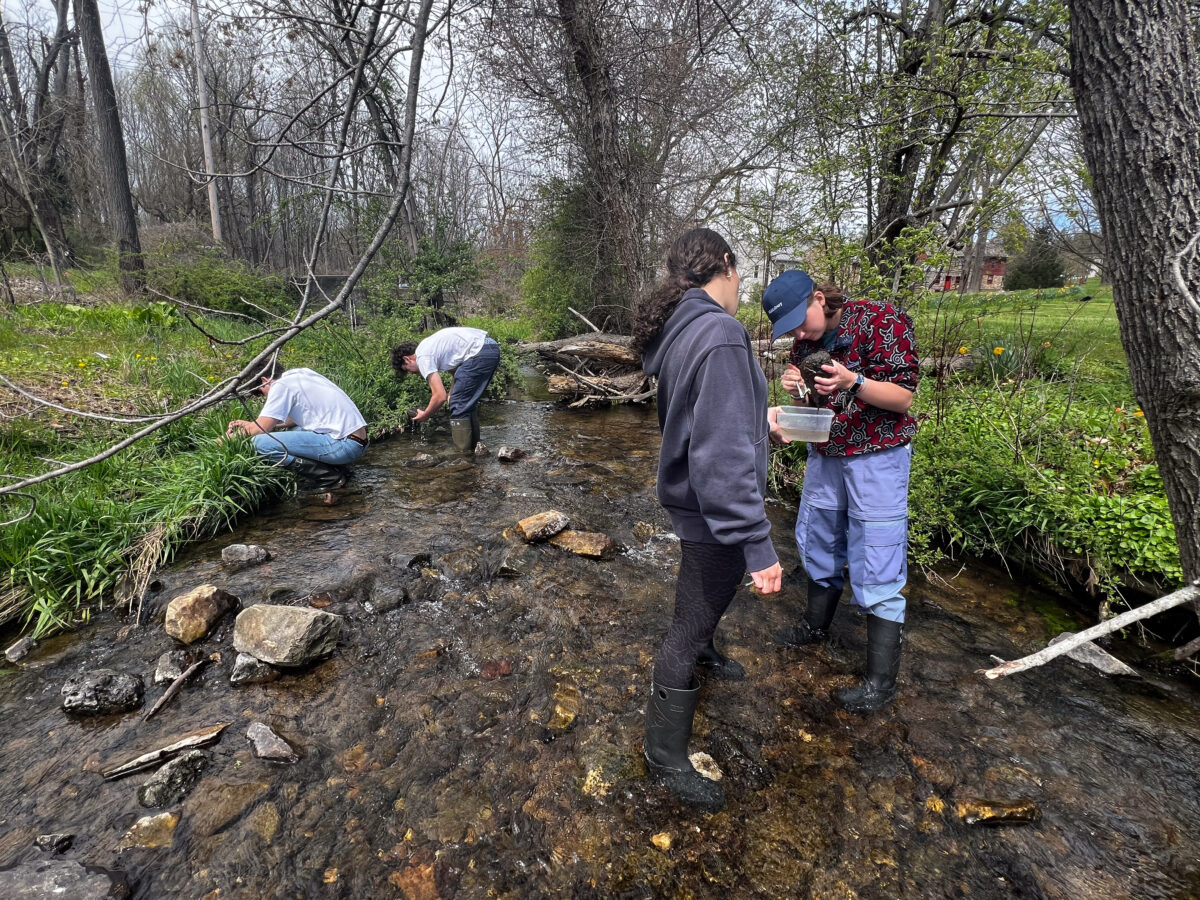
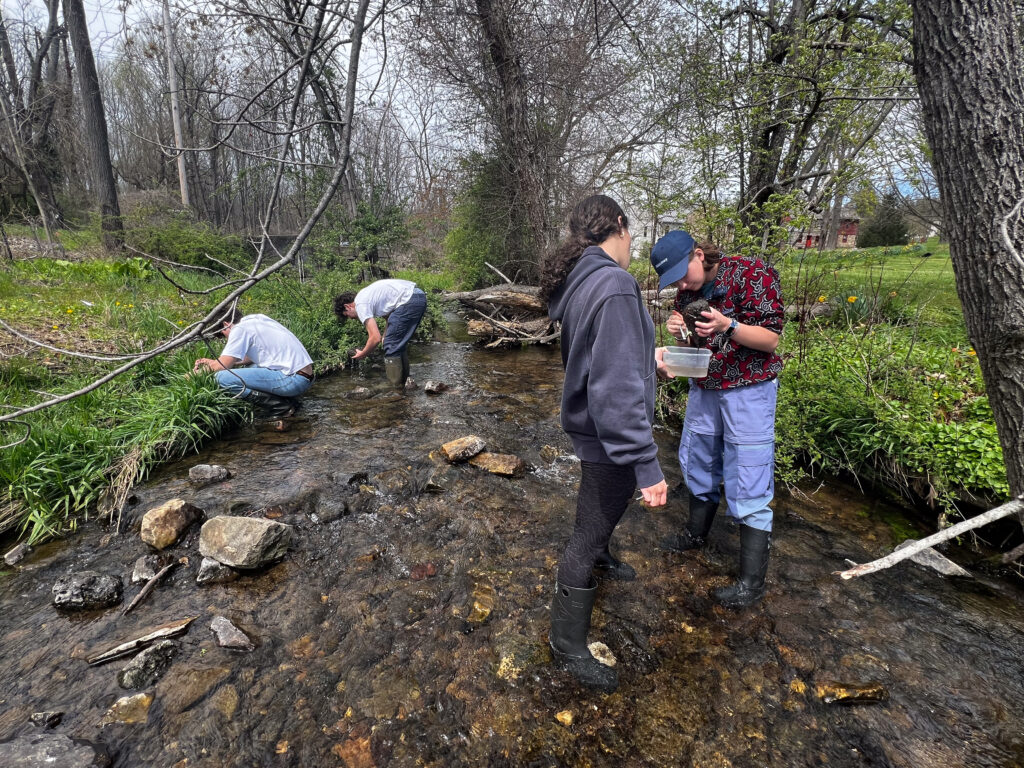
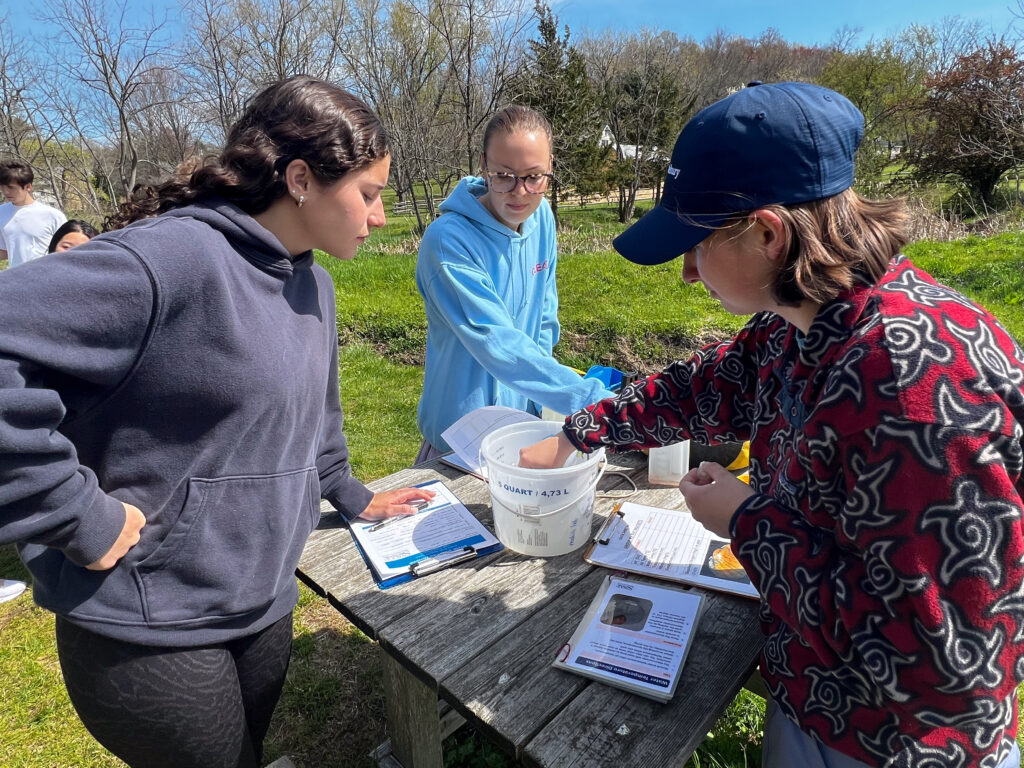
Students were on the move once again for a freshwater mussel survey of E. Chester Creek (on campus in the North Woods). Black says, “We have been unable to find any native freshwater mussels in the creek. This is unsurprising since mussels are missing from approximately 95% of regional streams surveyed. We compared the abundance of native mussel species (0) to invasive Asian clams (561). We also collected some water quality data and inspected some areas for macroinvertebrate life (picture of Dragonfly nymph on rock). It was the largest group I have ever had in waders at the same time and they did a great job!” 

Students also had a night field trip to Rushton Woods Preserve to observe Northern Saw-whet owl banding. The students were able to see the researchers collect data on one older female Saw-whet owl that was caught right at the last net check. Our students were hosted by the  Willistown Conservation Trust (WCT) who wanted to ensure that we share that, “All birds were handled for scientific purposes in the presence of Banders-In-Charge at a federally licensed banding station. Do not attempt to handle wild animals without the proper training and permits.”

Food Truck Challenge

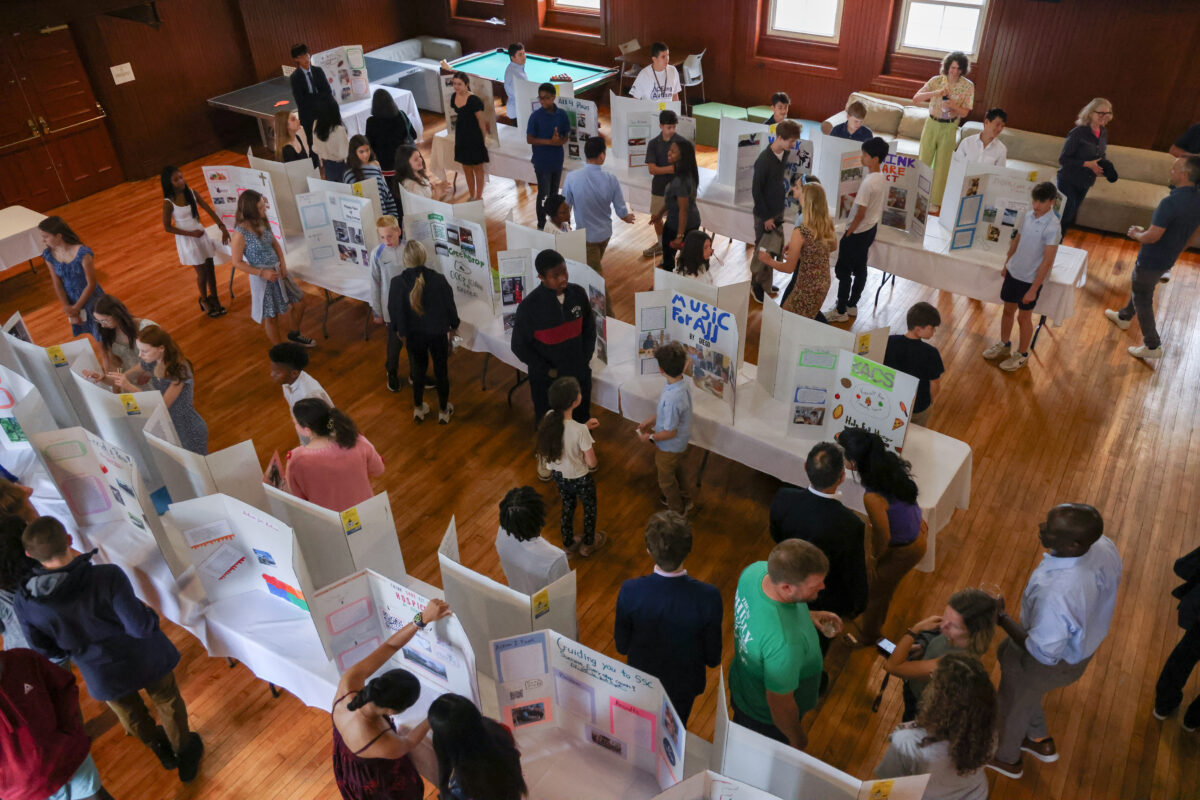
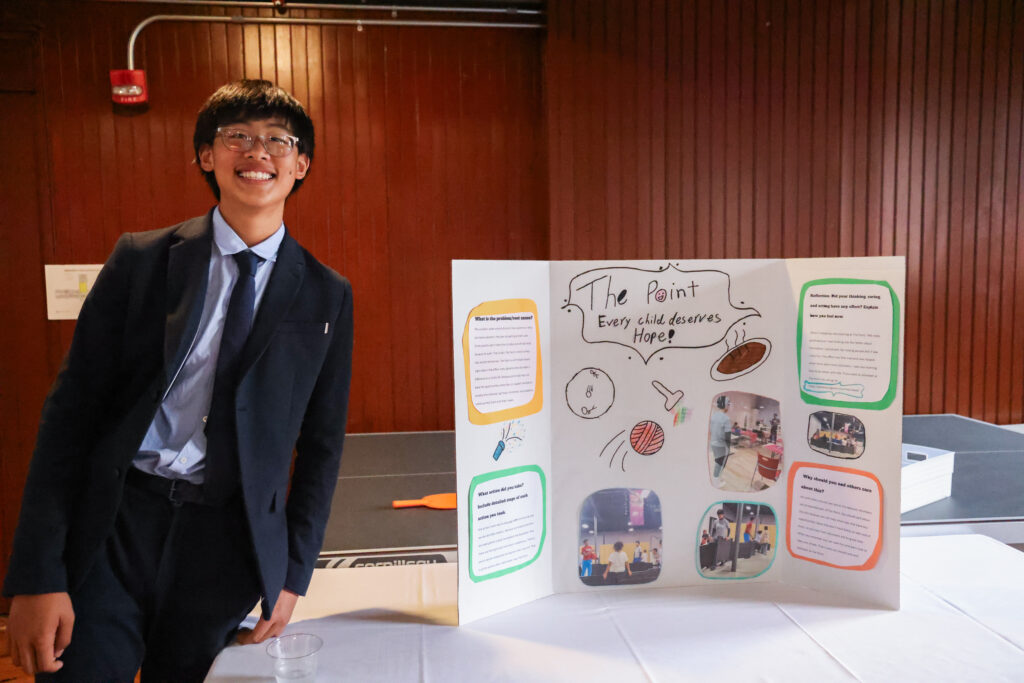
Seventh grade STEM teacher Carlos Charriez wanted his students to learn about the design thinking process and to create a collaborative project with Lower School students, so he introduced the Food Truck Challenge. Their leading question was: How can you design a food truck for third graders that focuses on healthy eating? They were challenged to create a menu, design a logo, create a slogan, and pay careful attention to presentation and truck design. In addition to other elements of the design thinking process—brainstorming, defining, prototyping, and testing—a crucial piece of design thinking is empathy and understanding a client’s needs to design toward solutions. 

For the Food Truck Challenge, seventh graders first visited with their third grader “clients” to interview them about their wants and needs in a food truck experience, their favorite foods, possible allergies, and to gather other ideas. The students then took this information and in groups worked on brainstorming ideas, designing their food trucks, and crafting healthy menus. Then, in the build stage, they built cardboard food trucks from which to serve their food. For the final stage, seventh graders set up their food truck stations in the Science Center and welcomed the third graders who got to sample all the offerings and provide feedback. The third graders were excited to visit the food trucks, taste the menus of all the groups, and the seventh graders were thrilled to share their creations! “The creativity and craftsmanship of the seventh grade class was on full display for this partnership and I could tell based on their smiles that they took a lot of pride in their work as they served their third grade clients,”  Charriez shared. “If students remember anything about this STEM class, I hope that they realize how important the skill of empathy is when working with others.” 

See the gallery of photos here!

Seventh graders interviewing their clients

Seventh Grade Canoe Trip

The canoe trips have been a signature program in the Middle School for over 40 years. The seventh grade canoe trip’s placement at the beginning of the school year is intentional, as this trip is often a formative experience for students, resulting in deeper relationships with peers and faculty, an increased sense of self-confidence, and a belief in their ability to overcome obstacles both individually and as a group. This trip is also an integral component of community building as they enter their seventh grade year. 

Led by Director of Outdoor Education Chris-Henwood Costa and several Middle School faculty, the group paddles a section of the Delaware River located in the beautiful Delaware Water Gap Recreation Area on the border of Pennsylvania and New Jersey. They carried everything with them on the river and camping as we traveled downstream. Henwood-Costa shares, “All students were engaged in the meaningful work of traveling as a large group down the river, including tent set­up, meal preparation and clean-up, fire building, canoe packing, and unpacking, etc. They learned navigation skills and had several opportunities to practice leadership in small and large groups. In addition, students continued their understanding of Leave No Trace (LNT) wilderness travel practices that we began working with in sixth grade Outdoor Education.”

Enjoy the gallery of photos of their adventure here!