The annual Alums/Community Basketball Game had a great turnout this year, and we were happy to welcome alums back to campus! Jair Bolden ’16, founder of the Grey Rose Foundation, came back to play in the game, and provided the boys’ varsity team with Grey Rose Foundation T-Shirts for warmups on Saturday. It was great to see so many alums on the court! You can see more photos from the game here!
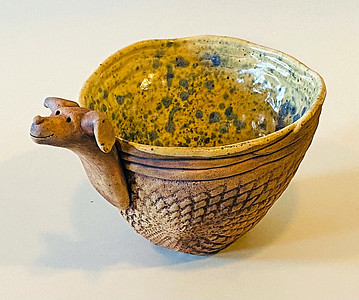
In September, Amy Hart, a 90-year-old former ceramics teacher in Swarthmore reached out to Westtown to consider donating a collection of pottery and other materials to the school. Hart is a prolific arts educator in the region and had friendships with major figures in American pottery and pedagogy such as Paulus Berensohn and M.C. Richards. Westtown was suggested as a potential home for these pieces thanks to the suggestion of Hart’s friend, retired Westtown ceramics teacher Joyce Nagata.
In this donation, Hart has gifted Westtown with pieces by Berensohn, Ruth Duckworth, and Karen Karnes. Further, to build on this donation, iconic Philadelphia gallery owners Rick and Ruth Snyderman have also donated a piece by Berensohn to Westtown. Berensohn has direct ties to Westtown, as he was an artist in residence in 1993. He worked with students in all divisions and delivered a lecture on his cutting-edge arts pedagogy.
In addition to the pottery collection, Hart donated a wide variety of classroom and research materials to Westtown. This donation included art books for the Lower School and Upper School libraries, 20 Native American rattles made of various materials, 22 carved spoons made of various materials, six Native American Zuni small stone fetishes, a large collection of minerals, fossils, ivory, shells and a completely intact ostrich egg on a hand-made ceramic base.
This donation comes at a time when Middle School art teacher Cindy Hodgson is conducting a project to consider the history of pottery at Westtown in collaboration with the Archives. Further, an anonymous donor purchased pottery by Joyce Nagata and current ceramics teacher Stephanie Wilhelm for the school’s permanent collection, as well as a ceramic piece by Cara Graver, former longtime Westtown art teacher. The donations honor a history connecting Quakerism and pottery in Chester County, as outlined in the book, The Potters and Potteries of Chester County by Westtown alum Arthur E. James.
“There is a thread connecting Quakerism, American pottery, Chester County, and Westtown School,” reflects Alex Ates, Director of PK-12 Visual and Performing Arts. “For example, Paulus Berensohn—who is widely credited for changing the course of American Ceramics education—was greatly influenced by Quaker mysticism and was a guest artist at Westtown. Amyallery of these wo Hart’s generous donation honors Westtown’s marvelous legacy of encouraging ‘the living arts.’ Indeed, these pieces will now live on campus with us, inspiring and teaching students for generations to come.”
On March 29 at 6:30 p.m., the Westtown Alumni Association Board held a Called Meeting for Business to discern changing the name of the Westtown Alumni Association to the Westtown Alums Association. This change was proposed to match Westtown’s style convention of using “alums” in place of “alumni/ae/x” to simplify communications and be explicitly gender inclusive.
We are pleased to announce that our proposal was accepted at this meeting, and our official name is now the Westtown Alums Association.
On behalf of all of our members, the WAAboard would like to thank everyone who attended the Called Meeting. If you have any follow-up questions, please email alums@westtown.edu.
Upper School history teacher Dan Burger-Lenehan, invited Andrew Richardson ’02 to a Zoom Q&A session with his 9/11 and U.S.-Middle East Relations classes. Burger-Lenehan shares, “Andrew is a counterterrorism analyst in the NYPD’s Intelligence Bureau. The students in my course just wrapped up a unit on terrorism that covered both 9/11 and the more recent surge in far-right domestic terrorism, so Andrew’s work is very relevant to what they’ve been studying.” Students enjoyed the presentation and had many questions for Richardson.
This is just one example of how alums’ experiences can enrich learning for our students. We welcome and invite alums to engage with our students, and to share their professional experiences. If you are interested, please be in touch with Domi Waldron, Director of Alums Engagement.
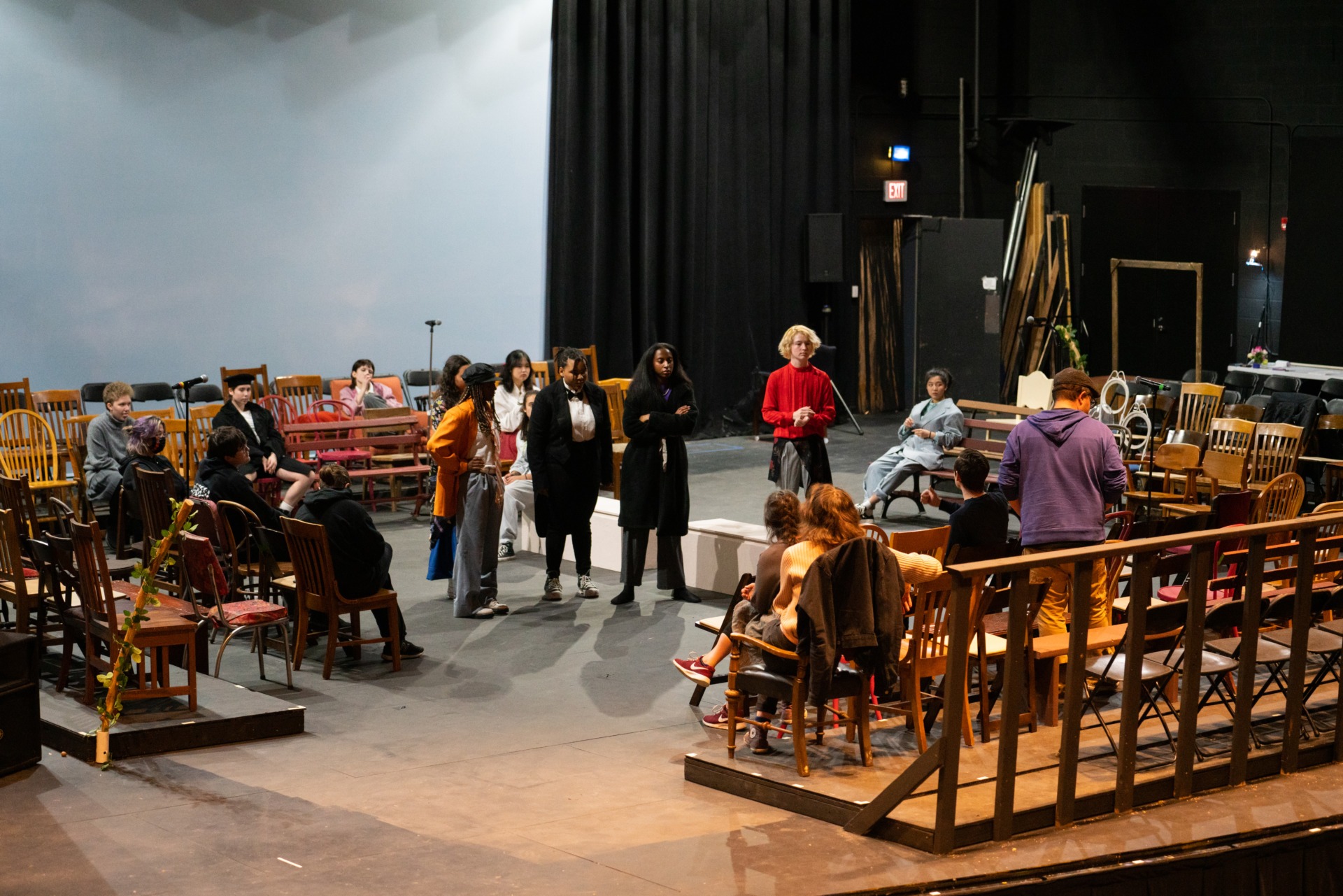
The Upper School production of Twelfth Night was amazing! This new, energetic adaptation of Twelfth Night — Shakespeare’s beloved comedy of mistaken identity, love triangles, music, and mischief — was a delight. Kudos to all the students, both center stage and back stage, who brought this play to life!
Westtown commissioned this original adaptation by the New Orleans-based writer and actor James Bartelle. Bartelle came to campus to have conversations with students about Shakespeare, acting, playwriting, and the process of adapting Twelfth Night. He stayed on campus for the run of the performances and engaged with classroom activities and events along with teacher Alex Ates, Theater Director and Director of Visual and Performing Arts. Our thanks to James Bartelle for sharing his time with our students!
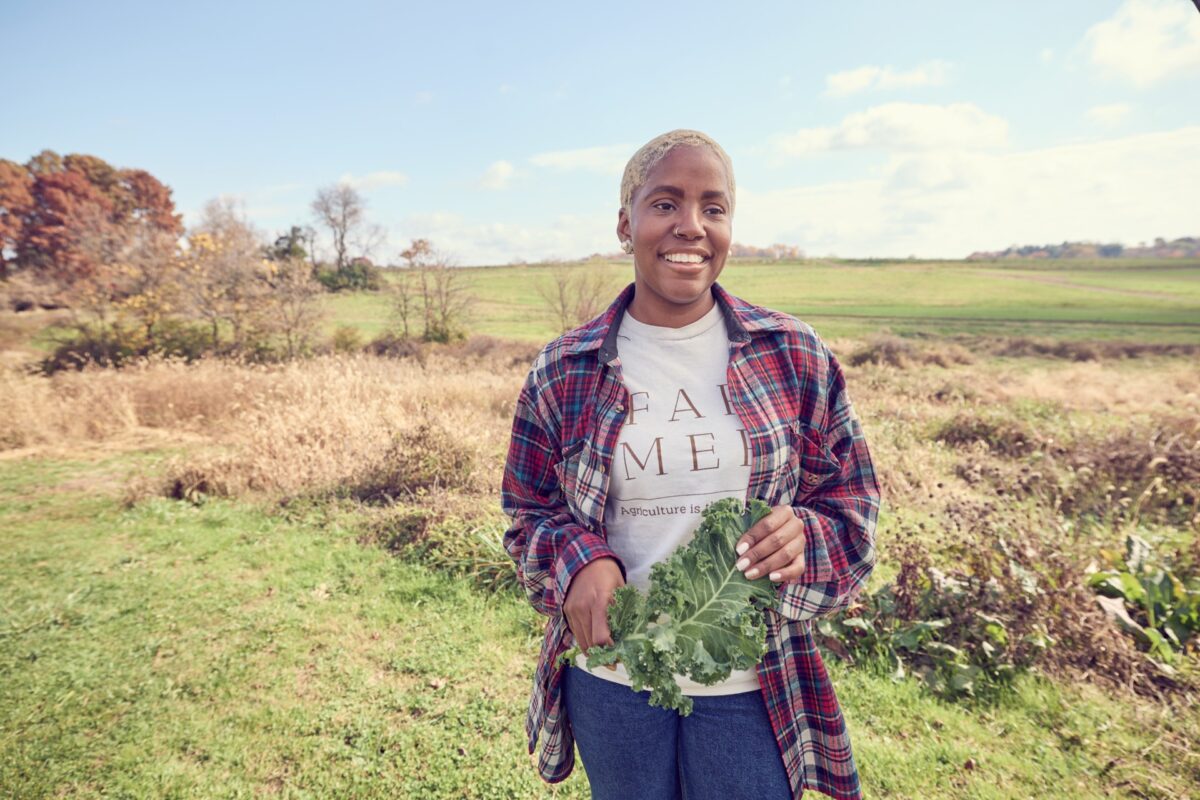
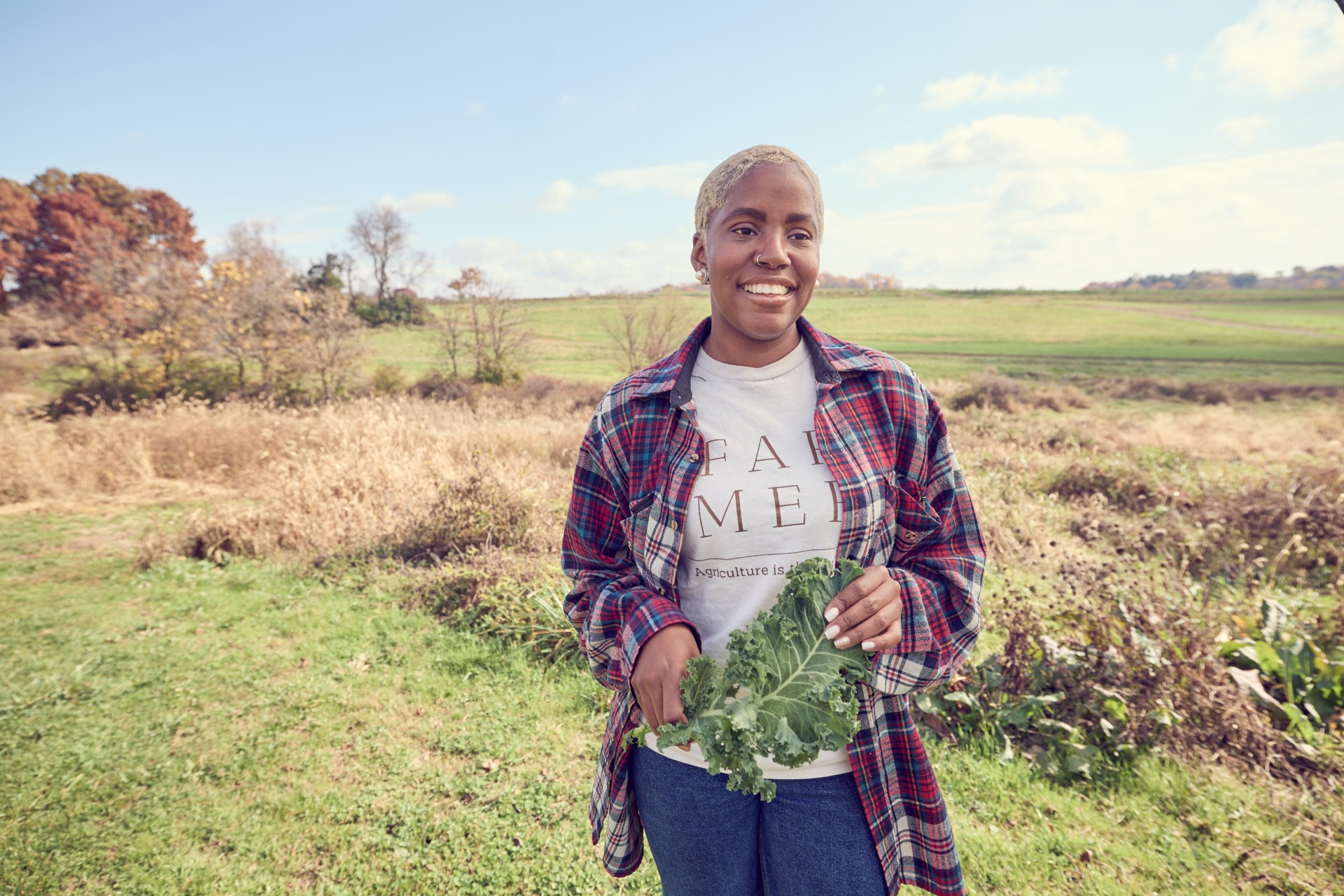
Westtown School and Christa Barfield, owner and operator of FarmerJawn Agriculture, are proud to announce a new partnership. Effective January 1, 2023, Barfield will lease 123 acres of the school’s campus to create an organic farm with an unconventional model.
Both stewardship of the land and the educational potential of Westtown’s 600 acres has long been a focus of the school. This intentional work is prioritized in the school’s Strategic Vision alongside a commitment to fostering equity, access, inclusion, and belonging.
A portion of the school’s land has been leased for farming use since 1996. Upon the announcement of current farmer Pete Flynn’s retirement, the school began a search for a partner with a commitment to a reciprocal, regenerative, and restorative relationship with the land. The school created a Farmland Task Force and commenced a months-long search for a mission-aligned partner. Head of School Chris Benbow shares, “The task force was impressed by Barfield’s experience, approach, and strong alignment with the school’s mission and Strategic Vision and is pleased to invite her to campus as our new partner.”
Barfield is a dynamic entrepreneur and a passionate advocate for healthy, organic food and for regenerative farming practices, with a vision to restore access to farmland and farming for Black farmers. She currently operates two Philadelphia-area businesses—FarmerJawn Agriculture and Viva Tea Leaf. Her organization includes a retail and garden learning center in Germantown, a community-supported agriculture (CSA) business, and five acres of farmland in Elkins Park. Barfield shares, “FarmerJawn is excited to expand our regional network to Westtown School to create a just food system that perpetuates regenerative and organic health for people and the planet.”
Barfield will farm half the land and use it to stock the farm market already located on the premises. The farm market will operate under a new name and will eventually include a CSA, prepared foods, and other locally grown and sourced products. The remaining acreage will become a “farming incubator,” comprising five ten-acre cooperative farms operated by a cohort of Black farmers. This incubator model will offer educational development opportunities and a “pathway to entrepreneurship” via sales at the farm market.
By Louisa Egan Brad, Dean of Equity, Justice, and Belonging
At a parent speaker series talk and at a faculty/staff Opening-of-School session this fall, I opened with the following quote from the American Friends Service Committee (AFSC). After you read it, I’d like you to guess what year it was written.
The need for [action beyond nondiscrimination] derives from the fact that discrimination is embedded in our societal patterns of education, housing, employment, social interaction, and political participation. These patterns are so pervasive that frequently neither their perpetrators nor their victims realize when and how discriminatory acts are being committed. AFSC is part of this society and has, generally unwillingly, fallen into some of the very activities and behavior patterns it seeks to avoid in itself and to change in others. In these circumstances, policies of nondiscrimination alone are inadequate to achieve inclusiveness and full participation. Special efforts and procedures to reach out to previously excluded groups are necessary…AFSC believes that the greater inclusiveness which is the goal of [action beyond nondiscrimination] is necessary for us to do our work effectively as a Quaker organization seeking to understand and address questions of oppression, empowerment, justice and peace…The objective of the plan is to change those patterns which have not so far produced the inclusiveness we seek and to try new ways to reach long established goals.
American Friends Service Committee “Affirmative Action Plan” 1978
To me, this statement reads as though it could have easily been written sometime after the murder of George Floyd. The recognition of discrimination throughout American society, the acknowledgement that individuals may participate in and perpetuate discrimination unconsciously, the appreciation that inaction itself reproduces societal inequities–all of these ring true as realizations that have dawned on many in our country only since the summer of 2020.
And yet, Quakers stated these truths plainly over 40 years ago. Is this simply an accident of history? The introduction of the affirmative action plan indicates not, stating that “Implicit in both Quaker faith and practice is the belief that God is an active force, using men and women as instruments in order to bring society to a more perfect state…To be instruments of Divine Will, men and women need to be free of the weight of oppression and harmful discrimination.” Such sentiment underlies a long history of Quaker social activism–while certainly not every Quaker has always been on the right side of history, Quakers have been trailblazers with respect to social justice, with respect to abolition, women’s suffrage, gay rights, and other issues.
At Westtown, our Quaker identity and mission guide our equity, justice, and belonging work and our commitment to working towards an anti-bias, anti-racist (ABAR) community. This work for us is not a digression from our purpose or a mere reflection of broader American culture in our time. Rather, it is central to the work and privilege of teaching and learning in a Quaker school.
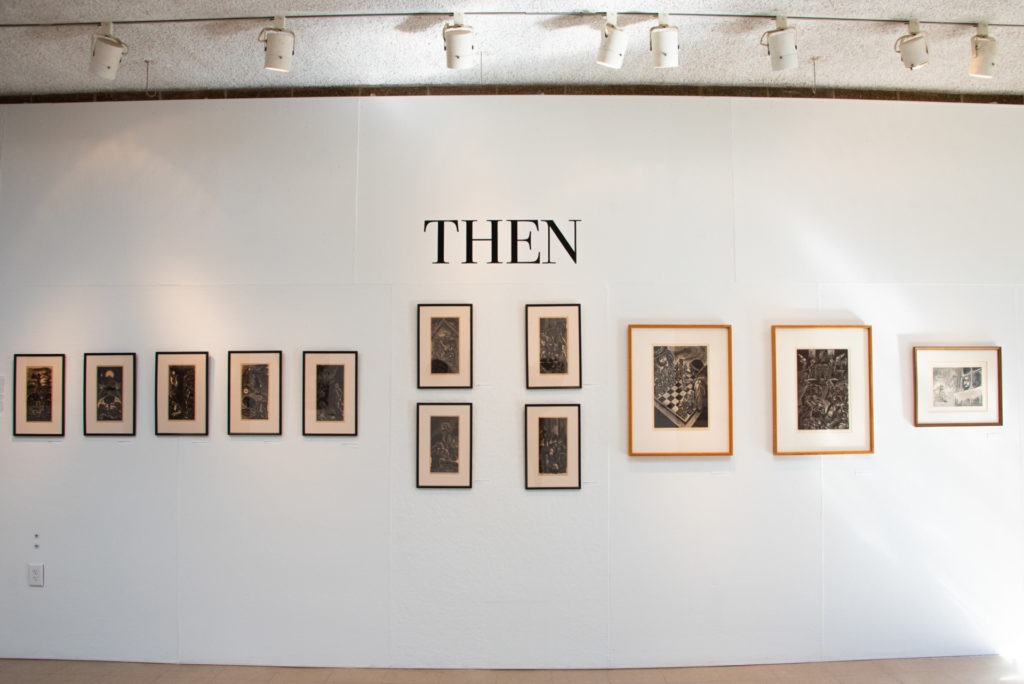
This fall Westtown’s Center for the Living Arts Gallery hosted the “Art and Faith” Exhibit to mark the 70th anniversary of Fritz Eichenberg’s Art and Faith Pendle Hill pamphlet, which considered the role of art at Westtown School. The exhibit featured original prints by Eichenberg from Westtown’s permanent collection, and works by Quaker artist Todd Drake, students, and faculty.
In 1954, Fritz Eichenberg, a German-born committed Quaker—and one of the most prominent visual arts educators of his time—visited Westtown’s campus to speak about the arts as an extension of the school’s essence. Two years prior, Eichenberg published his thoughts in a Pendle Hill pamphlet, Art and Faith. This is the 70th anniversary of that radical little work.
Fritz Eichenberg (b. 1901, Cologne, Germany; d. 1990, Rhode Island) was a popular German-American illustrator, speaker, and educator. Eichenberg held prominent posts at the Pratt Institute in New York City and the University of Rhode Island. He fled the rise of Nazism in 1933 and was involved in the Works Progress Administration’s Federal Arts Project during the Great Depression. A committed Quaker, Eichenberg’s art often focused on social justice topics. As a writer, Eichenberg composed radical pamphlets for the nearby Quaker education and retreat center, Pendle Hill. As a teacher, Eichenberg was well-known for his “The Art of Teaching Art” lecture. Perhaps, though, Eichenberg is best known as an illustrator of classic novels and for Dorothy Day’s The Catholic Worker radical newspaper. In the 1950s, Eichenberg visited Westtown’s campus as part of his ongoing participation in The Society of Friends and arts education.
Todd Drake (b. 1961, North Carolina) is an American interdisciplinary artist, activist, and educator who lives in New York City. The recipient of multiple grants and fellowships, Drake has traveled globally to facilitate social justice-oriented arts projects. Alongside his wife, Drake is the co-operator of a Quaker intentional community in Manhattan, Penington Friends House. Drake’s most recent solo exhibition was “Rising,” a series of prints and pen and ink drawings dealing with the issue of Global Warming. His surrealistic imagery links his experiences growing up on the Outer Banks of North Carolina with his concerns for what will be lost due to the rising tides of the Climate Crisis. Recently, Friends Journal published Drake’s “The Leading of Hope.”
Director of Visual and Performing Arts Alex Ates was instrumental in bringing this exhibit to life, and the idea came to him during his visit to Pendle Hill, a Quaker retreat and conference center. “The exhibit was inspired when I read Eichenberg’s Pendle Hill pamphlet Art and Faith while I was on retreat there,” says Ates. “I was stunned by the clear and vigorous way that Eichenberg connected Quakerism and art. I was further surprised to learn that Eichenberg has strong ties to Westtown, as the school invited him to speak on campus in the 1950s and purchased several of his prints for our permanent collection. When I visited the pieces in Westtown’s Archives, I was struck by the fact that Westtown has been exploring the relationship between artistic creativity and faith for quite a long time—and the past can help embolden our future as we continue those conversations today. And, it just so happened, this year marked 70 years since Eichenberg’s pamphlet was published! Immediately, I knew to pull in my colleague Lizzy Oxler, who just completed her doctoral research on Folklore, to support this exploration as curator.”
The Art and Faith exhibit ran from September 16 through October 22, 2022. The exhibit’s opening celebration included remarks from curator English teacher Lizzy Oxler, Head of School Chris Benbow ’90, and Pendle Hill Executive Director, Westtown trustee, and parent Francisco Burgos, along with an original piano composition entitledLooking for the Light, by Mandy Zhao ’24. During the exhibition, students from across divisions had interactive experiences with the work, from an image scavenger hunt and question series for Lower School students to reflective writing prompts for Upper School English classes.
As highlighted in the exhibit’s opening note: “Eichenberg wrote that while he lives in the Age of the Atom ‘under the shadow of the Terrible Cloud,’ he remains hopeful at the promise of art and what art can do, noting that art itself ‘has survived all cataclysms.’ In our own community, we reflect on our own version of the ‘Age of the Atom.’ We continue to live in a world of nuclear volatility and political vulnerability. And, not to mention the ever-present hum of the COVID-19 pandemic. Still, we came together during Meeting for Worship, we still created productions; those practices continued and they can live together—they do right here, right where you stand. This exhibit is a timeline of the progression of these twinned spaces of art and faith, a meditation on the relationship as perceived by members of the community.
The arts have flourished at Westtown. We live in a space where art and faith are intertwined and cohesive. Bold arts education will grow at Westtown because the seeds have already been planted. So, we invite you to look forward to our past and our present.” Please enjoy photos of the exhibit here.
At Westtown, service learning is an integral part of curriculum and all students have a variety of opportunities to engage in service projects throughout their school careers. In the Upper School, Service Network, a co-curricular offering, provides regular and ongoing projects for students. This fall, students in Service Network and a group of upper-level Spanish students took on some special community projects.
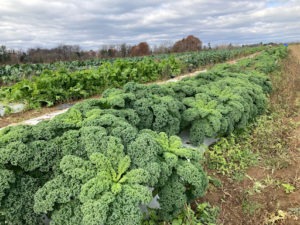
Last spring, Service Network students worked with Farmer Bill on the Chester County Food Bank farm (grown on the Westtown School farm in partnership with Farmer Pete Flynn). They planted kale, beets, and a variety of greens—about 900 plants in total. Just before Thanksgiving this year, the plants were harvested providing quite a bounty for the CCFB.
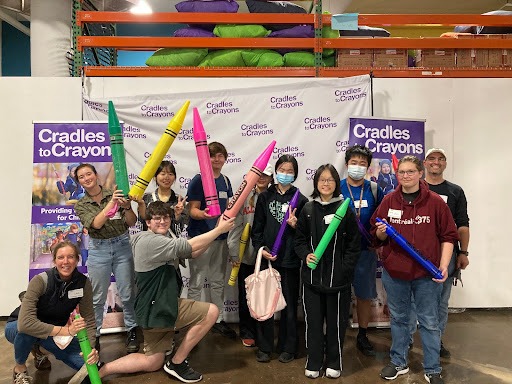
The Service Network’s partnership with Cradles to Crayons has also continued. Students recently spent an afternoon at the Philadelphia location to rehabilitate and clean used shoes to be distributed to children in the area. Service Network Coordinator Lara Freeman shares, “The work was tedious and required much elbow grease but the students were joyful and committed to the task!”
Throughout the fall, Service Network offered donation boxes around campus collecting items in support of the West Chester Food Cupboard. Students drop off donations a couple times each season. So far this year, over 150.5 pounds of food and personal care items have been donated. If you’re on campus and would like to contribute, there is a box on the East End of the Main Building.
Service Network co-curricular students also provide tutoring for the New Directions Program at the Melton Center in West Chester twice a week, they work at the SPCA in Brandywine once a week, and they make regular visits to volunteer at the Habitat ReStore on Saturdays to support the fundraising leg of Habitat for Humanity. Upcoming service opportunities will include a build project with Habitat for Humanity and a seed sorting project through the Cooperative Gardens Commission in which students will sort and make small packs of seeds for individual gardeners that will be sent to Seed Hubs around the country. Last year, this volunteer-led effort provided food for 20,000 people.
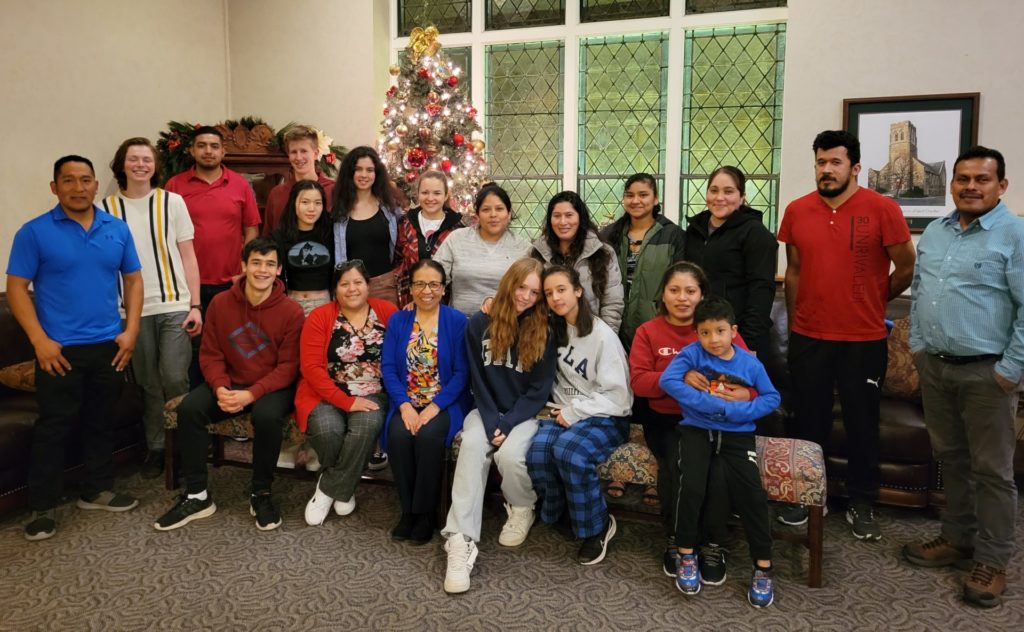
Beginning in September, 10 students have participated in a unique service partnership at the Iglesia Buen Samaritanos in West Chester. The members of this church are primarily Spanish speaking and a number of them wanted to either improve their English or begin to learn English for the first time. Students involved in this project are: Alena Zhang ’24, Luke Cogswell ’24, Dane Clunk ’23, Noah Bay ’23, Chloe Costa-Baker ’23, Melanie Flynn ’23, Antonio Ubiera ’25, Bailey Tuckman ’25, Helena McConatha-Rosle ’24, and Maya Jain ’24, all of whom have completed Level 4 or above of our Spanish program and wish to practice both their linguistic and cultural competency in Spanish in the local community.
Each Monday evening, these students met with Spanish teacher Cynthia Voorhees to reflect on the previous week, and make their lesson plans for the week. On Tuesday evenings, they went to the church to teach English from 7:00-8:30 p.m. Voorhees stresses that this is a significant time commitment for students on top of their regular course work.
Eight students were paired with adults or children at the church to teach them English, and two students also taught a basic technology skills class to the Spanish-speaking adults in the community. These classes were to help adults become more comfortable with creating gmail accounts, sending emails and files, and creating Google slide presentations. All teaching in this program was done in Spanish. The tech class has now concluded, but the English classes will continue through mid-January. In February, our students will be volunteering as child-care givers while adults in the church community are engaged in another course at the church.
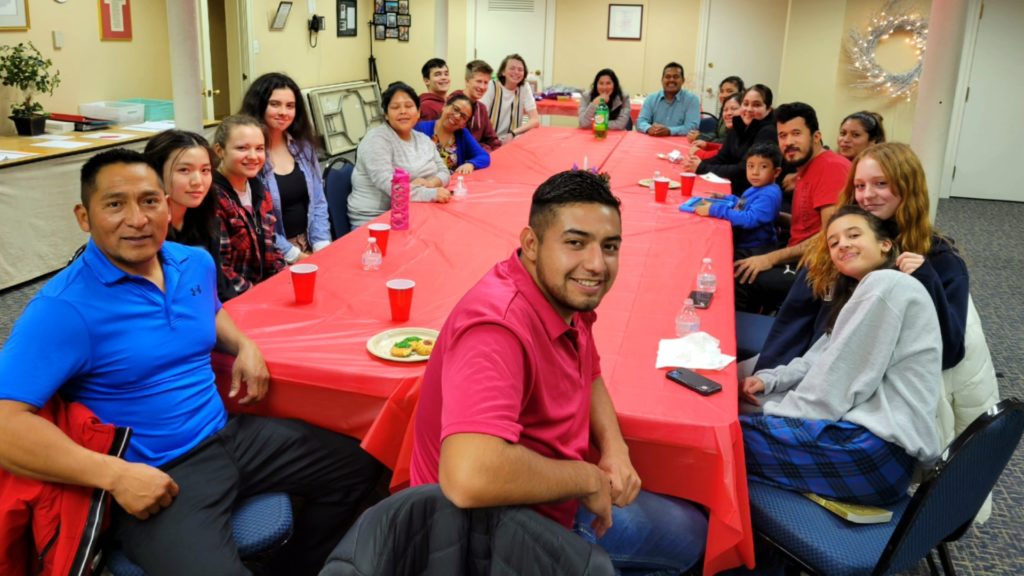
Voorhees shares, “The mutually beneficial partnership that we have formed with this church is truly a beautiful thing. We are serving them, but they are also serving us by allowing us to learn more about their culture, practice our Spanish, and to grow as teachers and care-givers. Some really beautiful friendships have evolved between our students and the folks at the church. I love that our kids are making friends outside their age-bracket, socio-economic bracket, and their own culture.” Just before Winter Break, students gathered with the members of the church enrolled in the English program for a holiday dinner sponsored by Lara Freeman and the Service Network program.